I.INTRODUCTION
Individuals with autism spectrum disorder (ASD) often exhibit impairments in social communication along with repetitive or restrictive behaviors. Machine learning (ML) classifiers and deep learning (DL) models are used by scholars to create automated tools for ASD detection. Such AI models analyze different data sources, including brain scans and behavioral observations, to identify patterns that cannot be identified by the naked eye. These procedures are fast and more accessible to the public. The research using AI was successful in differentiating ASD from typical developments through multiple biomarkers. For example, studies show that ML could analyze facial processing patterns [1] and specific behaviors like imitation [2] to identify autistic traits. These findings can be considered a significant breakthrough in applying DL to brain imaging data. Seminal work [3] used the ABIDE dataset to show that DL models could extract superior features from brain scans than traditional methods. The approach was later developed by graph neural networks (GNNs) that replicate the brain’s complex connectivity [4].
The field has since expanded to combine multiple data types, or modalities, to improve accuracy. These data types include electroencephalography (EEG) signals with specialized DL models [5–7] and integrating different types of brain scans to capture a complete picture of neural differences [8]. A major recent focus is on developing tools that are practical for real-world use, such as models that can analyze short video clips of social interactions on mobile devices [9] or that use a combination of eye-tracking and vocal analysis for ecologically valid screening [10]. While the potential is significant, the field is also thoughtfully addressing its challenges, such as gender, age, and background biases, through its algorithm [11]. The generalization and impartiality are the significant limitations in computational psychiatry [12]. Additionally, the integrated learning methodologies are crucial in addressing the concerns that arise due to the lack of data privacy and the need for massive, different datasets. The study proves that AI in autism is not about replacing clinics and that it is providing the health system with powerful tools to identify the health condition in early stages for more accurate, precise, and accessible support for families [13–15].
This study aims to design and evaluate a lightweight, custom convolutional neural network (CNN) model capable of classifying facial images of children as autistic or non-autistic. ASD is a behavioral and neurodevelopmental disorder diagnosed through clinical assessment, not facial appearance. Facial morphology is not a stand-alone diagnostic biomarker for ASD and is heterogeneous across individuals. Yet, the proposed model is intended as a screening aid, not a diagnostic tool, to complement clinical evaluation. The model is trained on a publicly available Autistic Children Facial Dataset [16] comprising thousands of labeled facial images. The goal is to create a lightweight and accurate screening model that could be adapted for real-time applications, such as mobile diagnostics and embedded systems.
The rest of the paper is organized as follows: Section II – an overview of related studies to autism; Section III – the methods of carrying out this study; Section IV – the experimental results and discussions, while the last section is Conclusion and future work.
II.RELATED STUDIES
In the past decade, researchers started using ML and DL massively to automate ASD diagnosis using neuroimaging, behavioral, and physiological data. Conventional techniques typically employed Support Vector Machines (SVM) and Random Forest (RF) algorithms to perform feature-driven classification. However, recent studies increasingly rely on DL architectures such as CNNs and GNNs.
They include superior pattern recognition that can support objective, data-driven diagnosis, and prediction of ASD across different models, including neuroimaging, EEG, eye-tracking, and behavioral data [17,18].
Figure 1 provides an overview of the technological methods applied in the detection of autism. Introductory courses show the capacity of ML for behavioral analysis [19] and the use of facial processing patterns for the detection [1] of ASD. The application of DL methodologies for neuroimaging through [3] stacked autoencoders on the ABIDE dataset to identify ASD from resting-state functional magnetic resonance imaging (fMRI) left a benchmark for deep feature extraction.
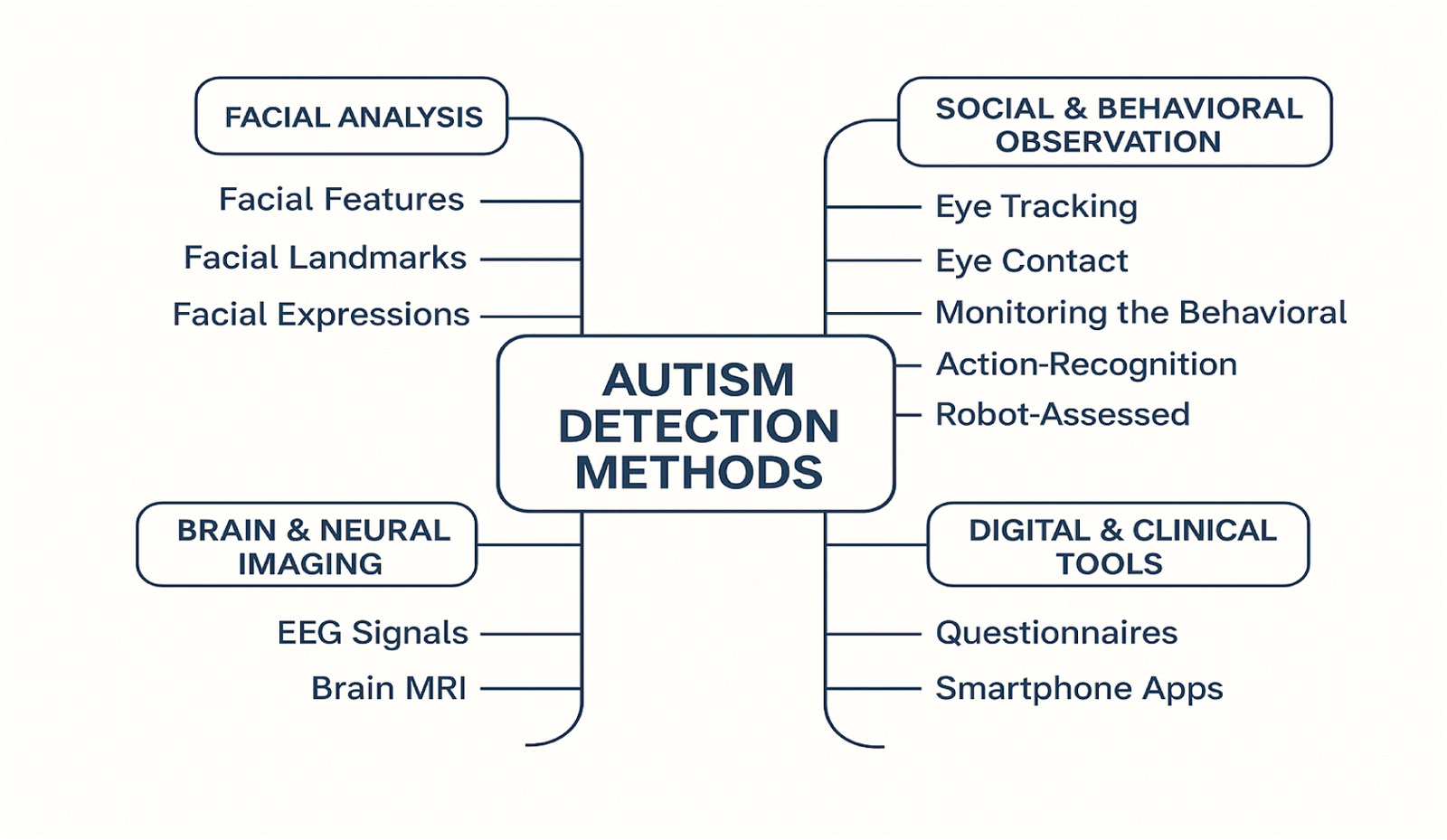 Fig. 1. Methods used to detect autism.
This can be considered as a notable leap in the research. This was further developed by ref. [4]. He introduced graph convolutional networks. These replicated brain connectivity while significantly improving classification accuracy.
Research has expanded to include diverse modalities such as EEG, magnetic resonance imaging (MRI), and behavioral signals [20]. Ref [21] highlighted the importance of reproducible biomarkers from multi-site fMRI data, a challenge that DL models are well suited to address. Studies have consistently shown that multimodal data fusion improves diagnostic precision. For instance, ref. [22] used low-rank representation to enhance ASD identification across multiple sites using structural MRI beyond neuroimaging. Application of deep neural networks to EEG signals showed improved accuracy compared to the traditional ML classifiers. Similarly, hybrid ML models were also proposed for EEG-based ASD classification. For instance, a study integrating SVM and k-nearest neighbors (KNN) identified the level of discrimination of children with ASD using mu-rhythm features [7]. Further, EEG studies also highlight that DL models, such as CNNs, can automatically learn hierarchical representations of brain activity. This leads DL models to outperform manual feature extraction [23].
Apart from EEG, MRI is widely used to study brain connectivity in ASD. Ref [18] conducted a meta-analysis of ML-based MRI studies. The result indicated that models like SVM and RF achieved high diagnostic accuracies, especially when applied to resting-state functional MRI (fMRI) data. Ref [24] developed a DL framework based on fMRI. This classified ASD subjects from the ABIDE dataset with strong generalization performance. Similarly, ref. [25] employed a 3D-CNN to integrate multi-site fMRI data. This experiment unveiled the effectiveness of deep models in extracting spatial features.
Ref. [26] further studied this by proposing ensemble DL models through different fMRI representations across multiple institutions, which resulted in improving strong data heterogeneity. Facial and behavioral data are also considered in ASD detection through ML [27]. Studies using facial image datasets trained DL models such as VGG16 and ResNet50 to differentiate children with ASD from controls. The models achieved an accuracy rate of above 90% [28–30]. Eye-tracking data combined with ML approaches are used to effectively identify atypical gaze patterns in children with ASD [31]. These behavioral cues support neural imaging findings and show that noninvasive data sources can be used for early screening.
Current research focuses on different approaches and different data types. For example, ref. [26,32] proposed ensemble DL systems that integrate MRI and EEG signals for more accurate ASD prediction. Other multimodel systems combined EEG with eye-tracking. This captured both brain and behavioral dynamics [33]. These models reveal the complementary nature of models to overcome the limitations of single-source data. Moreover, attention-based neural networks and transformer architectures have recently been explored to capture long-range dependencies in time-series data related to ASD [33,34].
The massive number of reviews from the scholars show the potential of ML in ASD research. Ref [35] surveyed recent ML-based prediction models and found that most studies achieved accuracy between 80% and 95%. The result was based on the size and the model of the dataset. Ref [17] summarizes EEG-based ML methods. He focused on the preprocessing and feature-selection challenges. Another review [35] emphasized the need for standard datasets and comprehensive AI (XAI) approaches to ensure clinical relevance. Therefore, it is important to note that ML relevance is important because black-box models lack transparency in medical decision-making contexts [36]. The hierarchical feature representation in DL is significant in ASD research. This is because CNNs, recurrent neural networks (RNNs), and autoencoders are utilized for ASD detection from fMRI, MRI, and EEG data [23]. Hybrid CNN-Long Short-Term Memory (LSTM) models capture both spatial and temporal features in EEG signals. This improves the classification accuracy [5].
Recently introduced transformers and attention mechanisms allow the integration of contextual dependencies across different brain regions [37]. The success of DL in this field stresses its ability to identify complex, nonlinear relationships in neurodevelopmental data.
Using ML for early screening of ASD in infants is another promising direction. Ref. [38] explored ML classifiers trained on infant motor and social behavior data. This improved the previous result compared to clinical evaluation. Similarly, ref. [37] used motion-capture sensors and DL algorithms to classify developmental movement patterns. Such approaches support early action critical for improving long-term outcomes. In addition, unsupervised and semi-supervised learning methods are also gaining attention for handling limited labeled data [3]. Further, autoencoder-based models are promising in identifying intrinsic brain representations without labeled training samples. Regardless of the developments, challenges remain as they are. The imbalance, heterogeneity, and limited sample sizes of the datasets often obstruct the model generalization. Studies such as refs. [25,26] proposed data harmonization and transfer learning techniques to mitigate these issues. Comprehensiveness and ethical considerations are also major concerns, as black-box predictions must be justified in clinical practice [35].
III.RESEARCH METHODS
This section outlines the methodology adopted in the study. The process has three stages. They are data preparation, data preprocessing, model architecture design, and model performance evaluation. The following paragraphs describe these stages. Figure 2 depicts the complete architectural design of the proposed model.
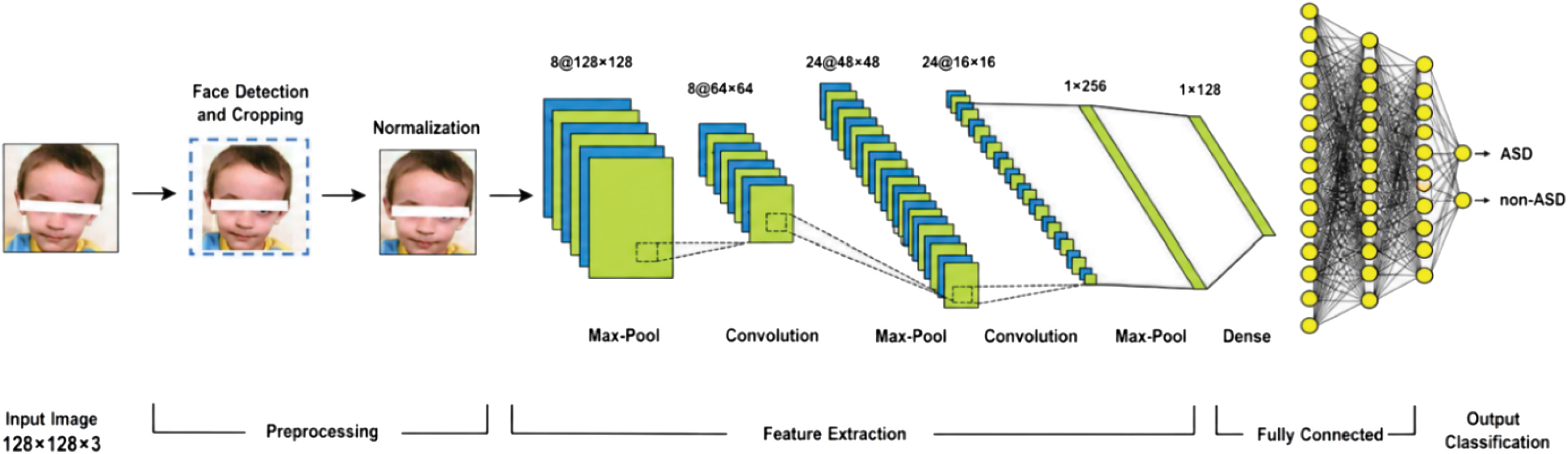 Fig. 2. The architecture of the proposed lightweight CNN model for ASD from facial images.
A.DATASET
The dataset is a publicly available Autistic Children Facial Dataset [16]. This was obtained from Kaggle. The dataset contains 2936 labeled images of autistic and non-autistic children, evenly distributed among both the categories. The initial stage starts by processing the dataset using TensorFlow’s image_dataset_from_directory. This automatically identifies images based on their relevant class labels. All images are resized to an equal resolution of 128 × 128 pixels, standardizing the input dimensions for the CNN while reducing statistical complexity. The size of 64 batch is used to manage memory during training. Pixel intensity values ranging from 0 to 1 are used through simple division by 255 to normalize each image. The normalization step improves the stability of training and accelerates consolidation by preventing large gradient updates. After that, 80% of the dataset is segregated for training, 15% for validation, and 5% for testing, which ensures the model evaluation is performed on unseen data. Figure 3 shows a sample of the autistic and non-autistic children.

B.PROPOSED MODEL ARCHITECTURE
The proposed model architecture contains three convolutional blocks, each followed by Rectified Linear Unit (ReLU) activation and max pooling, as shown in Fig. 4. A flattening layer is inserted into a fully connected dense layer, building up a softmax-activated output neuron for binary classification that is suitable for lightweight inference of the model. Dropout layers were added to mitigate overfitting. Figure 4 presents the proposed CNN model, which includes three convolutional blocks and a fully connected classifier for ASD detection from facial images. The accepted input image size for the network is 128 × 128 × 3. These are processed by three convolutional layers (16, 32, and 16 filters, respectively) interleaved with max-pooling layers for spatial downsampling. The extracted features are flattened into a 3,136-dimensional vector and fed into a dense layer of 256 units, followed by a dropout layer (rate = 0.5) to reduce overfitting. Finally, a softmax dense layer with two neurons outputs the classification probabilities for ASD versus non-ASD. Input and output tensor shapes at each stage are displayed in the figure. Table I summarizes the arrangement of the proposed CNN model, listing each layer along with its filter size, activation function, and output dimensions
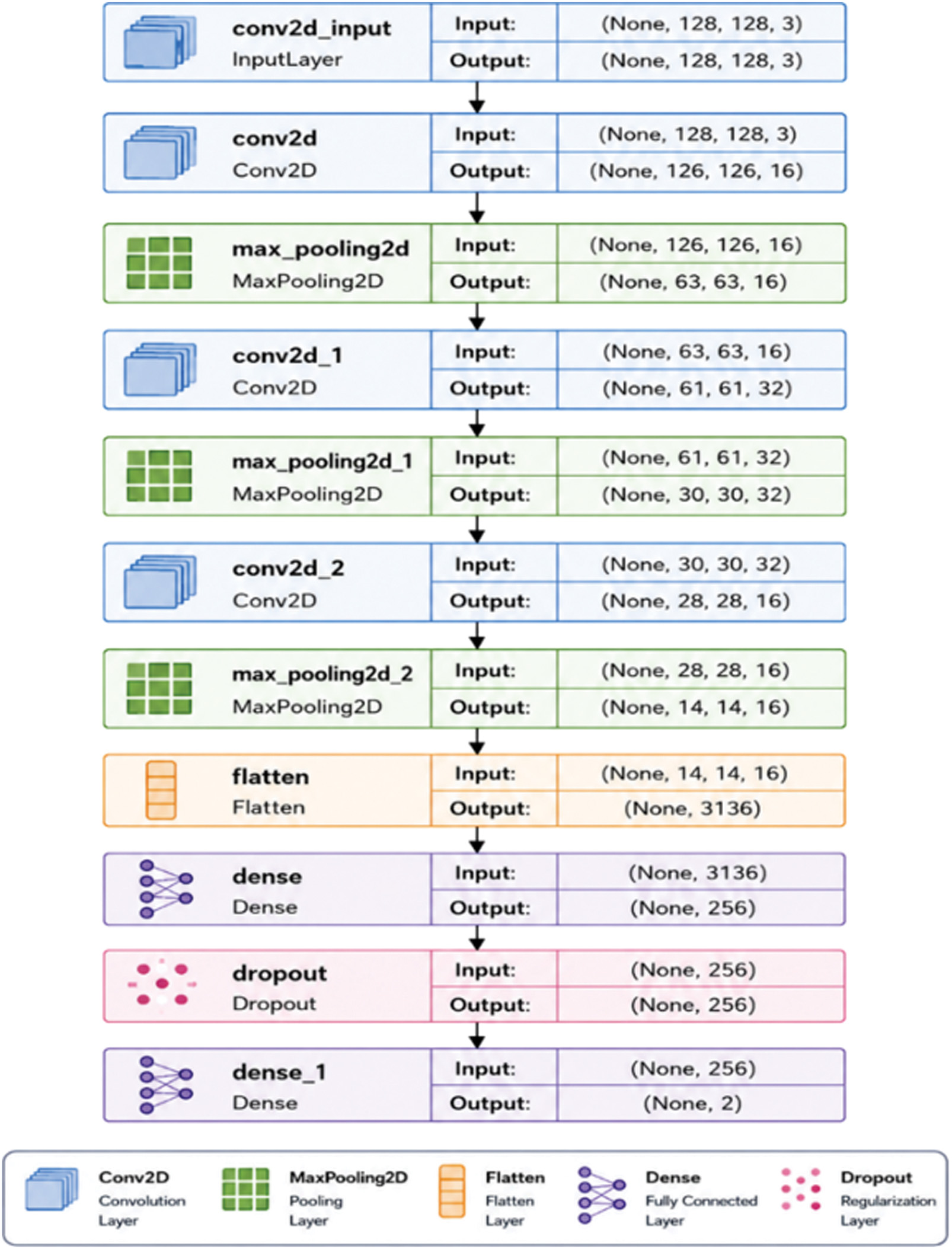 Fig. 4. Proposed CNN architecture for ASD classification from facial images.
Table I. Layer-wise configuration of the proposed CNN model
| Layer | Filters/units | Kernel | Activation | Output shape |
|---|---|---|---|---|
| Conv2D + MaxPooling2D | 16 | 3 × 3 | ReLU | 63 × 63 × 16 |
| Conv2D + MaxPooling2D | 32 | 3 × 3 | ReLU | 30 × 30 × 32 |
| Conv2D + MaxPooling2D | 16 | 3 × 3 | ReLU | 14 × 14 × 16 |
| Flatten | - | - | - | 3136 |
| Dense + Dropout (0.5) | 256 | - | ReLU | 256 |
| Output | 2 | - | Softmax | 2 |
C.MODEL EVALUATION METRICS
This section explains the evaluation methods employed in the experiments, including accuracy, precision, recall, F1-score, and ROC–AUC, while the confusion matrix was examined to analyze classification errors. The best-performing model, based on validation accuracy, was saved for testing and deployment. The metrics are formulated in Equations (1–4):
IV.EXPERIMENTS
This section presents the results obtained from applying a CNN model to the Autistic Children Facial Dataset [39]. The model was trained to classify facial images into autistic and non-autistic categories using a custom CNN architecture, which achieved high accuracy after training over 250 epochs. Model performance was assessed using standard classification metrics, including accuracy, precision, recall, F1-score, and loss curves.
A.EXPERIMENT SETTINGS
The training hyperparameters used in configuring the CNN are summarized in Table II. High-resolution images of size 128 × 128 × 3 were used to preserve fine spatial features. The proposed network was optimized to be over 250 training epochs using the ADAM optimizer with a learning rate of 0.001, selected for its adaptive convergence properties. A batch size of 64 was employed, both to accommodate computational constraints and to enhance generalization.
Table II. Hyperparameters used in the experiments
| Hyperparameters | Values |
|---|---|
| Images size | 128 × 128 × 3 |
| Epochs | 250 |
| Optimizer | ADAM |
| Learning rate | 1e–3 |
| Activation function | Softmax |
| Batch size | 64 |
| Loss function | Sparse categorical cross-entropy |
The softmax activation function was implemented in the output layer to compute class probabilities, and Sparse categorical cross-entropy was chosen as the loss function to address the binary nature of the classification task.
B.EXPERIMENT RESULTS
This section includes the results of the experiments. The proposed model was trained using the ADAM optimizer with a learning rate of 0.001 in conjunction with binary cross-entropy loss. An 80:20 training–validation split was employed, and training was conducted for 250 epochs with a batch size of 64. To improve generalization, data augmentation methods such as rotation, zooming, and horizontal flipping were applied. Table III provides a summary of the experimental performance, including precision, recall, F1-score, and accuracy, and Fig. 5 illustrates the training and validation loss and accuracy across the training epochs.
Table III. The performance evaluation metrics of the model
| Metric | Training | Validation | Test |
|---|---|---|---|
| Accuracy | 99.76% | 98.97% | 98.12% |
| Precision | 99.80% | 98.90% | 98.05% |
| Recall | 99.70% | 98.85% | 97.92% |
| F1-score | 99.75% | 98.87% | 97.98% |
| AUC | - | 0.9991 | 0.9987 |
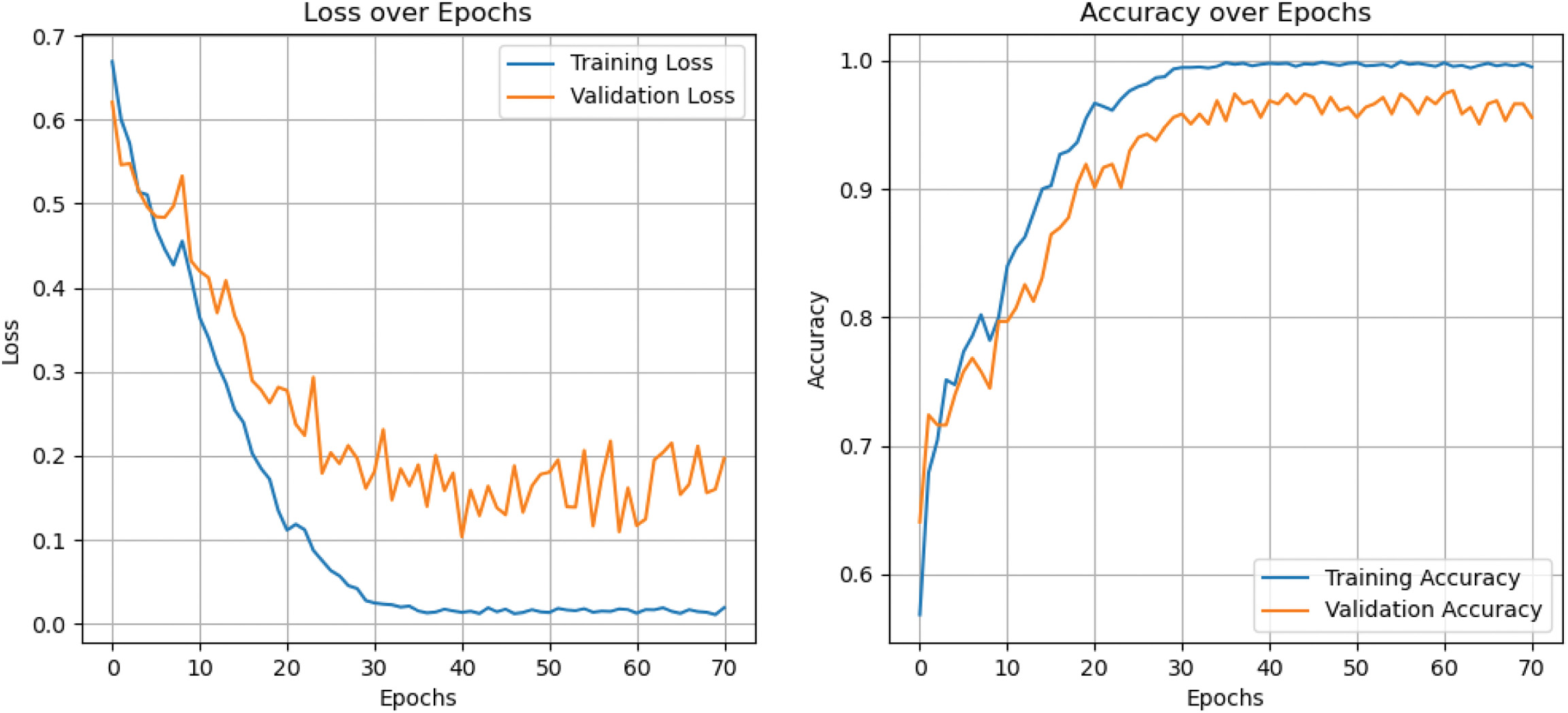 Fig. 5. Evolution of training and validation loss and accuracy across epochs for the proposed lightweight CNN.
The proposed CNN model was assessed using accuracy, precision, recall, F1-score, and area under the ROC curve (AUC) on the training, validation, and test datasets, as reported in Table III. The CNN model indicated a good generalization level demonstrating a training accuracy was at 99.76%, the validation rate was at 98.97%, and the test was at 98.12%. All the datasets mainly used precision, recall, and F1-scores. AUC values of 0.9991 on validation and 0.9987 on test sets demonstrate the discriminative ability of the models.
The CNN model indicated a good generalization level, demonstrating a training accuracy was at 99.76%, the validation rate was at 98.97%, and the test was at 98.12%. All the datasets mainly used precision, recall, and F1-scores. AUC values of 0.9991 on validation and 0.9987 on test sets demonstrate the discriminative ability of the models. As shown in Fig. 6, the validation confusion matrix demonstrates strong classification performance, characterized by many true positives and true negatives and few incorrect predictions.
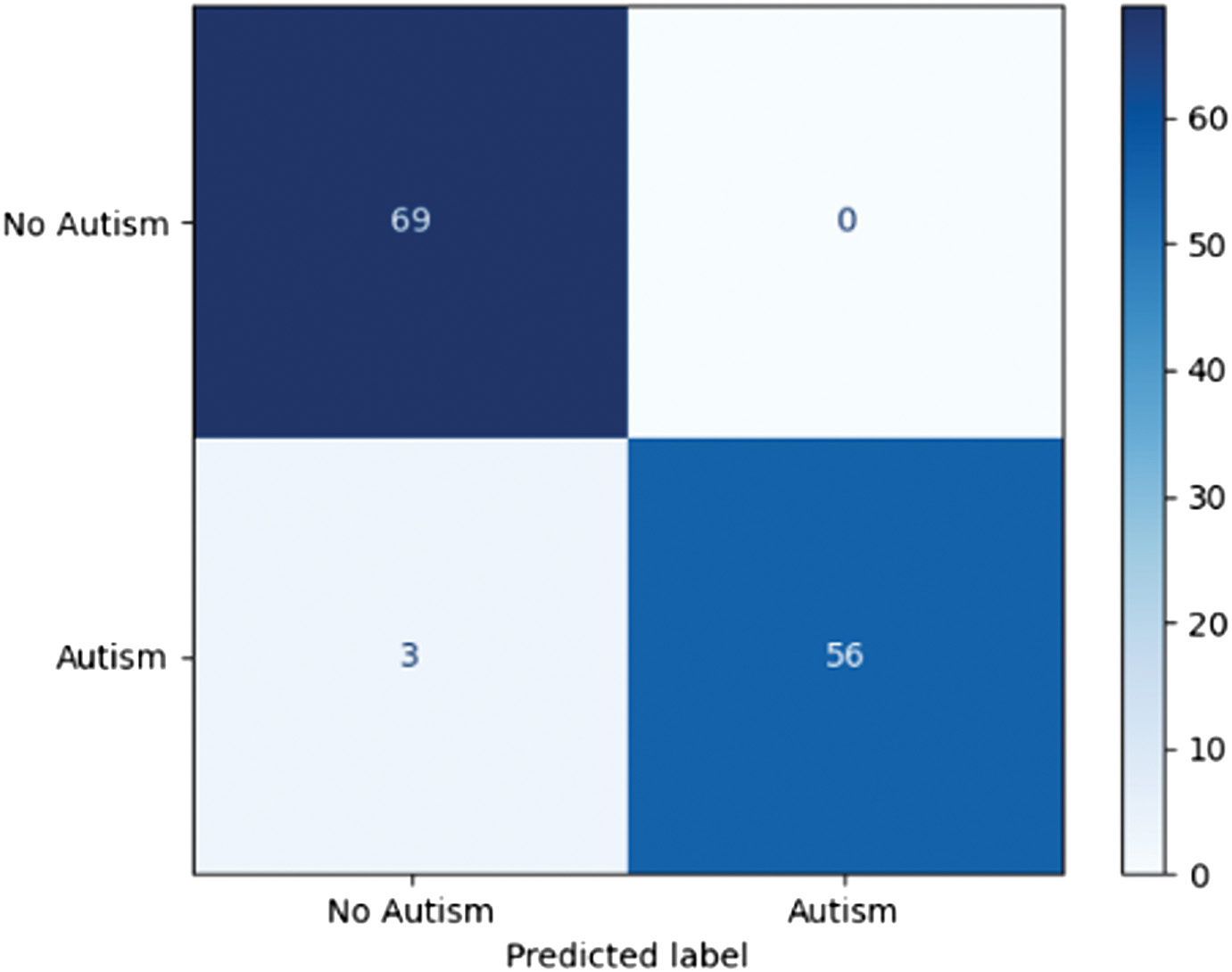 Fig. 6. Confusion matrix of the proposed.
Specifically, out of 128 validation images, only 3 were misclassified, corresponding to a 1.03% error rate. The receiver operating characteristic (ROC) curve evaluates the classification performance of the proposed CNN model. It distinguishes individuals with ASD from non-ASD controls.
The ROC curve depicts the sensitivity against the false positive rate (1 – mainly) between different decision thresholds, providing a comprehensive view of the model’s discriminative ability. The ROC is shown in Fig. 7.
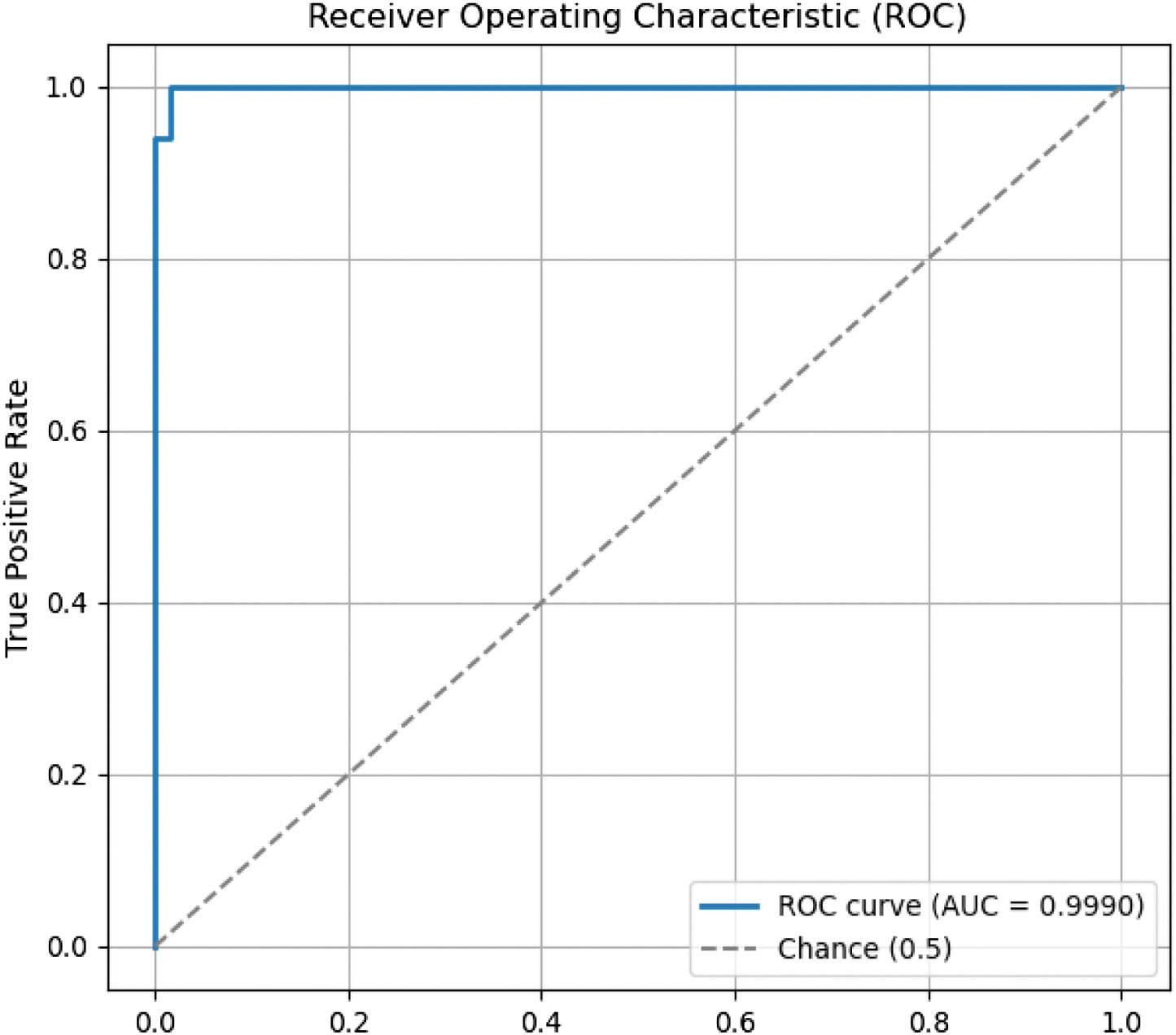 Fig. 7. ROC curve of the CNN model for ASD detection (AUC = 0.9990).
The Matthews Correlation Coefficient (MCC) was included to deliver a robust and balanced assessment of classification performance, incorporating all four outcomes of the confusion matrix. Using the confusion matrix in Fig. 6, the proposed CNN achieved an MCC that is very close to 1.0, which is consistent with the high accuracy, precision, recall, and F1-score reported in Table III. The high MCC value indicates a strong positive correlation between the predicted and true labels. Further, it proves that the classifier performs well on both ASD and non-ASD classes without being biased.
C.STATISTICAL ANALYSIS
Nonparametric statistical tests were conducted to evaluate whether the proposed CNN, which includes a dropout layer with a rate of 0.5, differed significantly from the baseline CNN, which uses the same architecture and training configuration but without the dropout layer, across 10 independent experimental runs.
The Mann–Whitney U test was used to assess differences between the performance distributions of the proposed and baseline configurations. In addition, the Wilcoxon signed-rank test was used for paired comparisons, where the results obtained from the proposed and baseline configurations were matched by experimental run. The null hypothesis for each test stated that there was no statistically significant difference in performance between the two configurations.
Table IV presents the resulting p-values. A significance level of α = 0.05 was adopted. The obtained p-values ranged from 0.018 to 0.034 for the Mann–Whitney U test and from 0.0162 to 0.0187 for the Wilcoxon signed-rank test. Therefore, all reported comparisons were statistically significant at the 0.05 level. However, none of the reported p-values met the more stringent 0.01 significance level. These results indicate that the observed performance differences between the proposed CNN, and the baseline configuration is statistically significant at the 5% significance level. The variation in p-values across the evaluated metrics reflects differences in the performance distributions of the individual evaluation measures across the 10 experimental runs.
Table IV. p-Values obtained from the Mann–Whitney–Wilcoxon and Wilcoxon signed-rank tests for the proposed CNN versus a baseline configuration
| Metric | Mann–Whitney p | Wilcoxon p |
|---|---|---|
| Accuracy | 0.018 | 0.0162 |
| Precision | 0.034 | 0.0187 |
| Recall | 0.027 | 0.0179 |
| F1–score | 0.027 | 0.0162 |
D.ABLATION STUDY
An ablation study was conducted by removing or modifying individual modules and observing the results to evaluate the contribution of each component of the proposed model.
This analysis shows the effectiveness of each model component. It also provides evidence that the design choices enhance the overall performance. Table V summarizes the results of the ablation study. This section evaluates different architectural and training modifications on the autism detection model.
Table V. Ablation study results on the test dataset. Mean ± std across n = 5 independent runs
| Experiment | Accuracy | F1-score | AUC |
|---|---|---|---|
| Baseline (best model) | 0.980 ± 0.013 | 0.980 ± 0.016 | 0.996 ± 0.010 |
| no_dropout | 0.915 ± 0.023 | 0.915 ± 0.024 | 0.956 ± 0.007 |
| add_batchnorm | 0.914 ± 0.023 | 0.912 ± 0.026 | 0.969 ± 0.003 |
| remove_conv3 | 0.922 ± 0.006 | 0.921 ± 0.008 | 0.967 ± 0.006 |
| half_filters | 0.897 ± 0.012 | 0.896 ± 0.011 | 0.954 ± 0.015 |
| sgd_optimizer | 0.705 ± 0.020 | 0.705 ± 0.031 | 0.779 ± 0.026 |
| input_44 × 44 | 0.832 ± 0.058 | 0.828 ± 0.050 | 0.908 ± 0.035 |
The baseline configuration, related to the proposed best model, achieved the highest performance. The model demonstrated the effectiveness of the full model, achieving an accuracy rate of 0.980 ± 0.013, an F1-score of 0.980 ± 0.016, and an AUC of 0.996 ± 0.010. The accuracy level and the F1-score were reduced due to the removal of the no_dropout layer and the addition of add_batchnorm in comparison to the baseline. Further, the removal of the remove_conv3 negatively impacted performance, achieving slightly better accuracy and F1-score compared to removing dropout layers or adding batch normalization. Half_filters led to a drastic drop in the performance, while switching to the SGD optimizer (sgd_optimiser) caused a reduction in model effectiveness. The input resolution of 44 × 44 pixels caused a reduction in performance. This decrease emphasized the significance of spatial resolution. Therefore, it is evident that proposed architecture has the strongest performance among all the assessed metrics which were calculated through the ablation study.
E.COMPARISON WITH EXISTING STUDIES
To match the results, the model’s performance was compared with other recent studies in literature. Table VI presents a comparative analysis between the proposed CNN model and selected facial-image-based ASD detection approaches. Khan et al. [40] used DenseNet-121 on the Kaggle ASD Facial Image Dataset and achieved 96.00% for accuracy, precision, recall, and F1-score, with an AUC of 0.980. Alkahtani et al. [39] applied MobileNetV2 on the Kaggle ASD Facial Image Dataset and reported 92.00% for accuracy, precision, recall, and F1-score. Awaji et al. [41] used a VGG16-MobileNet model with a single RF classifier and achieved 95.90% accuracy, 95.90% precision, 95.70% recall, and an AUC of 0.972.
Table VI. Superior performance of the proposed ASD diagnosis system over existing methods
| Study | Image dataset | Classification method | Accuracy | Precision | Recall | F1-score | AUC |
|---|---|---|---|---|---|---|---|
| Khan et al. (2024) [ | DenseNet-121 | 96.00% | 96.00% | 96.00% | 96.00% | 0.980 | |
| Alkahtani et al. (2023) [ | Kaggle ASD Facial Image Dataset | MobileNetV2 | 92.00% | 92.00% | 92.00% | 92.00% | — |
| Awaji et al. (2023) [ | Kaggle ASD Facial Image Dataset | VGG16-MobileNet + single RF classifier | 95.90% | 95.90% | 95.70% | 0.972 | |
| Proposed model | Kaggle Autistic Facial Dataset | Custom CNN | 98.97% | 98.90% | 98.85% | 98.87% | 0.999 |
However, the proposed CNN model improved performance by achieving an accuracy rate of 98.97%, a precision rate of 98.90%, recall of 98.85%, an F1-score of 98.87%, and an AUC score of 0.999. These results emphasize the strength and the reliability of the proposed model in comparison with the existing approaches and the potential for deployment in practical autism screening applications. Comparative evaluation shows that the proposed approach achieves superior performance compared to existing methods, especially in terms of accuracy and AUC, confirming its robustness and potential for deployment in practical autism
F.DISCUSSION
The findings indicate that the proposed lightweight CNN model attained strong performance in ASD detection using facial images. As depicted in Table III, the model attained a training accuracy rate of 99.76%, a validation accuracy of 98.97%, and a test accuracy of 98.12%, including precision, recall, and F1-score. All these attained above 97%. These values indicate that the classifier can distinguish between ASD and non-ASD classes on unseen data, with a fraction of misclassified examples in the validation confusion matrix (Fig. 6). The ROC analysis proves the discriminative power of the model. Figure 7 shows that the proposed classifier achieves a value of 0.9990 on the AUC, indicating an almost flawless separability between positive and negative classes.
Practically, this means that the true positive rate remains very high even when the false positive rate is kept low, which is particularly important in screening scenarios where missed ASD cases are costly. The fact that the ROC curve stays close to the top-left corner of the plot across a wide range of thresholds confirms that the model’s performance is not limited to a single operating point. The high MCC value (close to 1.0) is calculated from the confusion matrix. It provides a stable summary of classification quality that is important to potential class imbalance. Combining the improvements reported in the nonparametric tests (all p-values well below 0.05 in Table IV) and the insights from the ablation study (Table V), these findings prove that the proposed CNN architecture is not only accurate but also stable and reliable. Table VI and Fig. 8 include a comparison between the proposed model and recent facial-image-based ASD detection methods.
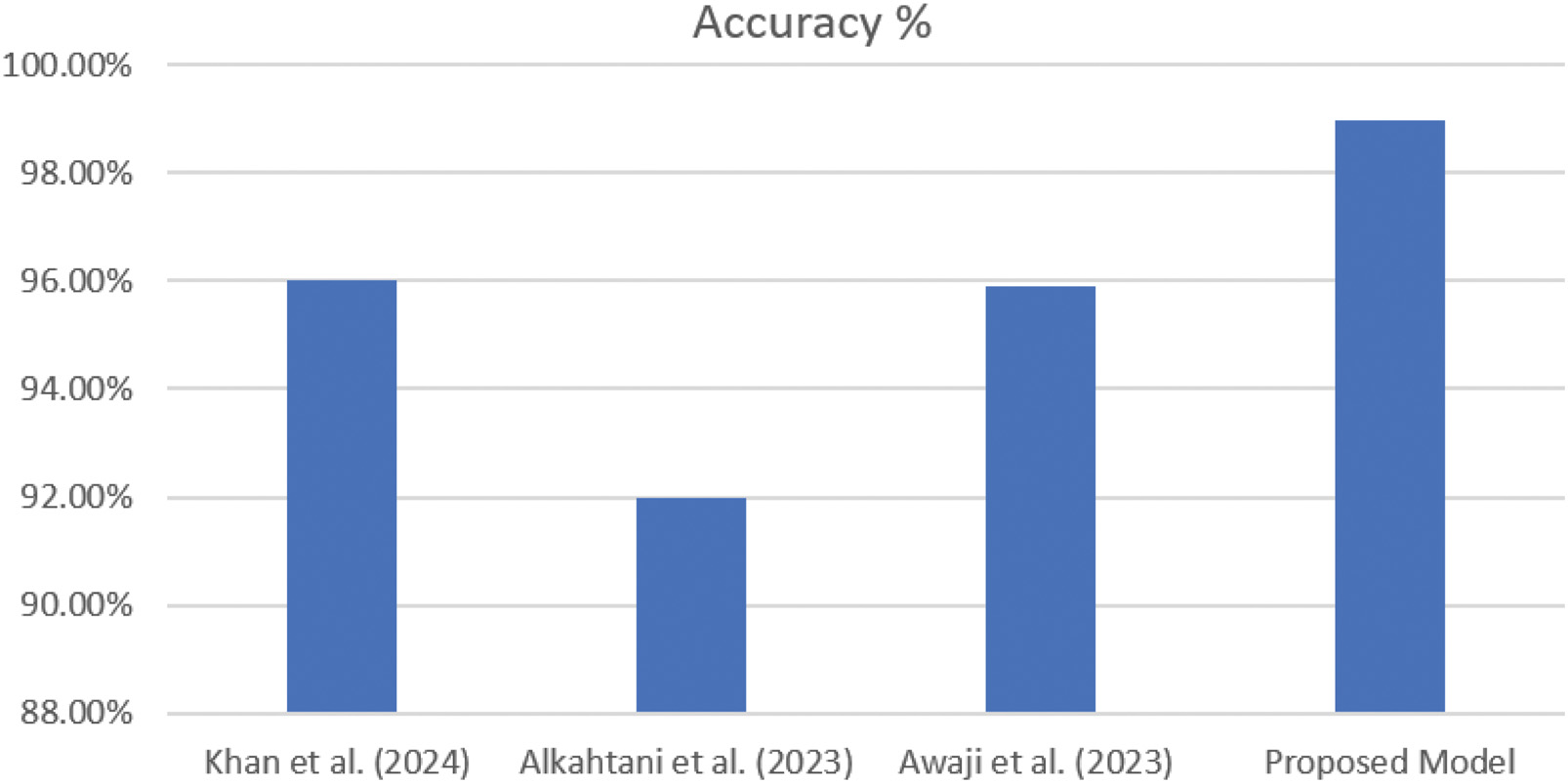 Fig. 8. Comparison of the proposed and existing systems with two recent studies.
The proposed custom CNN outperformed the listed classification methods, namely DenseNet-121, MobileNetV2, and VGG16-MobileNet with a single RF classifier, across the main evaluation metrics. This can be proven through the achieved accuracy rate, F1-score, and AUC on the Kaggle Autistic Facial Dataset. This high-level performance and the compact architecture of the proposed CNN emphasize that the method is effective and potentially more deployable in resource-constrained environments than heavier transfer learning pipelines. Overall, the results highlight the potential of the proposed model as a core component in computer-aided systems for early ASD screening in clinical and educational settings.
V.CONCLUSION
This study presented a complex neural network (CNN) model. This identified the facial images of autistic and non-autistic categories automatically. The proposed model was designed to be statistically efficient, maintaining high diagnostic accuracy. It was trained on a publicly available dataset, and the model demonstrated an improved performance, achieving an accuracy level of 98.97% and an AUC of 0.9991. It exceeded several standard models in the literature. These results proved the effectiveness of using facial features as a distinct biomarkers for ASD detection. It also enhanced the capability of DL to identify effective patterns associated with the condition. This research brought forward a simple and concise model. The model was easily deployable in the embedded systems, making it a significant step toward enabling real-time, on-device autism screening. It also increased the availability of early screening in both clinical and community settings.
This work supported the development of AI-assisted behavioral health diagnostics through a powerful, noninvasive, and screening aid that may complement, not replace, clinical assessment. The aim was to provide early diagnosis of ASD and provide improved access of AI-based tools for individuals and families. Future work will focus on the limitations and the impact of technology on health sector. The target is to stretch the dataset covering diverse demographic segments to ensure model neutrality across different ethnicities, ages, and genders. This can mitigate algorithmic bias. Furthermore, we plan to validate the model on external, multi-site datasets. The system will be deployed through an integrated, user-friendly mobile application for broader clinical and home-based use.