I.INTRODUCTION
Multiple Input Multiple Output (MIMO) technology is a revolutionary advancement in wireless communications that significantly enhances data transmission rates, reliability, and spectral efficiency. MIMO utilizes multiple antennas at both the transmitter and receiver to exploit spatial diversity and spatial multiplexing. The spatial diversity improves the robustness of signal transmission by reducing fading effects, while spatial multiplexing increases data throughput by transmitting multiple independent data streams simultaneously. Since its introduction, MIMO has become a fundamental technology in modern wireless standards, including LTE, 5G, and Wi-Fi networks, as shown in [1,2]. Nevertheless, MIMO plays a crucial role in improving wireless communication performance in several ways. First, it increases spectral efficiency by allowing multiple parallel data streams to be transmitted and received over the same frequency band. Second, it enhances signal reliability by using multiple paths to mitigate signal degradation caused by multipath fading. Third, MIMO enables higher data rates, which are essential for modern applications such as high-definition video streaming, real-time gaming, and large-scale IoT deployments. Additionally, MIMO improves network capacity by serving multiple users simultaneously using spatial multiplexing techniques like zero-forcing (ZF) and maximum ratio combining (MRC). These advantages make MIMO a key enabler of next-generation wireless networks, as shown in [3].
Despite its numerous benefits, traditional MIMO systems face several challenges. One major drawback is the increased hardware complexity due to the need for multiple antennas and radio frequency (RF) chains, as shown in [4]. Another issue is inter-channel interference, which occurs when multiple transmitted signals interfere with each other, leading to degraded performance. Previous studies, such as [5], demonstrate that. Furthermore, as the number of antennas increases, the computational complexity of signal processing algorithms also grows, making real-time communication more challenging. These limitations paved the way for the development of massive MIMO (M-MIMO) technology. M-MIMO was introduced as an evolution of traditional MIMO to address these challenges by employing a large-scale antenna array at the base station (BS). By utilizing hundreds or even thousands of antennas, M-MIMO significantly improves spectral efficiency, coverage, and energy efficiency, as shown in [6]. This large-scale antenna system enhances spatial diversity and multiplexing, allowing networks to support a much higher number of users simultaneously while reducing power consumption. M-MIMO resolves several key limitations of conventional MIMO. First, the large number of antennas enables beamforming, which focuses the transmitted signals directly toward the intended users, minimizing interference and improving signal quality. Second, channel hardening occurs in M-MIMO, where the effects of small-scale fading diminish as the number of antennas grows, resulting in a more stable and predictable communication channel. Third, M-MIMO enhances energy efficiency by reducing transmission power per antenna while maintaining strong signal reception through beamforming. These advantages make M-MIMO a critical technology for modern wireless networks, particularly in 5G and beyond.
While M-MIMO offers significant benefits, it introduces new challenges, primarily channel interference and feedback overhead. Channel state information (CSI) estimation has been widely studied in wireless communication systems [7]. Deep learning (DL)-based CSI feedback mechanisms have shown promising performance improvements [8]. As the number of antennas increases, the pilot contamination effect becomes a major issue. Pilot contamination occurs when different users in neighboring cells reuse the same pilot sequences, leading to interference in channel estimation. Additionally, the large number of antennas results in high-dimensional CSI matrices, requiring extensive feedback from the users to the BS, as shown in [9]. This CSI feedback overhead increases computational complexity, delays, and storage requirements, making real-time M-MIMO operation difficult. Moreover, one of the biggest challenges in M-MIMO systems is downlink CSI estimation, and feedback is shown in [10,11]. In conventional MIMO systems, CSI is estimated at the receiver and sent back to the BS for beamforming optimization. However, in M-MIMO, the enormous number of antennas results in high-dimensional CSI matrices, making it impractical to send complete CSI feedback due to bandwidth and latency constraints. Moreover, interference from multiple antennas and users leads to inaccurate CSI estimation, degrading the performance of M-MIMO systems as shown in [12]. This problem is exacerbated in high-mobility environments, where channel conditions change rapidly, requiring frequent CSI updates.
In recent years, machine learning (ML) approaches, particularly DL, have been proposed to tackle these challenges in M-MIMO systems, as shown in [13]. DL models have shown remarkable capabilities in capturing complex patterns, reducing feedback overhead, and improving CSI accuracy. Convolutional neural networks (CNNs), as shown in [14], autoencoders as shown in [15], and recurrent neural networks (RNNs) as shown in [16] have been widely used to compress, predict, and reconstruct CSI matrices efficiently. Moreover, reinforcement learning (RL), as shown in [17], has been integrated into M-MIMO for optimal power allocation, user scheduling, and beamforming control. These AI-driven approaches significantly enhance the adaptability and efficiency of M-MIMO networks. Hence, in this work, to address the critical challenges of channel interference and feedback overhead caused by the large number of antennas in M-MIMO, this work presents an encoding–decoding approach for channel interference mitigation and feedback reduction. The proposed model efficiently compresses high-dimensional CSI and reconstructs it with minimal loss, ensuring accurate CSI estimation with reduced overhead. To further optimize M-MIMO performance, this work introduces Deep Learning-based Channel State Estimation and Feedback Optimisation (DL-CEFO). The DL-CEFO leverages Deep Q-Network Reinforcement Learning (DQRL) to accurately estimate downlink CSI with minimal computational complexity and mitigate channel interference and CSI feedback overhead by encoding high-dimensional CSI matrices into compressed representations and decoding them at the receiver. By integrating DL techniques, DL-CEFO enables efficient CSI estimation, feedback compression, and interference mitigation, making M-MIMO systems more scalable and practical for next-generation wireless networks. The contributions of the work are as follows.
This work proposes an encoding–decoding approach for mitigating channel interference and reducing channel feedback overhead in M-MIMO systems. This work introduces DL-CEFO to enhance downlink CSI estimation accuracy. The DL-CEFO also reduces channel interference and CSI feedback overhead using the DQRL method for efficient signal processing by compressing high-dimensional CSI data while maintaining accuracy. This work enhances M-MIMO scalability by leveraging an AI-driven approach for efficient network performance and improves spectral and energy efficiency, making M-MIMO more practical for 5G and beyond.
The manuscript is structured as follows. Section II presents a detailed literature survey, discussing various existing works on M-MIMO that incorporate DL techniques for CSI estimation and channel optimization. Section III outlines the proposed methodology, including the encoding–decoding approach designed to mitigate channel interference and channel feedback overhead. Additionally, this section introduces the DL-CEFO approach, which provides better CSI estimation while minimizing feedback overhead and interference. Section IV presents the experimental results and performance evaluation of the DL-CEFO model, comparing it with existing state-of-the-art approaches. Finally, Section V concludes the work by summarizing the key findings, highlighting the advantages of the proposed approach, and discussing potential future research directions.
II.LITERATURE SURVEY
The literature survey presents various DL-based approaches presented for M-MIMO systems, particularly focusing on CSI estimation, feedback compression, and interference mitigation. W. Chen et al. [18], for reducing multi-user interference and maximizing spectrum efficiency in Orthogonal Frequency Division Multiplexing (OFDM) in M-MIMO, presented an approach using a one-sided DL framework. In this work, the CSI was compressed using linear projections at user equipment (UE) and was recovered at BS using DL having Plug-and-Play Priors (PPP). This work presented a novel wireless channel response, called CSI-PPP network, which exploited a DL-based denoising approach instead of using the proximal operation of the standard wireless channel response. A DL approach was trained to denoise and for CSI recovery, providing a better compression ratio. The framework provided better outcomes for different scenarios, that is, urban macro and open indoor scenarios, as presented in their experimentation results. J. Shin et al. [19] presented a finite-rate DL-based CSI feedback approach for M-MIMO, where a finite-bit representation of a latent vector on the basis of Vector-Quantised Variational-Autoencoder (VQ-VAE) was presented for minimizing computation complexities on the basis of shape-gain vector quantization. In this work, the latent-vector magnitude was quantized using a nonuniformly scalar codebook having efficient transformation functions; nevertheless, the latent-vector direction was quantized considering a trainable Grassmannian codebook. A multi-rate codebook approach was presented using a codeword choosing rule for a nested codebook by designing a loss function. Findings show that the presented approach reduced computation complexity with respect to VQ-VAE, thereby providing better CSI reconstruction efficiency for given CSI feedback overhead.
K. Wang et al. [20] presented an effective downlink CSI feedback and channel estimation method on the basis of data dual-driven DL networks and knowledge. In their work, they first presented a data-driven Residual Neural Network De-quantizer (ResNet-DQ) for preprocessing pilot signals received at the UE, where distortion and noise because of imperfect hardware were removed. A knowledge-based driven Generalised Multiple-Measurement Vector-Learned Approximate-Message-Passing (GMMV-LAMP) network was then presented for jointly estimating channels through the exploitation of approximated similar physical angles between various subcarriers, that is, two Wide-band Redundant-Dictionaries (WRDs) were presented for matrix measurement of GMMV-LAMP for accommodating near- and far-field beam squinting effect. Finally, an encoder at the UE side and decoder at the BS were presented, incorporating a data-driven CSI Residual Network (CSI-ResNet) for CSI matrix compression, which provided a low-dimensional quantized bit-vector for CSI feedback, which reduced channel feedback overhead. Evaluations in terms of signal-to-noise ratios (SNRs) show that the proposed approach provides better CSI feedback in comparison with existing downlink channel estimation approaches. Z. Liu et al. [21] presented an approach for CSI feedback, for which they presented a DL-based approach where a lightweight translation approach was used for coping with CSI environments. Also, this work presented a data augmentation approach on the basis of domain knowledge. This work first developed a deep-unfolding CSI feedback network called SPTM2-ISTANet+, which incorporated spherical normalization for mitigating issues of path-loss variations. Moreover, the approach integrated a trainable measuring matrix and CSI residual recovery blocks for enhancing accuracy and efficiency. Further, this work presented an adaptable CSI feedback framework called the CSI-Translation Network (CSI-TransNet), which used scenario-adaptable plug-in modules for CSI translation, comprising sparsity-aligned function and a DL compact module, which was used for reusing the pretrained model in different environments. Findings show that the approach provided better CSI feedback, considering the limited data for different CSI-unseen environments. X. Zhao et al. [22] presented a DL-based CSI compressing approach having a simple encoder–decoder architecture for M-MIMO. For achieving higher accuracy for CSI estimation, this work presented a Perceptual Encoder-Decoder approach having a Holistic Cross-Joint Convolution phase of various scales. In this work, a Perceptual Loss function was presented for improving matrix recovery accuracy and reducing computation cost. Findings show better outcomes in terms of computation complexity and accuracy when compared with standard DL-based CSI compression approaches, that is, TransNet [23] and CSINet + [24].
Y. Ma et al. [25] presented a DL-based CSI feedback method, which integrated Compressive Sensing and Learning-to-Optimise (L2O), called CSI-L2O. Recent research has also explored DL-based CSI compression and feedback mechanisms. For instance, the CsiNet framework utilizes CNNs to compress and reconstruct CSI matrices efficiently, thereby reducing feedback overhead in M-MIMO systems. Such approaches demonstrate the effectiveness of DL in capturing spatial channel correlations and improving CSI reconstruction accuracy. However, most existing methods focus primarily on compression accuracy and do not incorporate intelligent channel optimization mechanisms for interference mitigation.
In contrast, the proposed DL-CEFO framework integrates RL with CSI compression to jointly optimize channel selection and feedback efficiency. In this work, a linear-learnable projection was used at the encoder for compressing the CSI matrix, which provided better memory utilization and reduced computation complexity. Further, the decoder used two blocks, where the first block was a Learnable-Sparse Transformation Block and an Element-Wise L2O Reconstruction Block. The reconstruction block was created for learning a sparse basis for CSI inside an angular field, thereby exploring channel sparsity. Further, Long-Short Term-Memory was used for variable optimization, removing retraining cost. Findings show that the approach provided better CSI feedback. J. Park et al. [26] presented an approach for both Multi-User MIMO (MU-MIMO) and Single-User MIMO (SU-MIMO), which incorporated a DL-based approach for downlink transmission considering Time Division Duplex (TDD) instead of OFDM. For dealing with uplink transmission and overhead in SU-MIMO, a channel-adaptable pilot considering an analog CSI feedback approach. Deep neural network (DNN) pilots were generated for linearly transforming the uplink channel matrix to a low-dimensional latent vector. While the BS employed another DNN, which processed the received uplink to generate the best DL precoders. The training was an end-to-end approach that utilized training data from both DNNs. Further, for MU-MIMO, this work presents a DNN considering Theoretical Best Linear Precoding. Findings show that the approach achieved better outcomes, reducing channel feedback overhead for uplink and increasing sum rate with respect to different SNRs. M. Ahmad et al. [27] presented an M-MIMO that used Spectral-Efficient Frequency Division Multiplexing (SEFDM) incorporating a DNN for providing better channel estimation. This work used channel feedback for automatically adjusting SEFDM signal characteristics at the BS, providing better adaptability. This adaptive approach optimized SEFDM compression and modulation on a real-time basis, based on channel conditions, providing better Symbol Error Rate. Findings show that existing high modulation approaches have faced less efficiency when subcarrier compression was increased in SEFDM. Moreover, the DNN-based adaptive parameter choosing and channel estimation approach provided better outcomes in comparison with linear approaches, which have used SEFDM and OFDM in terms of spectral efficiency.
The literature survey highlights various DL-based approaches for addressing challenges in M-MIMO systems, particularly focusing on CSI estimation, feedback compression, and interference mitigation. However, these existing methods present several limitations. Many works, such as those by Chen et al. [18] and Shin et al. [19], focus on CSI compression and feedback using DL frameworks but still face challenges in optimizing interference mitigation and maintaining accuracy in dynamic environments. Similarly, approaches like Wang et al. [20] and Liu et al. [21] incorporate knowledge-driven and lightweight DL models, yet they struggle with high channel feedback overhead and suboptimal channel estimation. Zhao et al. [22], Y. Cui [23], J. Guo [24], and Ma et al. [25] attempted to enhance compression efficiency, but their methods often involve high computation complexity. Park et al. [26] and Ahmad et al. [27] introduce spectral-efficient modulation and precoding, yet their performance is limited by channel variations and hardware imperfections. To address these challenges, the proposed approach presents a DL-CEFO model, which improves downlink CSI estimation efficiency in M-MIMO using a DL framework. Additionally, an encoding–decoding approach is introduced to mitigate channel interference and reduce feedback overhead, effectively handling the challenges posed by large antenna arrays. The proposed approach provides better CSI recovery accuracy, enhancing spectral efficiency, and reduces computational overhead, outperforming existing methods in M-MIMO systems. The complete methodology discussing the encoding–decoding approach and DL-CEFO is discussed in detail in the next section.
A.COMPARISON OF RELATED CSI FEEDBACK APPROACHES
To better position the proposed DL-CEFO framework with respect to existing CSI estimation and feedback methods, a comparative analysis of representative approaches is presented in Table I.
Table I. Comparison of related CSI feedback approaches
| Reference | System setting | CSI representation | Method | Feedback reduction | Optimization objective |
|---|---|---|---|---|---|
| CsiNet | Massive MIMO | CSI Matrix | CNN Compression | Yes | CSI Reconstruction |
| DeepCMC | Massive MIMO | CSI Tensor | Deep Compression | Yes | Reconstruction Accuracy |
| CSI-L2O | Massive MIMO | CSI Matrix | Learned Optimization | Partial | NMSE Reduction |
| RL-based scheduling | Wireless Networks | Channel Metrics | Reinforcement Learning | No | Resource Allocation |
| Massive MIMO | Compressed CSI | Encoder + DQN RL | Joint CSI Compression and Channel Optimisation |
Following the comparison presented in Table I, it can be observed that most existing works focus either on CSI compression accuracy or channel optimization separately. In contrast, the proposed DL-CEFO framework integrates encoder–decoder-based CSI compression with RL-driven channel optimization, enabling both feedback overhead reduction and communication performance improvement.
III.METHODOLOGY
M-MIMO technology has emerged as a key enabler for 5th Generation (5G) and 6th Generation (6G) wireless communication systems, as it improves data rates, reliability, and spectral efficiency. Nevertheless, a major issue in M-MIMO is achieving accurate downlink CSI while minimizing channel feedback overhead and reducing channel interference. Due to the large number of antennas present at M-MIMO BSs, the process of CSI estimation and feedback requires significant resources, which leads to increased communication overhead and complexity. Hence, to solve the mentioned problems, this work presents a well-defined M-MIMO system architecture as presented in Fig. 1, which utilizes a novel encoding–decoding approach with the DQRL method. The encoding–decoding approach is presented for channel interference mitigation and for channel overhead reduction. Further, this work presents a DL approach called the DL-CEFO approach, which aims to further mitigate channel interference and channel feedback overhead and estimate downlink CSI efficiency in M-MIMO.
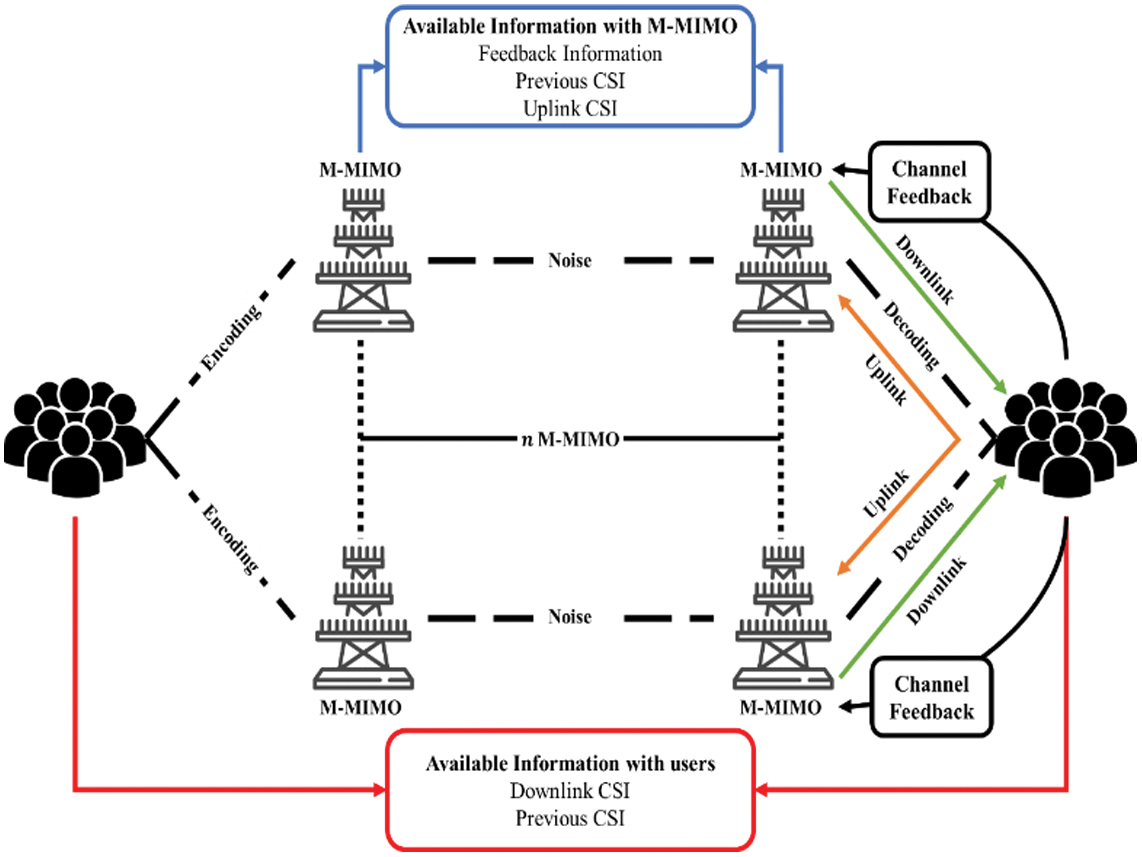 Fig. 1. M-MIMO network architecture used for modeling DL-CEFO.
A.END-TO-END PIPELINE OF THE PROPOSED DL-CEFO FRAMEWORK
To provide a clear understanding of the proposed framework, the overall data flow of the DL-CEFO approach is described as an end-to-end pipeline. The objective of the proposed method is to improve downlink CSI estimation accuracy while minimizing channel interference and CSI feedback overhead in M-MIMO systems.
The proposed system operates through multiple sequential stages, which are summarized as follows:
- •Step 1: Channel State Information Acquisition: Initially, the MU-MIMO BS collects uplink and downlink CSI from multiple UEs. The CSI matrix represents the wireless propagation characteristics between the BS antennas and the users across OFDM subcarriers.
- •Step 2: Low-Rank CSI Approximation: Due to the high dimensionality of CSI in M-MIMO systems, a low-rank approximation is applied using singular value decomposition (SVD). This step extracts the dominant channel components while eliminating redundant information. The CSI matrix is decomposed as: where , , and represent the singular vector matrices and the singular value matrix. Only the dominant singular values are retained to obtain a compressed representation of the CSI.
- •Step 3: Encoder-Based CSI Compression: The compressed CSI matrix is further processed using an encoder module that transforms the CSI into a lower-dimensional latent representation. This encoder reduces CSI feedback overhead by transmitting only essential channel features from the UE to the BS.
- •Step 4: Reinforcement Learning-Based Channel Optimisation: The encoded CSI information is then used by the Deep Q-Network (DQN) agent to perform intelligent channel optimization. The RL agent analyzes channel quality indicators such as SINR and received signal strength indicator (RSSI) to select the optimal channel configuration that minimizes interference and maximizes communication throughput.
- •Step 5: Decoder-Based CSI Reconstruction: At the receiver side, a decoder reconstructs the CSI matrix from the compressed latent representation. This reconstruction ensures that the essential channel characteristics are preserved while maintaining a reduced feedback overhead.
- •Step 6: Communication Performance Optimisation: Using the reconstructed CSI and optimized channel configuration, the system performs downlink transmission with improved beamforming and interference mitigation. The final system performance is evaluated using normalized mean squared error (NMSE), sum rate, and bit error rate (BER).
This end-to-end framework integrates CSI compression and RL-based channel optimization to improve the reliability and efficiency of M-MIMO communication systems.
The architecture of the M-MIMO system used for modeling DL-CEFO is presented in Fig. 1, which is designed for optimizing CSI estimation while reducing feedback overhead and interference. In the presented M-MIMO, the system comprises multiple M-MIMO BSs and UEs, where an encoding and decoding approach is used as presented in Section III.C for providing efficient CSI transmission. The M-MIMO BSs usually have the channel feedback information, previous CSI, and uplink CSI, which helps in optimizing downlink signal transmission. During the transmission from UEs to M-MIMO BSs and from M-MIMO BSs to M-MIMO BSs, noise is usually introduced in the channel during signal transmission, because of hardware or nearby equipment, affecting the received signal quality. For addressing the following issue, the proposed system employs encoding at the transmitter side to compress and transmit CSI efficiently. The UEs receive downlink CSI along with previous CSI for estimating the downlink using the channel feedback. Further, the decoding approach at M-MIMO BSs extracts relevant channel feedback from UEs, optimizing beamforming and reducing interference. The M-MIMO system uses DL-based channel feedback processing for enhancing CSI estimation while mitigating both channel interference and channel feedback overhead, as discussed in Section III.D. By using available downlink and uplink CSI, the presented M-MIMO system architecture ensures optimal channel usage, improving spectral efficiency and overall M-MIMO systems’ DL-based channel feedback processing for enhancing CSI estimation while mitigating both channel interference and channel feedback overhead as discussed in Section III.D. By using available downlink and uplink CSI, the presented M-MIMO system architecture ensures optimal channel usage, improving spectral efficiency and overall M-MIMO system performance.
In this work, the main aim is to estimate downlink CSI efficiency in M-MIMO while reducing channel feedback overhead and mitigating channel interference. Hence, according to the architecture presented in Fig. 1, an M-MIMO network environment deployed in a single-cell environment is considered, which consists of transmitting M-MIMO BSs equipped with antenna and SU M-MIMO for data transmission. Also, OFDM is used within subcarriers, denoted as , which enhances spectral efficiency and prevents multipath fading. From this, consider a downlink signal transmission from SU M-MIMO BSs to UEs at ^th subcarrier; hence, from this, the received downlink at UEs is represented as Eq. (1):
In Eq. (1), denotes the received downlink signal at UEs, denotes the channel vector for ^th subcarrier, denotes the Hermitian matrix operation, denotes the beamforming vector, denotes the transmitted signal, and denotes the additive noise received at UEs, and . Similar to downlink signal transmission, the uplink signal transmission from UEs to the SU M-MIMO BS, that is, the received signal at the ^th subcarrier from UEs to SU M-MIMO BS, is represented as Eq. (2):
In Eq. (2), denotes the received uplink signal by the SU M-MIMO BS, denotes the receiving beamforming vector at the SU M-MIMO BS, and . For evaluating the spatial frequency-domain characteristic, the uplink CSI matrix denoted as is represented using Eq. (3). In Eq. (3), and are spatial frequency-domain characteristics. Similarly, the downlink CSI matrix denoted as is represented as Eq. (4):
In Eq. (4), . Further, in SU M-MIMO, the channel feedback overhead poses issues because of the high-dimensional nature of CSI matrices. Considering that when the number of antennas increases, that is, multiple antennas, which can be denoted as , the CSI channel feedback increases significantly. However, by using the inherent CSI sparsity in the spatial-delay domain, the CSI channel feedback overhead can be reduced. This sparsity provides a transformation from the frequency-domain representation to the time domain using IDFT (Inverse Discrete Fourier Transform), expressed as , where is the DFT matrix. Using IDFT on , most elements in the resulting matrix approach zero, except for a few dominant components at the start rows, where . This sparsity enables compression of downlink CSI at the user by extracting significant elements using a transformed CSI matrix [28]. This approach is good only for SU M-MIMO, where there exists only a single user and fails to be effective when considering MU M-MIMO. Hence, for providing a solution for reducing channel feedback overhead and mitigating channel interference in MU M-MIMO, this work presents a novel encoding–decoding approach that incorporates a DL model, DL-CEFO, for better downlink CSI estimation.
Consider MU M-MIMO BSs, where MU M-MIMO BSs are equipped with multiple antennas, denoted as , and every antenna receives data from MU, as presented in Fig. 1. In MU M-MIMO, the data received by ^th antenna is denoted as , which can be represented as Eq. (5):
In Eq. (5), denotes the transmitted signal from ^th UEs, denotes the channel response, which affects ^th UEs signal received by ^th antenna, denotes a convolution operation, denotes noise, denotes time slots, and . Further, all the received signals at the encoder side are stored in a matrix , which has dimensions , where represents the total number of time slots . Furthermore, the stored matrix undergoes low-rank approximation using low-rank representations to reduce channel feedback overhead, ensuring a high relationship between data while storing essential channel features. The low-rank approximation process is performed using Eq. (6):
In Eq. (6), denotes a low-rank approximated CSI matrix, which consists of , a noise-free low-rank representation of , and , which denotes noise and interference components. As in MU M-MIMO, antennas are more when compared with UEs , that is, ; hence, the best low-rank approximation is evaluated, which is denoted as B^′ and achieved by evaluating Eq. (7). In Eq. (7), B^′ is the best low-rank approximation matrix or compressed matrix obtained using the SVD process [29] using Eq. (8), |(|·|) denotes the Frobenius norm, and denotes a low-rank approximation of . The main aim of B^′ is to minimize the Frobenius norm error between ^ and ; hence, from this, B^′ is evaluated using Eq. (8):
In Eq. (8), denotes the user’s left eigenvector values, denotes the user’s right eigenvector values, and denotes the conjugated matrix of the eigenvector values, where denotes the Hermitian matrix operation, and the eigenvector values are arranged diagonally. The eigenvector values are generated because of the operation of SVD. Further, using eigenvector values, the number of channel feedback bits is reduced, providing an accurate CSI representation, that is, by finding the simplest matrix that captures more important features. Further, the encoder utilizes for extracting the most relevant CSI bits for feedback, which are used for training the proposed DL-CEFO model, which is discussed in the next section in detail. After extraction, the matrix is optimized for transmission using Eq. (9):
In Eq. (9), contains only the principal components matrix, which is needed for CSI reconstruction at the user side. Using Eq. (9), the CSI matrix is reconstructed at the receiver side using Eq. (10). Moreover, during transmission, as feedback errors and noise can distort CSI data, this leads to reconstruction error . Hence, for ensuring better CSI feedback transmission, an adaptive error identification approach is included in the encoder. The adaptive error approach includes evaluating a noise-free low-rank representation of , that is, , and by adding the reconstruction error , which is mathematically represented as given in Eq. (11):
In Eq. (11), denotes identified CSI distortions because of compression loss and noise. Further, for reducing channel feedback overhead and reducing channel interference during uplink, consider ^th UEs in MU M-MIMO network, where UE is sending uplink data and the channel feedback to M-MIMO, having speed and frequency . From this, the total signal attenuation transmission cost is evaluated using Eq. (12). In Eq. (12), denotes maximum transmission power, denotes the number of antennas, and denotes a particular antenna having . Using Eq. (12), the channel interference is evaluated using Eq. (13):
In Eq. (13), denotes Received-Signal-Strength Indicator and denotes interference signal attenuation. For estimating downlink CSI efficiency, further mitigating channel interference and channel feedback overhead, the next section presents the DL-CEFO approach.
In this section, Fig. 2 shows the flow of the DL-CEFO approach for CSI estimation, channel interference, and channel feedback overhead reduction for MU M-MIMO systems. The proposed DQRL approach [30,31] comprises the encoder and decoder to perform channel feedback overhead optimization. First, the encoder compresses CSI data at MU M-MIMO BSs before transmission to reduce feedback overhead, while the feedback block quantizes and transmits CSI feedback efficiently to UEs. The decoder then reconstructs CSI at UEs, which helps in data transmission improvement and reduces errors. The DL-CEFO approach utilizes DQRL for estimating downlink CSI, optimizes channel selection for reducing channel interferences, and provides better channel feedback overhead. The DL-CEFO ensures that channel feedback is optimized, reducing both computation complexity and channel interference, while maintaining high communication reliability. The integration of DL and feedback optimization enhances overall communication efficiency by selecting the least attenuated channel on the basis of signal-to-interference-noise ratio (SINR) and RSSI values.
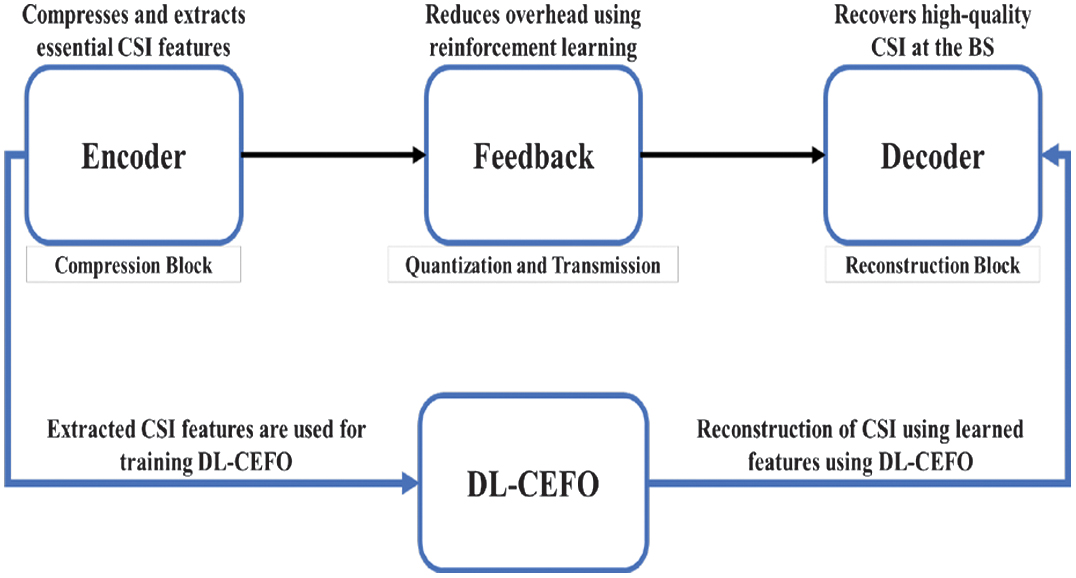
B.REINFORCEMENT LEARNING FORMULATION OF DL-CEFO
To optimize channel selection and CSI feedback in the proposed system, the DL-CEFO model incorporates a DQN RL framework. The objective of the RL agent is to learn an optimal policy that minimizes channel interference while improving CSI estimation accuracy and communication efficiency.
1).STATE REPRESENTATION
The environmental state at time is defined using channel and signal characteristics observed by the BS. The state vector includes:
- •Estimated CSI matrix
- •SINR
- •RSSI
- •Channel feedback overhead
- •Interference level from neighboring users
Thus, the state vector is defined as:
where represents the interference level and denotes CSI feedback overhead.2).ACTION SPACE
The RL agent selects an action. represents the optimal channel configuration and CSI feedback decision. The action space includes:
- •Selecting the best communication channel
- •Adjusting the CSI feedback compression level
- •Optimizing beamforming configuration
The action set is defined as:
where each action corresponds to a possible channel allocation and feedback configuration.3).REWARD FUNCTION
The reward function is designed to maximize communication efficiency while minimizing interference and feedback overhead. The reward at the time is defined as:
where- • represents the system sum rate
- • denotes bit error rate
- • represents the interference level
- • are weighting coefficients.
This formulation encourages the RL agent to select channels that improve throughput while maintaining low error rates.
4).EPISODE DEFINITION
Each RL episode corresponds to a communication frame consisting of multiple transmission intervals in the M-MIMO system. The agent observes the channel environment, selects actions, and receives rewards until the transmission cycle is completed.
5).DQN TRAINING STRATEGY
The RL model is trained using a DQN with experience replay and a target network for stable learning. The experience replay buffers stores transition tuples (S_tⓜ, A_tⓜ, R_tⓜ, S_(t+1)), which are sampled randomly during training to reduce correlation between experiences.
An ɛ-greedy exploration strategy is used to balance exploration and exploitation:
- •With probability ɛ, a random action is selected.
- •Otherwise, the action with the maximum Q-value is selected.
The target network parameters are updated periodically to tabilizes the training process.
6).TRAINING HYPERPARAMETERS
The key hyperparameters used for training the DQN model are summarized as follows:
- •Learning rate: 0.001
- •Discount factor (γ): 0.95
- •Replay buffer size: 10,000 transitions
- •Mini-batch size: 64
- •Target network update interval: 100 steps
- •Exploration rate ɛ: initialized at 1.0 and gradually decayed to 0.05.
This RL formulation enables DL-CEFO to dynamically learn optimal channel selection strategies and improve CSI estimation performance in M-MIMO systems.
The DL-CEFO approach is a DQRL-based approach that has been designed for improving downlink estimation, minimizing channel interference, and optimizing channel feedback. The DL-CEFO utilizes CNN for training using past communication experiences and for predicting optimal communication channels with minimum signal attenuation. This algorithm ensures efficient CSI estimation, interference mitigation, and reduced channel feedback overhead, leading to enhanced wireless communication performance in M-MIMO. The performance of the DL-CEFO approach is discussed in detail in the results and discussion section.
IV.RESULT AND DISCUSSION
In this section, the performance of the DL-CEFO approach is compared with the CSI-L2O method, as shown in [25]. The simulations were conducted using the NS3-based SIMITS simulator, where both DL-CEFO and CSI-L2O were implemented under similar simulation parameters as specified in [25]. These parameters included QAM-19 modulation as shown in [32,33], a carrier frequency of 28 GHz, a bandwidth of 100 MHz, a cell radius of 400 m, and an M-MIMO BS transmission power of 46 dBm as shown in [34–36]. The simulations were performed over 20 iterations, varying the number of nodes between 25 and 50. The average performance for 20 iterations was considered and was evaluated in terms of NMSE, sum rate, and BER reduction with respect to SINR.
This section presents the results of NMSE achieved by the DL-CEFO and CSI-L2O approach, as presented in Fig. 3. The results indicate that the DL-CEFO approach significantly improves CSI estimation accuracy compared to CSI-L2O, as demonstrated by the lower NMSE values across all SINR levels. The percentage improvement ranges from approximately 15.37% at −6 dB SINR to 28.53% at 6 dB SINR, highlighting the efficiency of DL-CEFO in minimizing estimation errors. As SINR increases, both models show a decreasing NMSE trend, but DL-CEFO consistently outperforms CSI-L2O. This improvement is attributed to DL-CEFO’s DQRL-based optimization, which enhances CSI estimation by selecting optimal signal attenuation levels and minimizing interference. The DL-CEFO achieved a better average NMSE of 26.31% in comparison with the CSI-L2O approach.
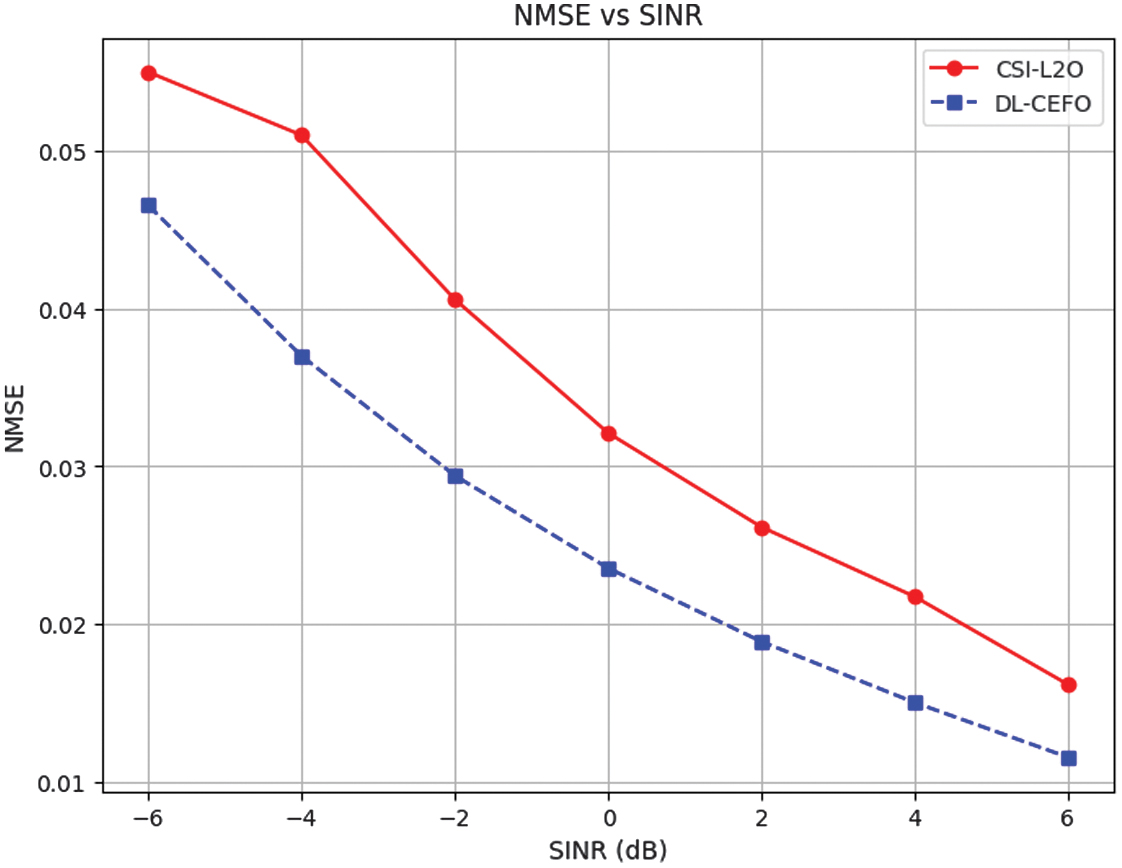 Fig. 3. NMSE for CSI estimation accuracy.
A.PERFORMANCE IMPROVEMENT CALCULATION
To ensure a consistent evaluation of the proposed method, the percentage improvement of DL-CEFO over the baseline CSI-L2O method is calculated using the following formula:
where represents the performance of the proposed model and represents the performance of the CSI-L2O approach. The average improvement values reported in this study are obtained by averaging the results across all SINR levels.B.SIMULATION SETUP
The performance of the proposed DL-CEFO framework was evaluated using the NS-3-based SIMITS wireless network simulator. The simulation environment was designed to model an M-MIMO communication system operating in a single-cell scenario.
The BS was equipped with 64 antennas, serving multiple UEs simultaneously using a MU-MIMO configuration. The number of active users in the network varied between 25 and 50 UEs, representing different traffic densities within the cell.
The system operates under a Time Division Duplex (TDD) communication mode, which allows the BS to estimate downlink CSI from uplink pilots due to channel reciprocity.
The wireless channel was modeled using a Rayleigh fading channel model, which captures the multipath propagation characteristics commonly observed in urban wireless environments. The CSI matrix is represented as:
where represents the number of receiver antennas and represents the number of transmit antennas.For training the RL model, a dataset consisting of 10,000 CSI samples was generated using the simulated channel environment. The dataset was divided into 80% training data and 20% testing data.
To ensure statistical reliability, all experiments were repeated across multiple simulation seeds, and the reported performance metrics represent the average results obtained across these simulation runs.
The system performance was evaluated using NMSE, sum rate, and BER across different SINR levels.
C.BASELINE METHODS FOR COMPARISON
To evaluate the effectiveness of the proposed DL-CEFO framework, several baseline approaches commonly used in CSI estimation and feedback research are considered.
- •Least Squares (LS) EstimationThe LS estimator represents a classical CSI estimation technique that directly estimates the channel coefficients from pilot signals without exploiting prior statistical information.
- •Linear Minimum Mean Square Error (LMMSE) EstimationThe LMMSE estimator improves upon LS by incorporating channel statistics to minimize the mean squared estimation error.
- •CSI-L2O FrameworkThe CSI-L2O method represents an optimization-based learning approach designed to improve CSI reconstruction accuracy through learned optimization strategies.
These baseline approaches provide representative comparisons across classical estimation methods and learning-based CSI feedback frameworks (Table II).
Table II. The simulations were conducted using the following system parameters
| Parameter | Value |
|---|---|
| Carrier frequency | 28 GHz |
| Bandwidth | 100 MHz |
| Cell radius | 400 m |
| BS antennas | 64 |
| Number of UEs | 25–50 |
| Duplex mode | TDD |
| Modulation | 16-QAM |
| Transmission power | 46 dBm |
This section presents the results of the sum rate achieved by the DL-CEFO and CSI-L2O approach, as presented in Fig. 4. The sum-rate evaluation results demonstrate that the DL-CEFO approach achieves a significantly higher sum rate compared to the CSI-L2O model across all SINR levels. The percentage improvement ranges from approximately 31.43% at −6 dB SINR to 28.44% at 6 dB SINR, with the highest enhancement observed at 0 dB SINR (32.52%). This indicates that DL-CEFO efficiently optimizes channel selection and interference mitigation, leading to improved spectral efficiency. As SINR increases, both models exhibit a rise in sum rate, but DL-CEFO consistently maintains a higher performance advantage. The substantial increase in sum rate highlights DL-CEFO’s effectiveness in enhancing data transmission efficiency by leveraging DQRL-based optimization. These findings show that the proposed approach outperforms CSI-L2O in maximizing throughput, making it a more reliable solution for managing channel resources in M-MIMO networks. Also, the DL-CEFO achieved a better average sum rate of 26.31% in comparison with the CSI-L2O approach.
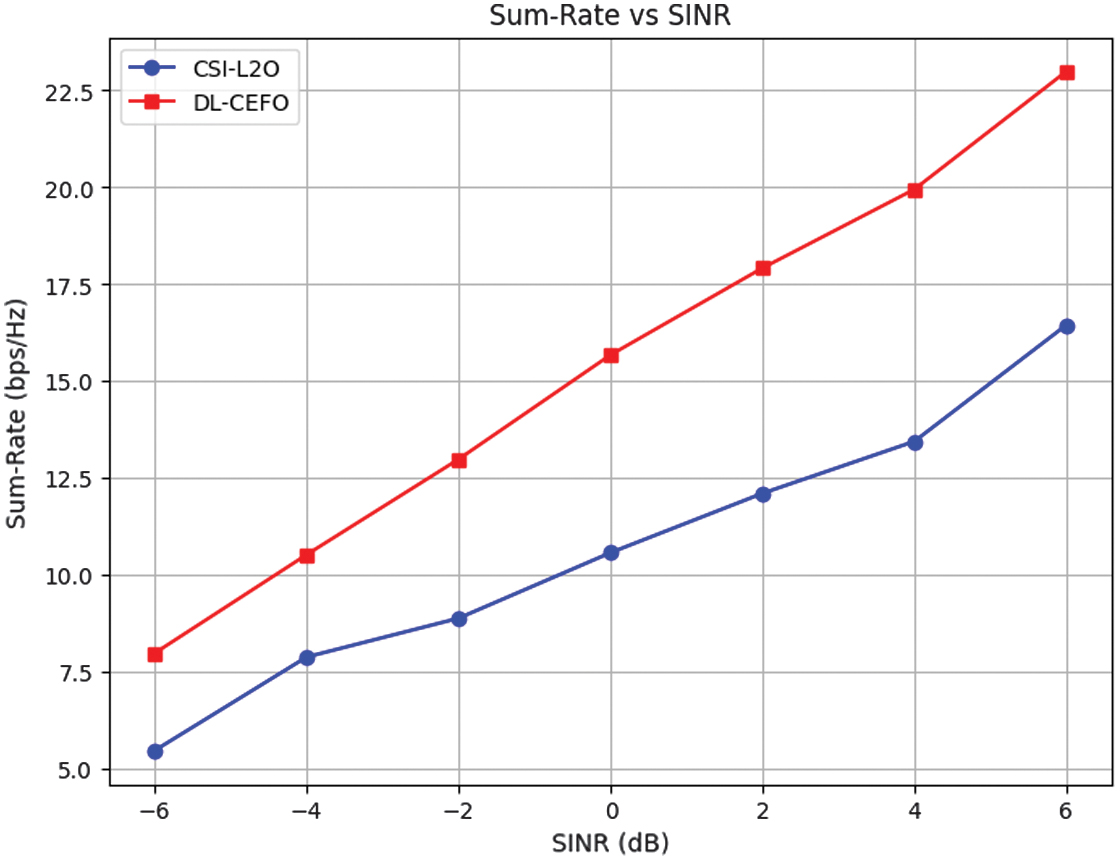 Fig. 4. Sum-rate performance evaluation.
This section presents the results of the BER performance achieved by DL-CEFO and the CSI-L2O approach as presented in Fig. 5. The BER vs. SINR results demonstrate that the DL-CEFO approach significantly reduces BERs compared to the CSI-L2O model, effectively minimizing channel feedback overhead. At lower SINR values, such as −6 dB, the reduction is marginal (6.15%), but as SINR improves, DL-CEFO achieves substantial improvements. Notably, at −4 dB and 6 dB, DL-CEFO reduces BER by approximately 98.86% and 98.13%, respectively. Even at moderate SINR values (0 dB to 4 dB), DL-CEFO consistently outperforms CSI-L2O, achieving reductions between 75.99% and 95.42%. These results highlight the efficiency of DL-CEFO in optimizing signal transmission and mitigating channel errors, leading to more reliable communication. The significant BER reduction ensures lower retransmissions, reduced latency, and improved spectral efficiency, making DL-CEFO a robust solution for minimizing channel feedback overhead in wireless networks. Also, the DL-CEFO reduced BER by an average of 77.29% in comparison with the CSI-L2O approach.
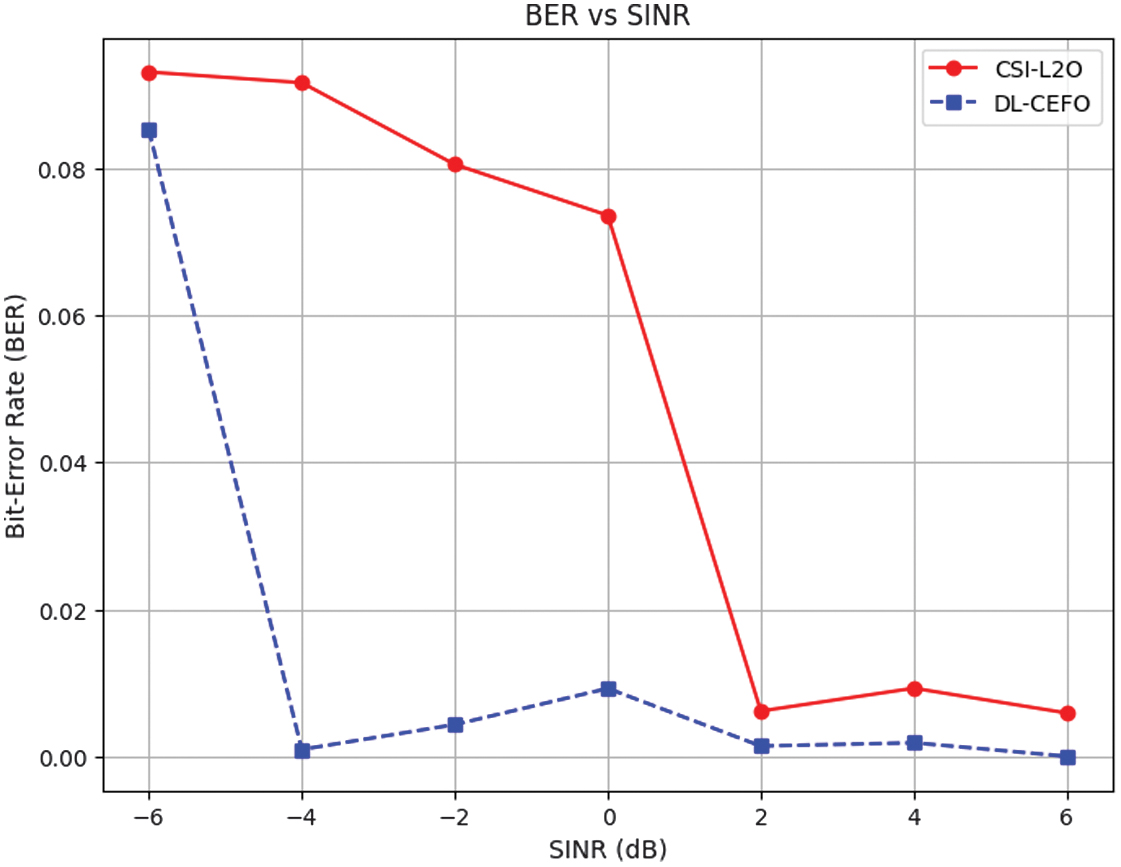 Fig. 5. BER performance evaluation for channel feedback evaluation.
The results indicate that the proposed DL-CEFO approach significantly improves CSI estimation accuracy and communication in Table III.
Table III. Baseline comparison methods
| Method | Type | Key idea |
|---|---|---|
| LS | Classical | Direct pilot-based CSI estimation |
| LMMSE | Classical | Statistical CSI estimation |
| CSI-L2O | Learning-based | Learned optimization for CSI reconstruction |
| RL-based | Joint CSI compression and channel optimization |
D.FEEDBACK OVERHEAD AND COMPUTATIONAL ANALYSIS
In addition to communication performance improvements, the proposed DL-CEFO framework aims to reduce CSI feedback overhead in M-MIMO systems. Therefore, an analysis of feedback compression efficiency and computational complexity is performed.
E.CSI COMPRESSION RATIO
The original CSI matrix contains a large number of channel coefficients due to the high number of antennas in M-MIMO systems. By applying the encoder-based compression mechanism, the CSI representation is transformed into a lower-dimensional latent vector before being transmitted as feedback.
The compression ratio is calculated as:
In the simulation environment, the original CSI representation consists of 1024 channel coefficients, while the encoded representation contains 128 coefficients, resulting in a compression ratio of 8:1 (Table IV).
Table IV. Overall performance comparison
| Metric | CSI-L2O | DL-CEFO | Improvement |
|---|---|---|---|
| NMSE | Higher error | Lower error | |
| Sum rate | Baseline throughput | Increased throughput | |
| BER | Higher error rate | Reduced error rate |
F.FEEDBACK OVERHEAD REDUCTION
Assuming 16-bit quantization per CSI coefficient, the feedback overhead is reduced from 16,384 bits for the original CSI representation to 2,048 bits for the compressed CSI representation. This significantly decreases the uplink feedback load between the UE and the BS.
G.COMPUTATIONAL COMPLEXITY
The computational complexity of the DL-CEFO framework mainly arises from three components:
| Encoder Network | O(n) |
| Decoder Network | O(n) |
| DQN Agent | O(s × a) |
where represents the CSI dimension, represents the state space size, and represents the action space size.
H.LATENCY AND MEMORY CONSIDERATIONS
The encoder module operates at the UE side with a lightweight neural network architecture, enabling efficient real-time CSI compression. The decoder and RL components operate at the BS, where higher computational resources are available. Therefore, the proposed DL-CEFO framework introduces minimal computational overhead while significantly reducing CSI feedback transmission requirements (Table V).
Table V. Feedback overhead comparison
| Method | CSI size | Feedback bits | Compression ratio |
|---|---|---|---|
| Raw CSI | 1024 | 16384 bits | 1:1 |
| CSI-L2O | 256 | 4096 bits | 4:1 |
| 128 | 2048 bits |
The results demonstrate that the proposed DL-CEFO method achieves a significant reduction in CSI feedback overhead compared with existing approaches.
V.CONCLUSION
This work proposed a DL-CEFO approach to enhance CSI estimation accuracy and reduce channel interference and channel feedback overhead mechanisms in M-MIMO networks. Traditional CSI estimation methods suffer from high estimation errors, interference, and inefficient resource utilization, which degrade overall network performance. To address these issues, the DL-CEFO is presented, which leverages DQRL for dynamically optimizing channel selection, mitigating interference, and reducing channel feedback overhead. Experimental results demonstrated that DL-CEFO significantly outperforms the existing approach, that is, CSI-L2O. Specifically, DL-CEFO achieved an average 26.31% improvement in NMSE, a 26.31% increase in sum rate, leading to improved network stability and efficiency. Additionally, DL-CEFO reduced BER by an average of 77.29%, ensuring more reliable data transmission and lower feedback overhead. These results highlight DL-CEFO’s superior ability to enhance CSI estimation, minimize interference, and maximize throughput in M-MIMO systems. For future work, the DL-CEFO approach will be extended for resource allocation in both uplink and downlink transmissions, further optimizing channel selection strategies. Also, the DL-CEFO will be optimized for further reducing channel estimation errors, thereby improving spectral efficiency and network reliability in next-generation wireless communication systems.