I.INTRODUCTION
Optimization is a crucial decision-making process in various fields, enhancing performance amid the increasing complexity of optimization challenges. Optimization is a process used to make decisions that are ideal, functional, or effective [1]. Metaheuristics (MHs) have been widely accepted in optimization because they are flexible, simple, able to handle local optima, and derivative-free [2]. Glover, in 1986, defines a metaheuristic as a senior heuristic designed to identify a heuristic that can provide a rough answer to an optimization challenge [3]. A new algorithm’s total performance may differ based on the domain of the problem for which it is used. The result can be positive or negative when searching for feasible solutions using a specific algorithmic process. An MH is not dependent on a problem and operates based on randomized inputs and outputs. The goal is to provide a practical algorithm for satisfactory and reasonable solutions.
MHs are classified based on their metaphor and their work in the search space during optimization. The metaphor MHs classifications include human (e.g., mother optimization algorithm (MOA) [4] and group learning algorithm (GLA) [5]; sports (e.g., golf optimization algorithm (GOA) [6] and quad tournament optimizer (QTO) [7]; music (e.g., method of musical composition (MMC) [8] and melody search (MS) [9]; physics-chemistry (e.g., al-biruni earth radius (BER) [10], dark-matter search optimizer (DSO) [11], and the power-aware intelligent water drops routing algorithm (PIWDRA) [12]- a routing variation of the intelligent water drops algorithm (IWD) [13]; maths (e.g., exponential distribution optimizer (EDO) [14] and subtraction-average-based optimizer (SABO); and bio MHs. The types of bio MHs include plants (e.g., lotus effect algorithm (LEA) [15] and victoria amazonica optimization (VAO) [16]; evolutionary MHs (e.g., multivariable grey prediction evolution algorithm (MGPEA) [17] and linear prediction evolution algorithm (LPE) [18]; and swarm intelligence. Also, the classes of swarm intelligence include aquatic animals (e.g., leopard seal optimization (LSO) [19] and walrus optimization algorithm (WaOA) [20]; flying animals (e.g., murmuration-flight-based dispersive optimization (MDO) [21] and new caledonian crow learning algorithm (NCCLA) [22]; micro-organisms (e.g., coronavirus metamorphosis optimization algorithm (CMOA) [23] and liver cancer algorithm (LCA) [24]; and terrestrial animals’ MHs (e.g., prairie dog optimization (PDO) [25] and american zebra optimization algorithm (AZOA) [26]. The classifications based on their operation include single vs. population-based, deterministic vs. stochastic, one vs. various neighborhood structures, local vs. global, greedy vs. iterative, memory-based vs. memoryless, static vs. dynamic objective functions, hybrid vs. non-hybrid, and parameterized vs. non-parameterized MHs [27].
Arthur Samuel proposed the term “Machine Learning” [28]. Machine learning (ML) is a sub-field of artificial intelligence and computer science that delves into how computers can mimic human learning capabilities. In ML, several algorithms are implemented to extract patterns from data sets based on optimization, mathematics, statistics, and methods for knowledge discovery. Machines are taught how to work with data effectively or make algorithms uncover patterns within the data. Over time, the algorithms enhance their learning abilities independently based on patterns discovered or knowledge extracted from the data, commonly in the form of observations and real-world interactions. These algorithms can then generalize in new environments.
The significant motivation behind hybridizing various algorithms is to leverage the complementary characteristics of different optimization strategies. A hybrid algorithm merges the prowess of two or more algorithms to tackle a challenge. The factors for hybridization in optimization include the algorithms to hybridize, the level of hybridization, the execution order and the guiding control structure [29]. Regarding the first factor, MHs can be combined with complementary MHs, problem-specific algorithms, exact methods, constraint programming, ML, and other approaches. This research focuses on MHs hybridized with ML and MHs hybridized with other MHs denoted as MH-ML and MH-MH, respectively.
A.MACHINE LEARNING (ML) ALGORITHMS
There are four main classes of ML algorithms: supervised, unsupervised, semi-supervised, and reinforcement learning. Supervised learning allows machines to be trained based on datasets with both input variables and their associated output labels known. The algorithm uncovers data patterns and then learns how the inputs and outputs are associated. New inputs are predicted based on the acquired knowledge. The algorithm corrects its predictions as it learns until it attains maximum accuracy or effectiveness [30]. The classes of supervised learning algorithms are classification, regression, and forecasting algorithms. Whereas classification algorithms aim to infer from observed values and identify the class of new observations, regression algorithms seek to enable ML technology to comprehend and then estimate the association between a group of independent variables and a dependent variable. Forecasting algorithms predict the future depending on past and present data [31]. The tasks of supervised algorithms include classification, dimension reduction, time-series prediction, and regression. Typical examples of supervised algorithms include linear regression, logistic regression, linear discriminant analysis, random forest, k-nearest neighbor, artificial neural networks, few-shot learning, naïve bayes, decision trees, and gradient boosting.
Unsupervised ML approaches are employed when there is the absence of labels or predefined output values for the training data. Without any guidance from a human operator, this strategy uncovers and describes hidden patterns in the input data. The approach improves its decision-making and performance capabilities as it manipulates several unlabeled pieces of data. Regression, classification, dimension reduction, time series, and latent variable models are the everyday tasks performed by unsupervised ML approaches [32]. Some traditional unsupervised learning algorithms include k-means clustering, shared nearest neighbor clustering, self-organizing maps, principal component analysis, and multiple correspondence analysis.
Under circumstances where only limited samples are labeled manually, but a high quantity of unlabeled samples exist, semi-supervised strategies are employed. ML strategies can learn to label the unlabeled samples if this strategy is used. The objective is to make meaning out of how grouping labeled and unlabeled samples could affect learning abilities and create strategies that leverage such a combination. Semi-supervised learning is used in tasks that involve visual object recognition or natural language processing.
In reinforcement learning (RL) algorithms, an agent is trained to learn the best actions through interactions with a complex environment and obtaining feedback from the environment. The agent employs the training experience gained to enhance its performance. The agent aims to execute jobs in several settings [9] successfully. Model-based and model-free are the two main divisions of reinforcement algorithms. Reinforcement learning algorithms include learning automata, opposition-based reinforcement learning, Monte Carlo reinforcement learning, state-action-reward-state-action and q-learning.
B.HYBRIDIZATION OF MACHINE LEARNING AND METAHEURISTICS
ML can be integrated into MHs and MHs into ML for various tasks. ML tasks such as classification, regression, clustering, rule mining and so on have been extensively improved using MHs. ML is integrated into MHs for five reasons.
- 1.Setting Parameters: Based on the nature of the MH in use, a set of parameters must be set before the commencement of the search process. The parameter values can be set or controlled using ML before or during the search process.
- 2.Cooperative behavior: Numerous MHs can be applied to solving an optimization challenge sequentially or in parallel. ML can enhance the effectiveness of these cooperative MHs by adapting their search process behavior.
- 3.Choosing an algorithm: When solving an optimization challenge using MHs, the first decision is to apply one or a group of MHs. ML strategies can estimate the effectiveness of MHs.
- 4.Evaluating fitness function: The assessment of the solutions’ fitness determines the success of any MH that yields a particular goal, and the search process is boosted by ML by approximating complex fitness functions.
- 5.Evolution of solutions: ML can choose the search operators from the initial to the final solution, generate a learnable evolution model and support neighbor generation based on knowledge acquired during the search process.
C.PROBLEM STATEMENT
Even though there is a growing interest in solving optimization challenges using MH-ML and MH-MH, there is limited knowledge about their current monthly publication growth. Also, the lead author countries promoting this area remain unknown, limiting global research collaboration. The publisher and best publisher journal’s trends are poorly understood, making it challenging to target key journals. The ML and MH techniques frequently employed in such hybridizations are unclear, leading to problems in identifying the best or dominating technique in the domain.
While prior reviews examined hybrid optimization techniques, many focused on broad algorithm classifications or domain-specific applications without detailed bibliometric mapping. For instance, Azevedo et al. [33] provided a comprehensive overview of MH-ML techniques for clustering and classification but did not analyze publication trends or geographic author distribution. Similarly, Giannopoulos et al. [34] reviewed evolutionary algorithm integrations in routing problems with ML, yet their scope remained limited to logistics and robotics. These studies, while valuable, did not distinguish MH-ML from MH-MH combinations, nor did they capture month-by-month publication activity, author-country dynamics, or cross-domain hybrid trends. This paper addresses these gaps through a bibliometric-scoping approach based on logic-based searches and PRISMA-guided screening to analyze MH-ML and MH-MH literature published from January to October 2024.
D.OBJECTIVES
- 1.To review the publications that develop new MH-ML.
- 2.To develop the trend and percentage distribution of the new MH-ML and MH-MH and describe their total percentage growth over time.
- 3.To develop the trend of single and dual lead-author countries for the new MH-ML and MH-MH.
- 4.To identify the application focus of the top nine countries of lead-author affiliation across all hybrid MHs.
- 5.To develop the trend per publisher and highest journal publications that develop new MH-ML and MH-MH.
- 6.To identify the dominant ML technique among the publications that develop the new MH-ML.
- 7.To identify the dominant MHs among the publications that develop the new MH-ML and MH-MH.
The rest of the paper is organized as follows: Section II provides the related works, Section III presents the methodology, Section IV reports the results, and Section V concludes with key findings and recommendations for future work.
II.RELATED WORK
This section reviews prior studies under three themes: broad bibliometric reviews lacking detail on hybridization and geography, domain-specific reviews with limited generalization, and methodological reviews missing bibliometric depth. These gaps motivate the current study’s focus. Table I provides a summary of related reviews on MH-ML and MH-MH.
Table I. Summary of related reviews on MH-ML and MH-MH
| Study | Year | Data source(s) | Scope of study | Methods/ tools used | Key contributions | Limitations identified |
|---|---|---|---|---|---|---|
| [ | 2024 | Scopus, IEEE, WoS | Hybrid MH-ML techniques for clustering and classification | Systematic and bibliometric review; SWOT analysis | Classified 1007 articles; algorithm strengths and weaknesses | Lacked temporal trend analysis, author-country mapping, and ML/MH dominance metrics |
| [ | 2024 | Scopus | Hybrid Metaheuristic Algorithms (HMAs) across a decade | PRISMA, VOSviewer, Tableau | Assessed citation impact, co-authorship networks, publication volume | Did not isolate MH-ML or MH-MH categories; lacked monthly/year-specific trends and dual-country analysis |
| [ | 2025 | Google Scholar, Scopus | MHs in brain tumor segmentation with deep learning | Bibliometric and systematic review | Detailed domain-specific insights into MH-DL integration | Application-specific; lacked general MH-ML trend, geography, or hybrid typology |
| [ | 2020 | Not specified | Hybrid MH for QoS-aware service composition | Systematic mapping | Classified hybridization strategies; discussed ML incorporation | Narrow application domain; no author-country, temporal, or cross-domain hybrid trend analysis |
| [ | 2025 | Not specified | Evolutionary Algorithms and ML in routing problems | Systematic review | Highlighted RL-based EA-ML integrations for logistics and robotics | Domain-limited; lacked bibliometric structure or hybridization temporal dynamics |
| [ | 2024 | Not specified | Metaheuristics with Reinforcement Learning for VRP | Systematic review of 279 papers | Classified RL-MH integration in VRP; revealed low adoption (13.2%) | No bibliometric trends; focused only on routing applications |
| [ | 2022 | Not specified | ML and optimization for last-mile logistics | Bibliometric and critical review | Identified trends in supervised/optimization-based forecasting | Domain-specific; did not examine MH-ML or MH-MH pairings or global publication patterns |
| [ | 2024 | CiteSpace, VOSviewer | ML and OA for environmental effect prediction in blasting | Bibliometric and narrative review | Evaluated ML/DL models vs empirical techniques | Focused on hazard prediction; lacked hybrid classification and general MH-ML synthesis |
| [ | 2024 | Not specified | ML/DL + OA for Intrusion Detection Systems (IDS) | Systematic review | Compared GA, PSO, ACO for IDS; hybrid performance highlighted | Application-specific; no trend analysis or bibliometric mapping |
| [ | 2023 | Not specified | ML-enhanced metaheuristics across optimization problems | Systematic review of 111 studies | Emphasized SAEAs and EDAs; performance gains across domains | No geographic trend, publication distribution, or bibliometric analysis |
| [ | 2023 | Scopus, WoS | ML-assisted local search metaheuristics | PRISMA-based systematic review (48 articles) | Identified metamodeling and ML-aided initialization as key strategies | Narrow corpus; no quantitative trend mapping or global author analysis |
| [ | 2019 | Not specified | Metaheuristics for optimizing Extreme Learning Machines (ELMs) | Review paper | Classified research into three ELM-MH optimization lines | Focused only on ELM models; lacked broader hybridization view |
A.BROAD BIBLIOMETRIC REVIEWS WITHOUT GRANULAR HYBRIDIZATION OR GEOGRAPHIC TRENDS
Azevedo et al. [33] conducted a systematic and bibliometric review of hybrid optimization and ML techniques, focusing primarily on clustering and classification. Drawing from 1,007 articles across Scopus, IEEE, and Web of Science, they performed a SWOT analysis to assess algorithmic strengths and weaknesses. However, their work lacked publication trend analysis over time, geographic authorship mapping, or identification of dominant ML/MH techniques and publishing sources. The current study addresses these omissions by employing a bibliometric-scoping approach using Google Scholar data from January to October 2024. By analyzing temporal trends, country-level contributions, and algorithmic pairings, this work extends the analytical depth beyond that of Azevedo et al.
Nassef et al. [35] presented a decade-long bibliometric analysis of hybrid metaheuristic algorithms (HMAs) based on Scopus data, emphasizing publication volume, citation impact, and author productivity. Their use of PRISMA methodology and tools like VOSviewer and Tableau supported visualizations of co-authorship networks and trend mapping. However, the study did not distinguish between MH-ML and MH-MH hybridizations, nor did it investigate within-year trends or dual-country authorship collaborations. In contrast, this paper narrows its scope to a single year while expanding analytical granularity, capturing monthly hybridization patterns, publisher dominance, and country collaborations, thereby offering a finer layer of insight.
B.DOMAIN-SPECIFIC REVIEWS LACKING GENERALIZATION ACROSS OPTIMIZATION FIELDS
Saifullah et al. [36] carried out a bibliometric and systematic review of bio-inspired MHs in brain tumor segmentation using deep learning. They analyzed 106 studies retrieved from Google Scholar and Scopus, providing a deep but domain-constrained view. Their study did not explore broader optimization contexts, algorithmic emergence patterns, or global hybridization structures. By adopting a cross-domain bibliometric-scoping approach, the current study systematically maps MH-ML and MH-MH combinations, author geography, and dominant algorithm pairings across diverse application fields, filling the generalizability gap in Saifullah et al.’s work.
Naghavipour et al. [37] mapped hybrid MHs applied to QoS-aware service composition across 71 studies from 2008 to 2020. Their work emphasized taxonomical classifications of hybridization strategies and algorithmic improvements. Although they acknowledged the role of ML, their analysis remained confined to one domain and lacked broader bibliometric depth, such as author-country mapping or algorithmic distribution. The current study addresses these limitations by examining trends in MH-ML and MH-MH proposals globally and across domains, with monthly and geographic resolution.
Giannopoulos et al. [34] reviewed the integration of evolutionary algorithms (EAs) and ML in routing problems, with emphasis on reinforcement learning (RL). Their classification of learning paradigms (e.g., Q-Learning, Deep RL) was valuable but focused narrowly on logistics, robotics, and network routing. Their study did not incorporate publication trends or geographic authorship mapping. The present study expands on this by providing a January-October 2024, globally scoped analysis of hybridization trends across multiple domains and learning paradigms.
Jaouhari and Bencheikh [38] examined hybrid metaheuristic-RL frameworks for solving the Vehicle Routing Problem (VRP). While the review proposed a useful classification model and emphasized the underuse of RL in MH optimization (only 13.2% of 279 papers), it was limited to VRP applications. The current study addresses this limitation by broadening the scope to include hybrid models across a wide range of optimization problems, identifying key algorithmic trends and regional research concentrations.
Zhou et al. [39] presented a bibliometric and narrative review of ML and optimization algorithm (OA) applications in predicting the environmental effects of blasting. Using CiteSpace and VOSviewer, they mapped publication trends but confined their analysis to flyrock, air overpressure, and fragmentation prediction. While promoting hybrid models, they did not classify MH-ML integration schemes or map research geography. Unlike their approach, this study focuses on temporal publication trends and hybridization patterns from January to October 2024.
Giuffrida et al. [40] conducted a bibliometric and critical review of optimization and ML techniques applied to last-mile logistics, focusing on supervised learning, demand forecasting, and anomaly detection. Their study clustered research into operational research-based, ML-driven, and hybrid methods but remained confined to urban logistics. It did not analyze MH-ML or MH-MH hybridizations or bibliometric patterns across domains. The current study extends this by offering a global, cross-domain analysis of hybrid optimization strategies, algorithmic pairings, and geographic trends using a bibliometric-scoping framework.
C.CYBERSECURITY AND INFRASTRUCTURE-ORIENTED REVIEWS MISSING BIBLIOMETRIC STRUCTURING
Khoulimi and Benammar [41] reviewed hybrid ML, deep learning, and optimization algorithm models in Intrusion Detection Systems (IDS). Their work compared the impact of various algorithms, genetic algorithms (GA), particle swarm optimization (PSO), and ant colony optimization (ACO), on detection accuracy. However, their analysis remained application-specific and did not cover temporal, geographic, or hybridization structure trends. By contrast, the current study contributes a broader scoping analysis across domains and includes capturing monthly trend patterns, mapping country-level authorship, and analyzing hybridization intensity.
D.METHODOLOGICAL REVIEWS LACKING BIBLIOMETRIC LAYERING
Da Costa Oliveira et al. [42] systematically reviewed 111 studies integrating ML into MH algorithms, focusing on surrogate-assisted evolutionary algorithms (SAEAs) and estimation of distribution algorithms (EDAs). Although the study highlighted optimization performance improvements, it lacked citation dynamics, bibliometric trends, and geographic insights. The present paper offers a structural complement by mapping MH-ML and MH-MH developments, analyzing algorithm usage frequency, and examining author-country distribution.
Szénási et al. [43] applied a PRISMA-based review of local search MHs enhanced by ML, analyzing 48 studies using hybrid forms such as simulated annealing and tabu search. Their findings emphasized two dominant approaches: metamodeling and ML-based initialization. However, the limited scope excluded bibliometric analysis across authorship, publisher dominance, or temporal distributions. In contrast, the current study broadens the analytical framework by incorporating monthly trends, mapping regional contributions, and identifying technique-level insights in hybrid optimization research.
Eshtay et al. [44] reviewed the use of MHs in optimizing Extreme Learning Machines (ELMs), identifying three key design strategies. Their focus was strictly on improving ELM model parameters using MHs, with no consideration of broader hybridization trends, bibliometric indicators, or cross-domain generalization. The present study complements this model-specific analysis by capturing MH-ML and MH-MH hybrid trends across domains, highlighting macro-level patterns in algorithm adoption and research collaboration.
III.METHODOLOGY
A properly planned search strategy focusing on the objectives makes a good literature review. This study adopts a bibliometric-scoping approach combining structured logic-based searches and manual classification to investigate recent MH-ML and MH-MH hybrid optimization literature. The process followed is described in the following sections.
A.LOGIC SEARCH AND IDENTIFICATION
Google Scholar is used to conduct two different searches. The keywords used for the first search relate to MH-ML, while the second concerns MH-MH. Additional materials are discovered from the citations within the chosen materials and from the materials that cited the selected studies.
1).FIRST LOGIC SEARCH
This search is centered on studies that hybridize one or more ML approaches with one or more MH techniques. The logic applied is: (Machine Learning OR Supervised Learning OR Semi-Supervised Learning OR Unsupervised Learning OR Reinforcement Learning) AND (Metaheuristic OR Nature-Inspired OR Bio-Inspired OR Global OR Local OR Swarm) AND (Hybrid OR Hybridization OR Combination OR Integration) AND (Optimization OR Optimizer OR Search) AND (Algorithm OR Technique OR Method OR Approach OR Strategy).
2).SECOND LOGIC SEARCH
This search focuses on studies that combine two or more MH techniques. The logic applied is: (Metaheuristic OR Nature-Inspired OR Bio-Inspired OR Global OR Local OR Swarm) AND (Hybrid OR Hybridization OR Combination OR Integration) AND (Optimization OR Optimizer OR Search) AND (Algorithm OR Technique OR Method OR Approach OR Strategy) AND NOT (Machine Learning OR Supervised Learning OR Semi-supervised Learning OR Unsupervised Learning OR Reinforcement Learning).
Filtering based on time and language
The search was conducted based on:
- 1.Works from January 2024 to October 2024. The January-October 2024 window is selected to focus on the most current trends in MH-ML and MH-MH research. Previous reviews covered hybrid developments from earlier years, and this study offers month-level granularity for emerging patterns that broader timelines often overlook.
- 2.Works published in English.
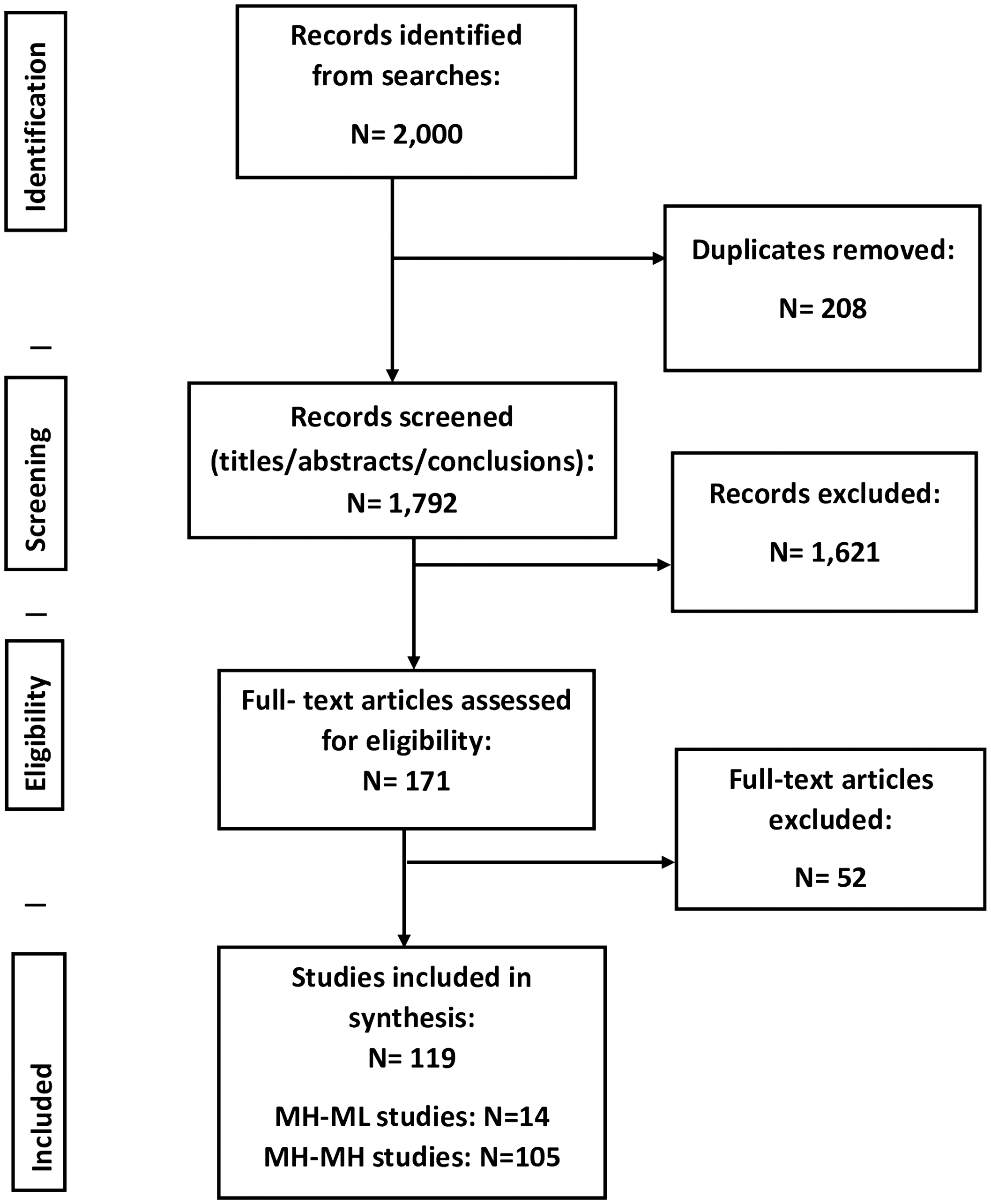
The first 10 pages are involved in every search, producing 100 outcomes for each page. Overall, about 2000 studies were captured for both searches. Manual deduplication was performed to remove 208 duplicates, leaving 1792 unique studies for screening.
B.SCREENING APPROACH
First, two independent reviewers screened the works based on their titles, abstracts, and conclusions. A third reviewer addressed contradictions.
C.EXCLUSION
A study is excluded if it met the following requirements:
- 1.Solely hybridization involving two or more ML techniques.
- 2.Research involves either purely ML or MH and is not centered on hybridization.
- 3.Studies mention hybridization but do not implement it.
- 4.Unavailability of full-text or double entry.
- 5.Theses, whiteboards, editorials and articles which are not peer-reviewed.
One thousand seven hundred ninety-two records were screened, resulting in 1621 excluded and 171 full-text articles left for eligibility checking.
D.ELIGIBILITY
The following requirements were used to determine if a full-text paper was eligible.
- 1.Explicitly implements an MH-ML or MH-MH.
- 2.Data can be extracted and verified.
- 3.Sufficient information is provided about the algorithms and the areas to which they are applied.
E.INCLUSION
At the end of the process, 14 and 105 papers were obtained regarding MH-ML and MH-MH, respectively, for inclusion in the final synthesis, totaling 119. In this study, the term ‘new’ refers to MH-ML or MH-MH that first appear in the 2024 bibliometric dataset analyzed. This definition emphasizes publication emergence rather than algorithmic invention.
Data extracted and coded include the publisher (e.g., Elsevier, IEEE), journal (e.g., Applied Soft Computing, Ad Hoc Networks), author, month, problem solved/application area (e.g., anomaly detection, intrusion detection) description, proposed technique (e.g., SSA-GWO, HYCHOPSO), MHs used (e.g., EA, DBO), ML techniques used (e.g., k-means, convolutional neural networks (CNN)), and evaluation methods used (e.g., real-world dataset, benchmark problems). Also, publications were categorized based on the lead author’s institutional affiliations. A single lead author country refers to a publication in which the lead author is affiliated with only one country, whereas dual lead author countries are those in which the lead author holds two institutional affiliations located in different countries (e.g., UAE-Egypt).
All screening, classification, and analysis were performed manually, including checking for implementation of hybridization, identifying algorithm types and application areas, and verifying whether combinations were previously documented. No automated tools or external models were used.
Figure 1 depicts the PRISMA flow for the process.
IV.RESULTS
A.RESEARCH OBJECTIVE 1
Venske et al. [45] proposed the TSin-EAin-ANN model for neural architecture search. The strategy used reinforcement learning (RL), mainly the thompson sampling (TS), to improve the effectiveness of an evolutionary algorithm (EA) for the optimization of structures for artificial neural networks (ANN). Compared with the genetic algorithm (GAinANN) and EA without reinforcement learning (EAinANN), the strategy showed remarkable performance in most instances, specifically with a few datasets.
Chen and Wang [46] proposed the Q-learning-aided slack induction by string removals (QSISRs), a Q-learning-enhanced hybrid metaheuristic for resolving the parallel drone scheduling travelling sales man problem. Q-learning was combined with the ruin-and-recreate metaheuristic for optimizing several aspects of the algorithm, solving the problem of coordinating drone and truck deliveries in urban logistics. Outcomes from numerical experimentation showed the effectiveness of Q-learning in enhancing the strategy, proving its’ effectiveness against traditional methods.
Madadi and Correia [47] proposed a hybrid framework to resolve bi-level road network design problems (NDPs). Their strategy incorporated a graph neural network (GNN), specifically, a graph isomorphism network (GIN) framework that supported genetic algorithm (GA), informing GA’s fitness function evaluations to estimate outcomes to the traffic assignment challenge. The strategy yielded outcomes within 1.5% of the optimal results in less than 0.5% of the time an exact solver needs. This application demonstrated that machine learning can boost fitness evaluations in a metaheuristic process.
Abdelaziz et al. [48] presented the hybridization of a self-organizing map (SOM), deep learning, and a genetic algorithm (GA) for energy management within public buildings. Energy consumption pattern clusters were detected using the SOM model combined with principal component analysis (PCA). GA was used in conjunction with k-means to detect clustering levels per structure. Also, convolutional neural networks (CNN) combined with GA promoted the correctness of predictions on energy consumption, reaching 94.01% accuracy on the training dataset.
Geo and Sheeja [49] proposed a Bagging-DRL-based intrusion detection framework to improve intrusion detection in WSNs within IoTs based on four steps. The last step involved a deep reinforcement learning (DRL) based intrusion detection, which integrated multi-layer perceptron (MLP), convolutional neural networks (CNN), and optimized recurrent neural networks (O-RNN) with the self-improved seagull optimization algorithm (SI-SOA). The DRL component was improved by adjusting the weight function of the RNN using SI-SOA. The proposed framework yielded elevated detection accuracy of a maximum of 0.9836 and 0.9606 on NSL-KDD and CSE-CIC-IDS2018 datasets.
D. Zhang et al. [50] presented the hybridization of improved dung beetle optimization (DBO) algorithm and deep reinforcement learning (DRL) for enhancing the effectiveness of rescue robots in disaster situations. The UAV-assisted task offloading system focused on easing the computational burden on robots caused by their size and energy limitations. UAV flight positions were optimized using the DBO algorithm, while robot offloading was enhanced using a twin delayed deep deterministic policy gradient (TD3) algorithm. The DBO enhanced the operational conditions so that the DRL could work efficiently. Compared to other methods, the approach significantly minimized the processing latency and energy consumption when implemented in simulation and real-world tests.
F. Zhang et al. [51] presented a hybrid deep reinforcement learning and memetic algorithm model for power-aware adaptive job shop scheduling with numerous autonomous guided vehicles (AGVs), resolving the incorporation of manufacturing and logistics scheduling while integrating green manufacturing metrics. The research presented an energy-efficient flexible job shop scheduling model, EFJS-AGV, that reduces makespan and total energy consumption, resolving this challenge by applying a deep Q-network-oriented mechanism. The strategy incorporated the strength pareto evolutionary algorithm (SPEA2) to improve objective space exploration. Also, the strategy used four different local search operators depending on critical paths and blocks to promote makespan reduction. The approach demonstrated superior performance when compared against five traditional algorithms, showcasing its effectiveness in resolving power-aware scheduling problems.
Qtaish et al. [52] proposed the hybridization of the capuchin search algorithm (CSA) and chameleon swarm (CS) algorithm for the enhancement of the k-means clustering approach, resolving local optima traps and initialization sensitivity issues. When a rotation strategy was applied, the proposed HCSA boosted the migration of search agents, thus promoting clustering effectiveness across several datasets. HCSA showcased remarkable performance in clustering effectiveness and performance metrics when compared against the state-of-the-art k-means algorithm and eight other metaheuristics.
Wang et al. [53] introduced a model for the integration of a diversity evolutionary algorithm (DEA) with a dynamic pointer network (DYPN), efficiently balancing optimization efficiency and accuracy. This double-layer optimization strategy addressed large-scale orienteering problems (OPs), mainly circumstances of over 50 nodes. Several features for innovative optimization operators, like a greedy population initialization heuristic and a fitness-sharing selection mechanism, were applied to promote the algorithm’s search efficiency. The proposed DEA-DYPN showcased significant performance over the traditional exact algorithms and other state-of-the-art approaches in resolving OPs.
Xiong et al. [54] employed a hybrid reinforcement learning and artificial bee colony algorithm for pretraining weights to enhance the effectiveness of a BERT-based strategy for plagiarism detection. The work resolved the issues concerning imbalanced classification by framing the detection challenge as a series of decisions in sequence, rewarding the strategy for accurately detecting minority classes. Experiment outcomes showed that the framework worked better when tested on several benchmark datasets than the traditional plagiarism detection models.
Nalini et al. [55] integrated a grid search-based multi-population particle swarm optimization (PSO) algorithm for the optimization of a regional convolutional neural network (RCNN) for anomaly detection. PSO optimized the RCNN for improved anomaly detection. The goal was to make the framework more robust to handle large-dimension data for accuracy improvement and overfitting reduction. When tested against four datasets, the strategy yielded 90% accuracy, outperforming the state-of-the-art approaches by effectively tuning parameters and filtering unnecessary data.
Saravanan et al. [56] proposed a hybrid framework by joining the binary firefly algorithm (BFA) with a machine learning (ML) fault detection solution which used naïve bayes. The BFA supported the ML for performance improvement in photovoltaic (PV) array reconfiguration. Experiment outcomes demonstrated the effectiveness of the proposed BFA-ML system over the traditional approaches, enhancing power generation by 15%.
Geetha et al. [57] hybridized a metaheuristic feature selection with neural network-oriented classification to promote security in IoT networks. The chaotic vortex search (CVS) selected optimal features, whereas the fast-learning network (FlN) was applied to classify intrusions. The framework yielded high accuracy of 99.22% and 99.92% when implemented across the CIC IDS-2017 and BoT-IoT data sets.
Gong et al. [58] presented a hybrid framework for optimizing high-dimension, challenging problems. The proposed framework, DRBM-ASRL, was a surrogate-assisted evolutionary algorithm (SAEA) boosted with dual restricted Boltzmann machines (RBMs) and reinforcement learning (RL). Four different search mechanisms were incorporated in the model, using RBMs for selecting features and RL for selecting adaptive strategies enhancing both local and global searches. DRBM-ASRL yielded superior convergence and performance compared to the other eight SAEAs based on benchmarks and real-world problems.
Table II provides a summary of the MH-ML introduced from January to October 2024.
Table II. Summary of MH-ML introduced from January to October 2024
| Citation | Techniques hybridized | Description |
|---|---|---|
| [ | TS improves the EA’s mutation strategy, which then optimizes the parameters of an ANN for solving a regression problem. | |
| [ | QL is integrated into the SISRs to select appropriate ruin strategies and to determine the degree of search process destruction. | |
| [ | GIN approximates solutions for the lower-level user equilibrium assignment problem, which GA then uses to evaluate candidate solutions in the upper-level road network design problem. | |
| [ | GA optimizes SOM for clustering data which is further refined by the k-means clustering to serve as input for the CNN for energy consumption prediction. | |
| [ | SI-SOA enhances EPCO in EPCO-SISA to extract more relevant features using C-RFE for the deep reinforcement learning model, which is the intrusion detection model. The intrusion detection model integrates MLP, CNN and O-RNN. | |
| [ | K-means clustering is employed to group mobile devices into clusters, which informs DBO to optimize improved UAV positions based on those clusters and then use TD3 to implement offloading strategies for mobile robots. | |
| [ | DQN is used in MA to improve operator selection. SPEA2 improves objective space exploration. | |
| [ | CS and a rotation mechanism enhance CSA for optimizing k-means clustering. | |
| [ | DYPN enhances DEA by learning and refining solutions. | |
| [ | BERT is used for pre-processing within ML-ABC for pretraining weights. RL uses the weights optimized by ML-ABC to handle an imbalance in the classification task. | |
| [ | GSMPSO fine-tunes RCNN parameters for improved anomaly detection. | |
| [ | BFA optimizes photovoltaic (PV) array reconfiguration as input features for naïve bayes to classify and detect faults in the PV panels. | |
| [ | CVS is used for feature selection, which is then applied in FlN for classification. | |
| [ | RBMs are used for feature learning, while reinforcement learning is for adaptive strategy selection to optimize SAEA. |
B.RESEARCH OBJECTIVE 2
Figures 2 and 3 present 14 MH-ML techniques proposed from January to October 2024. March and June recorded the highest counts of MH-ML publications (three each), indicating isolated surges in hybrid interest during the review period. Notable methods introduced during these months included DQNMA, DEA-DYPN and CVS-FlN. Two MH-ML techniques appeared in January and April, each representing 14%. May, July, August, and October each contributed one method 7%, while February and September had no representation. The monthly average was 1.4, with a standard deviation of 1.08, indicating moderate variability.
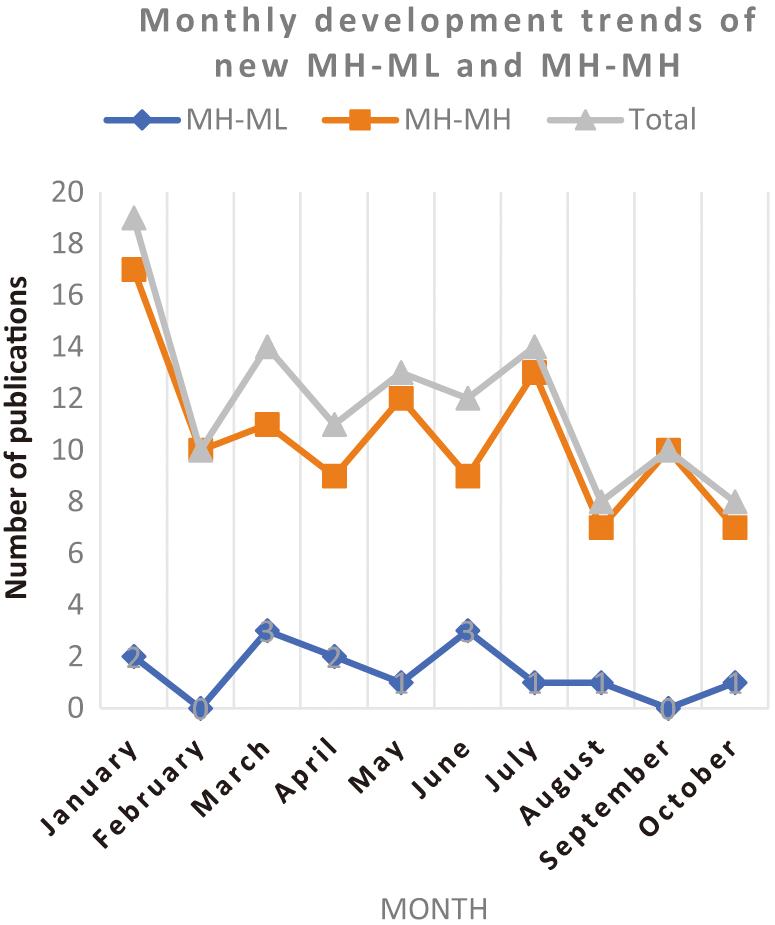 Fig. 2. Monthly development trend of new MH-ML and MH-MH.
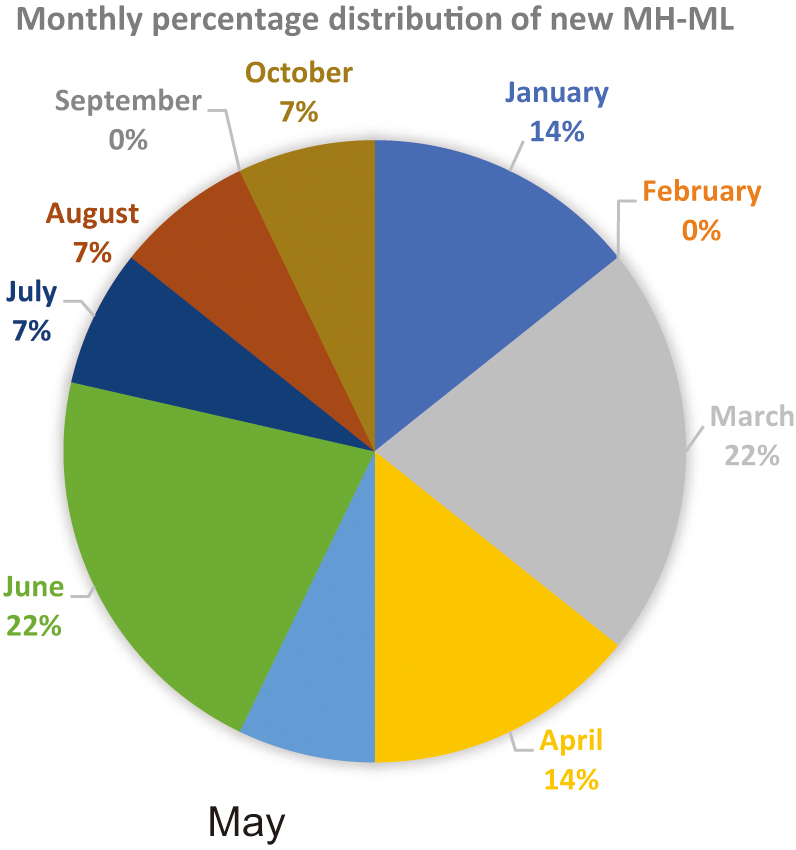 Fig. 3. Monthly percentage distribution of new MH-ML.
For MH-MH, 105 techniques were proposed between January and October 2024. Figures 2 and 4 show that January had the highest representation (16%) with 17 techniques, including the SSA-GWO, hSMA-HHO, ASCAEO, and Hybrid FFA-PSO. July followed with 12% (13 techniques); May, 11% (12 proposals); March, 10% (11 proposals); September, 10% (10 techniques); April and June, 9% (nine proposals each); and October, 7% (seven methods). The monthly average was 10.5, with a standard deviation of 2.73, indicating minimal fluctuation compared to MH-ML but with some variation overall.
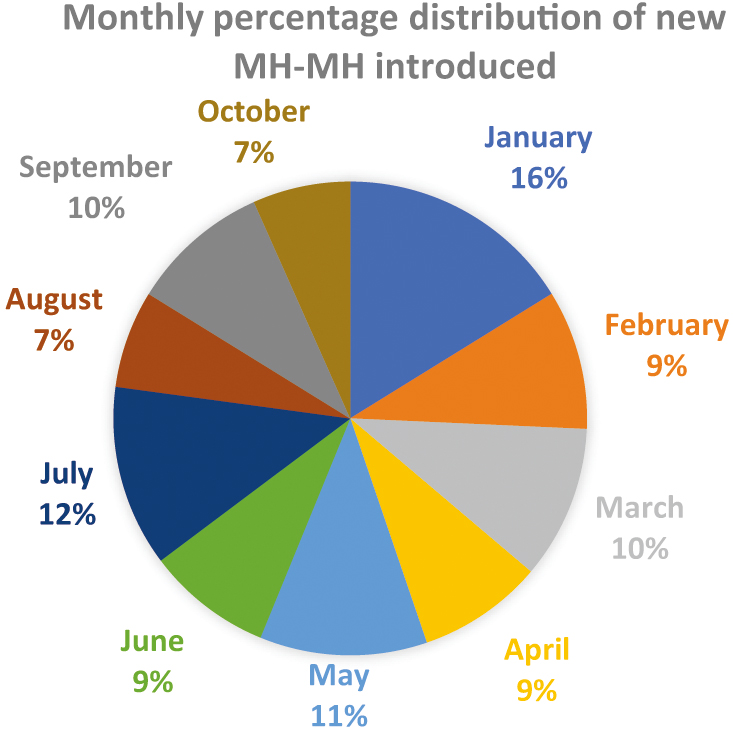 Fig. 4. Monthly percentage distribution of new MH-MH proposed.
Figure 2 summarizes the total monthly contributions for both techniques. January recorded 19, the highest, while August and October had the fewest at eight each. March, June, and July showed smaller peaks. The monthly average was 11.9, with a standard deviation of 3.36, indicating observable monthly volatility.
Table II and III presents the month-to-month percentage growth. Overall, developments were declined by 47.4% between January and February. From February to March, there was a strong recovery driven by MH-ML (over 40.0%). April recorded a 21.4% decrease, followed by a rebound of 18.2% in May. June experienced a smaller decline of 7.7%, while July showed a growth of 16.7%. August saw a major decline of 42.9%, followed by a 25% rebound in September, only to dip again by 20.0% in October. Overall, the monthly growth pattern fluctuated without any sustained upward trend despite intermittent recovery points.
Table III. Monthly percentage growth over time for total publications
| Month | Total | % Change from previous month |
|---|---|---|
| January | 19 | – |
| February | 10 | ((10 − 19)/19) × 100 ≈− |
| March | 14 | ((14 − 10)/10) × 100 = |
| April | 11 | ((11 − 14)/14) × 100 ≈− |
| May | 13 | ((13 − 11)/11) × 100 ≈ |
| June | 12 | ((12 − 13)/13) × 100 ≈− |
| July | 14 | ((14 − 12)/12) × 100 ≈ |
| August | 8 | ((8 − 14)/14) × 100 ≈ |
| Sept. | 10 | ((10 − 8)/8) × 100 = |
| October | 8 | ((8 − 10)/10) × 100 = |
C.RESEARCH OBJECTIVE 3
Figures 5 and 6 present the publication trends of lead authors from single and dual countries for MH-ML studies. Six countries were involved for single lead-author contributions. China emerged as the dominant country, contributing five studies. Saudi Arabia followed with four papers, while Brazil, the Netherlands, India, and Malaysia each produced one publication. Portugal and Egypt each had one study led by a single author.
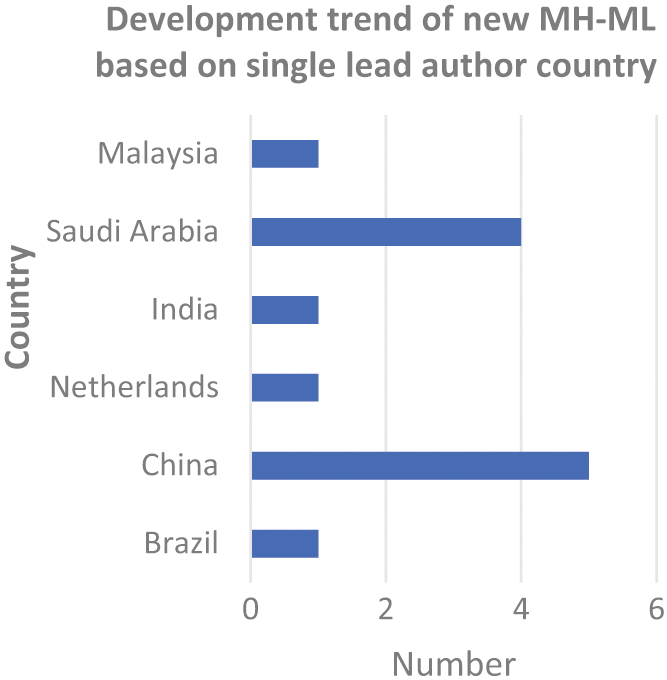 Fig. 5. Development trend of new MH-ML based on single lead author country.
 Fig. 6. Development trend of new MH-ML based on dual lead author countries.
For MH-MH studies, Fig. 7 illustrates the publication trends for single lead-author countries. Twenty-two countries were represented. India recorded the highest number with 45 publications, followed by China (15), Iran (5), and Iraq and Turkey (4 each). Pakistan, Jordan, and Egypt each had three publications, while Saudi Arabia and Algeria contributed two each. The remaining countries produced one publication each.
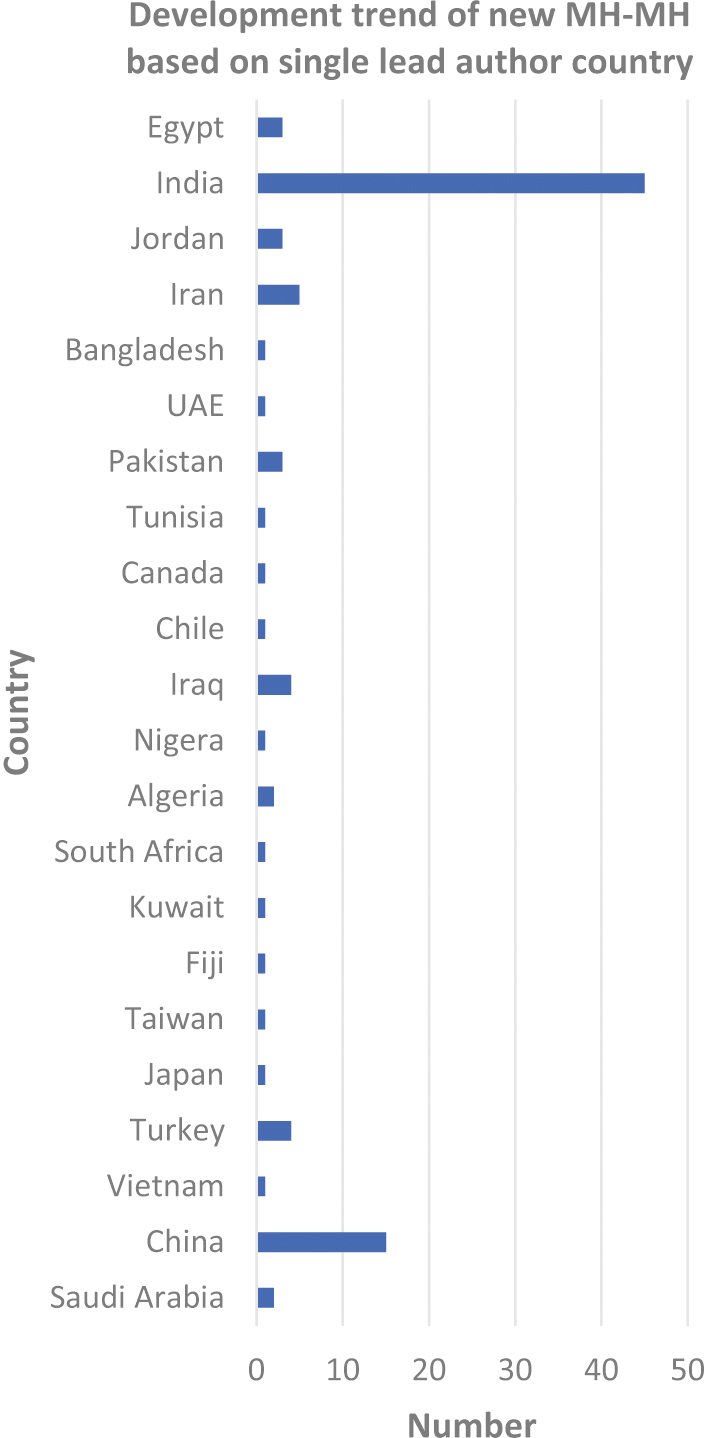 Fig. 7. Development trend of new MH-MH based on single lead author country.
For dual affiliated lead authors (Fig. 8), the UAE-Egypt pair recorded the highest with three publications. One publication each came from the following pairs: Malaysia- Nigeria, Sweden-Egypt, and India-Jordan.
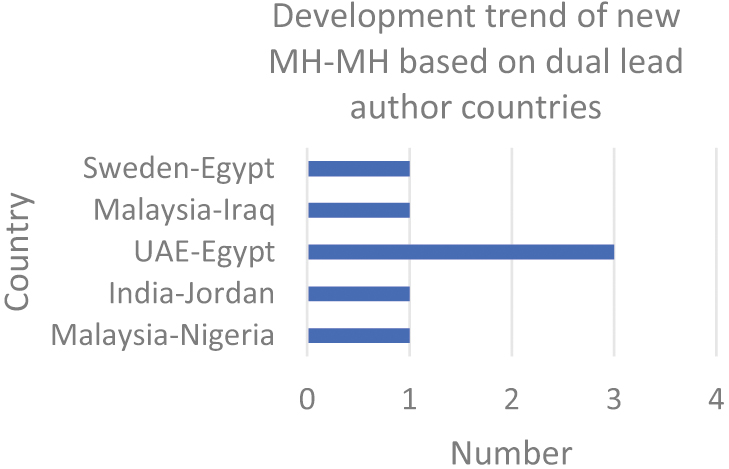 Fig. 8. Development trend of new MH-MH based on dual lead author countries.
D.RESEARCH OBJECTIVE 4
Figure 9 illustrates the application areas of hybrid MH research, focusing on the top nine lead-author countries. India led with 46 publications, primarily concentrated in energy forecasting (14), urban logistics (9), and job scheduling (7), reflecting the country’s emphasis on applied optimization research. This focus was linked to India’s digital transformation initiatives, such as Digital India and NITI Aayog’s AI Strategy, both of which promoted smart manufacturing and AI adoption [59].
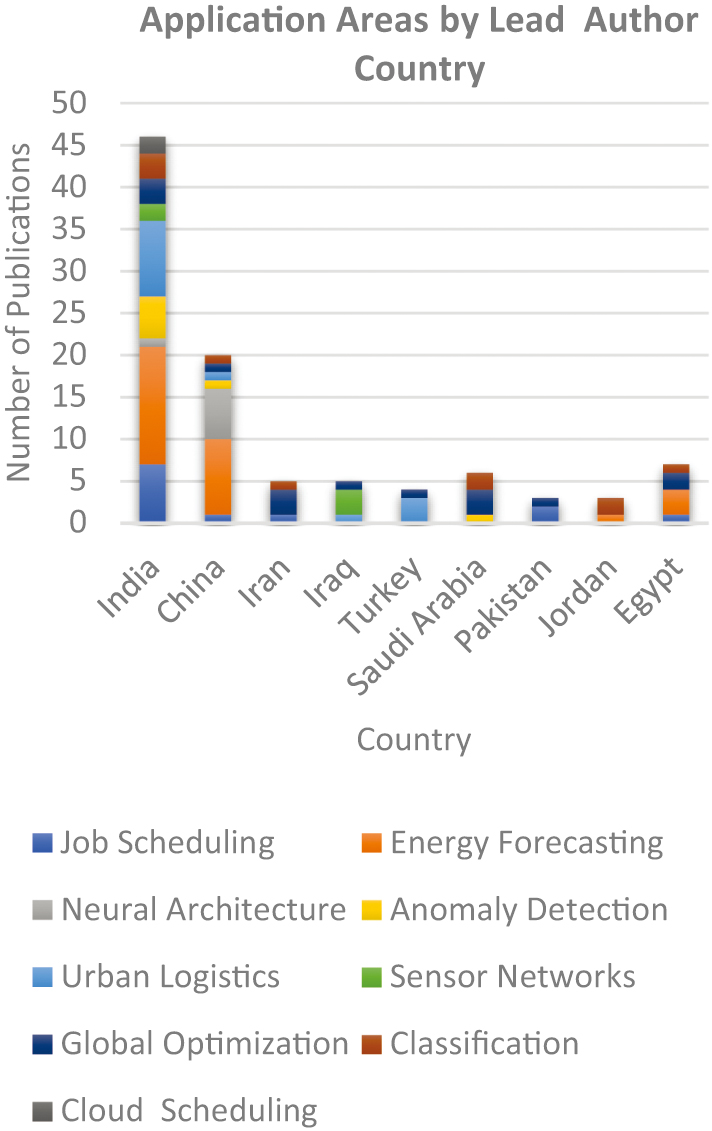 Fig. 9. Development trend by application areas across the top nine lead author countries.
China followed with 20 developments, centered on energy forecasting (9) and neural architecture (6). This focus aligned with China’s New Generation Artificial Intelligence Development Plan, which emphasized renewable energy modeling and AI-driven infrastructure [60].
Egypt contributed seven publications, mainly in energy forecasting, consistent with its growing investments in renewable energy systems and predictive energy modeling under the Sustainable Energy Strategy 2035 [61].
Saudi Arabia produced six studies emphasizing global optimization, while Iran contributed five studies, most of which focused on global optimization as well. Iraq, also with five studies, emphasized sensor networks, reflecting its efforts to rebuild digital infrastructure [62].
Turkey contributed four studies focused on urban logistics, consistent with its Smart Transportation Systems Strategy and Smart Cities Strategy, both of which promoted logistics, industrial digitalization, and intelligent transportation systems [63].
Finally, Pakistan and Jordan each produced three studies emphasizing job scheduling and classification.
E.RESEARCH OBJECTIVE 5
Figures 10 and 11 present the publication trends by publisher and leading journals for MH-ML, while Fig. 12 and 13 depict the same for MH-MH. For MH-ML, 14 publications emerged from Springer, Elsevier and IEEE. Elsevier recorded the highest count (nine), followed by Springer (four), and IEEE (one). Two Elsevier journals, Expert Systems with Applications and Computers and Industrial Engineering, produced the highest number of publications (two each).
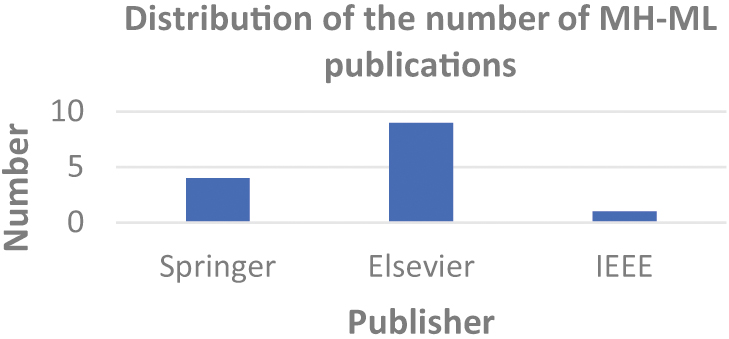 Fig. 10. Distribution of the number of MH-ML publications.
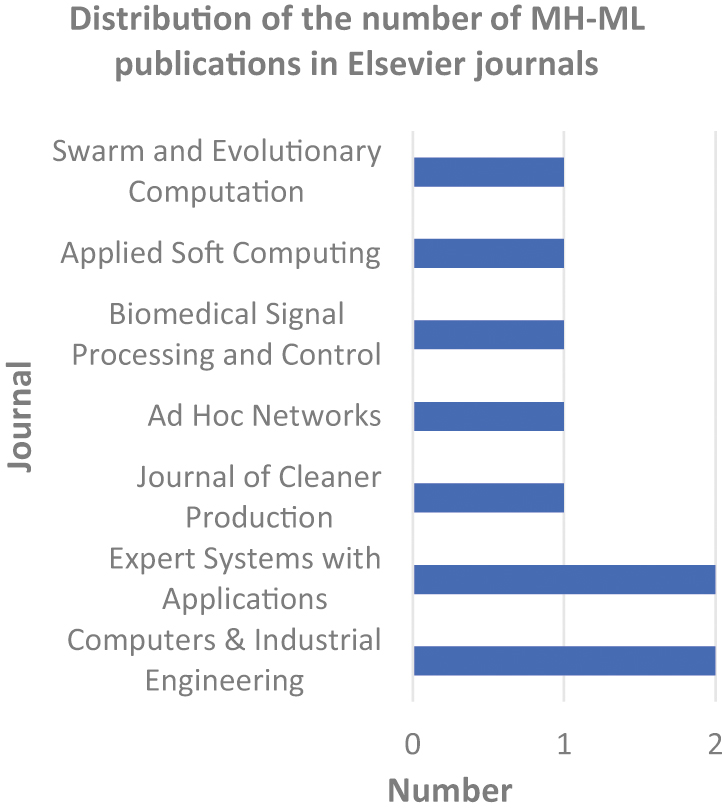 Fig. 11. Distribution of the number of MH-ML publications in Elsevier journals.
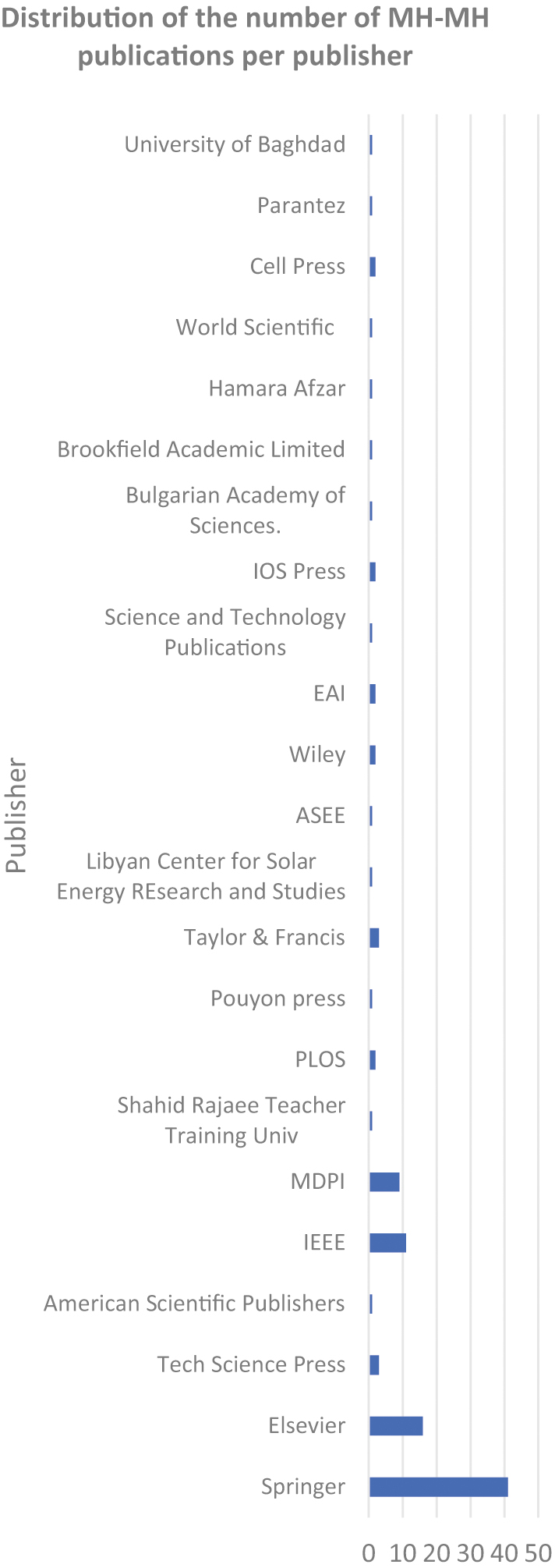 Fig. 12. Distribution of the number of MH-MH publications per publisher.
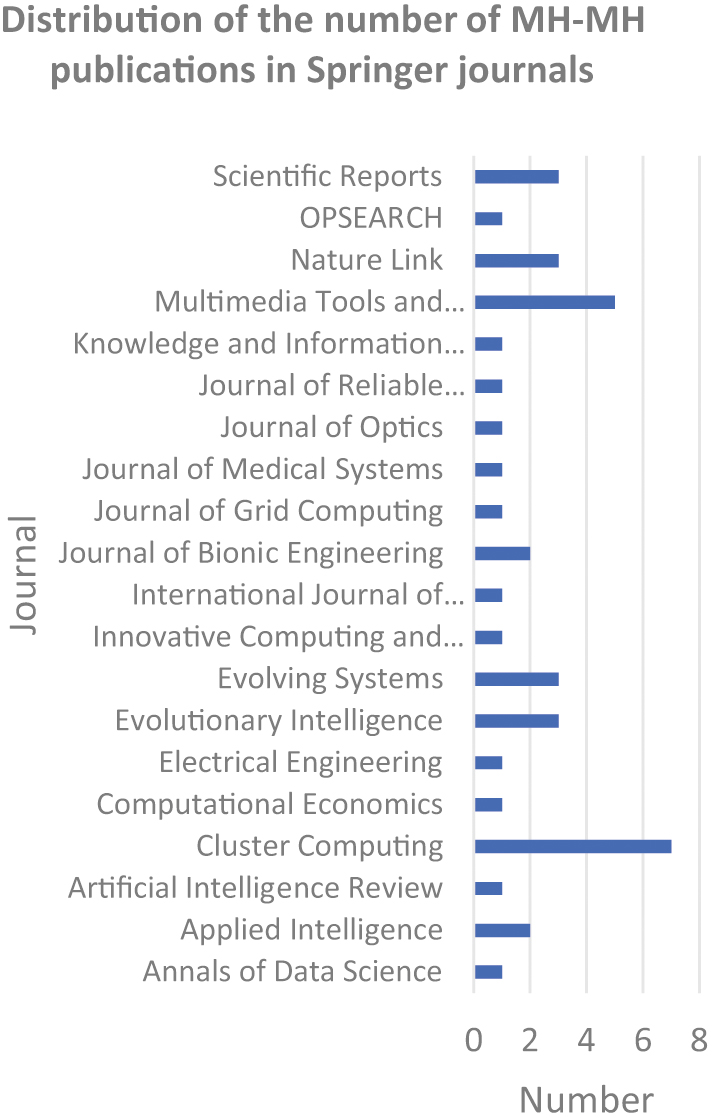 Fig. 13. Distribution of the number of MH-MH publications in Springer journals
By contrast, MH-MH involved 105 publications from 23 publishers. Springer led with 41 publications, followed by Elsevier (16), IEEE (11), and MDPI (9). Tech Science Press and Taylor & Francis contributed three each. PLOS, Wiley, EAI, Science and Technology Publications, IOS Press, and Cell Press produced two each, while the remaining publishers contributed one each. Figure 10 highlights Cluster Computing (Springer) with seven publications, the highest among all journals.
An investigation into the scopes of the top journals reveals distinct thematic preferences. For instance, Expert Systems with Applications emphasized applied intelligence across energy, health, engineering and logistics domains (Elsevier, 2024), consistent with MH-ML publications such as Madadi and Correia [47] on bi-level road network design and Xiong et al. [54] on plagiarism detection.
Similarly, Computers and Industrial Engineering focused on predictive modeling, resource scheduling, and decision support systems, aligning with the study by Chen and Wang [46], which enhanced drone coordination and truck deliveries in urban logistics, and the work of F. Zhang et al. [51], which introduced a flexible, energy-efficient job shop scheduling strategy integrating manufacturing and green logistics.
In contrast, Cluster Computing targeted theory-driven and benchmark metaheuristic research [64], aligning with MH-MH publications such as the bat-salp swarm algorithm (BASSA) [65], binary hybrid sine cosine white shark optimizer (BHSCWSO) [66], hybrid remora crayfish optimization algorithm (HRCOA) [67], PSO-WOA [68], and so on.
F.RESEARCH OBJECTIVE 6
Figure 14 shows the most dominant ML techniques in MH-ML studies. The most frequently used methods are k-means and CNN.
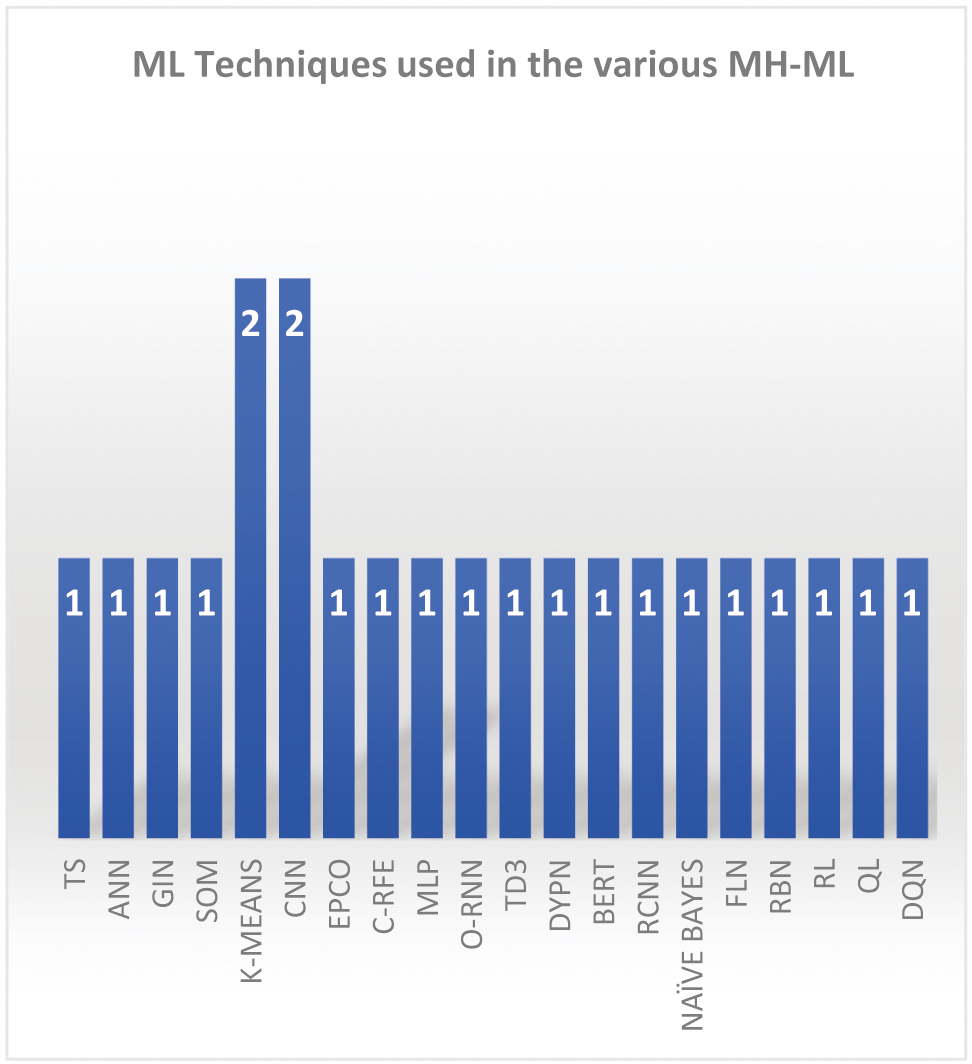 Fig. 14. ML techniques used in the various MH-ML.
For instance, Abdelaziz et al. [48] used k-means in conjunction with GA to determine clustering levels for each public building based on its energy consumption patterns. This approach enabled the identification of optimal clustering levels for the given structures, facilitating practical analysis and interpretation of the data.
Similarly, k-means was applied to group characteristics enhanced by CSA and CS in anomaly detection [52]. Its popularity in hybrid frameworks stemmed from its computational simplicity, scalability, and support for data segmentation and cluster-based learning optimizers [69].
CNN dominated in several studies, including Abdelaziz et al. [33], where it was applied with k-means, GA, and SOM for energy consumption prediction in public buildings. Furthermore, CNN was utilized in hybrid approaches addressing deep hybrid structures for wireless sensor network intrusion detection, where it was combined with O-RNN, SI-SOA, and MLP to enhance detection quality, demonstrating its capabilities in hierarchical feature learning and handling diverse data forms.
G.RESEARCH OBJECTIVE 7
Figure 15 presents the MHs used in MH-ML studies. GA was dominant, supporting faster convergence in optimization tasks. Its use was notable in studies combining GA with neural networks, such as Madadi and Correia [47], where GA was integrated with GIN to estimate traffic assignment outcomes, and in clustering methods, such as Abdelaziz et al. [48], where GA enhanced clustering and centroid detection. The widespread adoption of GA aligned with extensive documentation on its adaptability, parameter-tuning capabilities, and global search strengths [70].
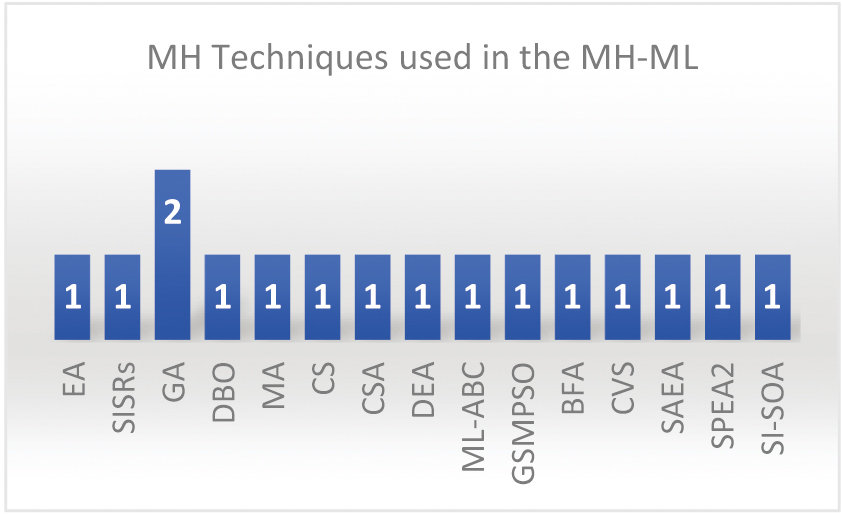 Fig. 15. MH techniques used in the MH-ML.
By contrast, PSO was most dominant in MH-MH studies, as shown in Fig. 16, appearing in nearly 20 hybrids, including the works of Choudary and Kavithamani [71], Mahesh et al. [72], Subrahmanyam et al. [73], Singla et al. [74], and Lasabi et al. [75]. PSO was frequently adopted because of its fast convergence and low-parameter sensitivity strengths [76,77]. To maintain clarity and focus, only the top 38 metaheuristics (MHs) with the highest occurrence counts were visualized in the figure.
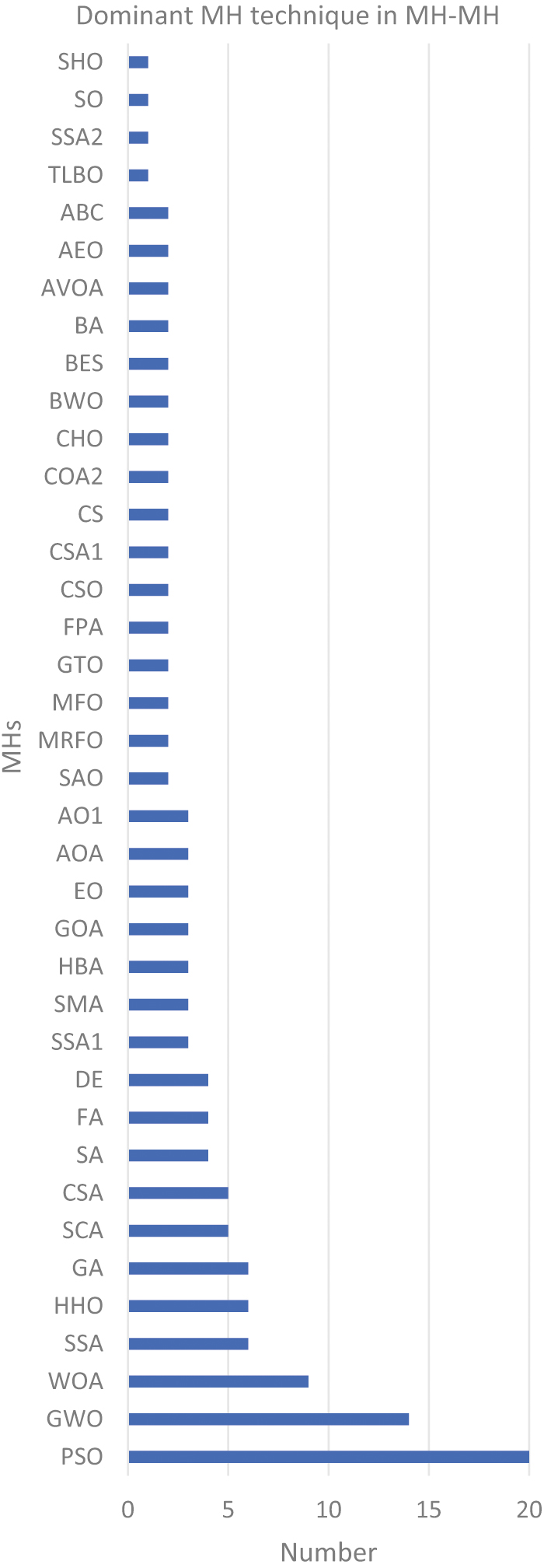 Fig. 16. Most dominant MH technique used in MH-MH.
Overall, MH-MH research demonstrated broader and more stable development patterns than MH-ML, suggesting greater maturity within the metaheuristic community.
V.CONCLUSION
This study conducted a bibliometric-scoping review of hybrid metaheuristics involving MH-ML and MH-MH published between January and October 2024. A total of 14 MH-ML and 105 MH-MH publications were analyzed. MH-MH research appeared more frequently and consistently than MH-ML, indicating greater maturity in this area.
India emerged as the global leader in MH-MH research, contributing 46 studies with a strong focus on energy forecasting, logistics, and scheduling. Lead authors with dual affiliations most commonly listed UAE and Egypt as their countries of association. Elsevier and Springer were the most active publishers for MH-ML and MH-MH studies, respectively, with Cluster Computing (Springer) publishing the highest number of MH-MH articles.
Convolutional neural networks and k-means were the most frequently used ML techniques, while genetic algorithms and particle swarm optimization were dominant among MHs. These patterns highlight the early yet growing interest in MH-ML combinations and the widespread adoption of hybrid metaheuristics globally.
The structured manual screening and classification applied in this review enabled nuanced interpretation of hybridization trends beyond what automated tools typically provide. Future research will explore learning strategies within optimization in greater depth to advance hybrid metaheuristic design and application.