I.INTRODUCTION
Artificial intelligence (AI) has emerged as a transformative force, reshaping industries by enhancing decision-making, operational efficiency, and customer engagement [1]. In particular, service-intensive industries such as tourism and hospitality are undergoing rapid change as AI applications become integrated into everyday operations [2]. Market analyses project the AI sector’s value to grow from USD 142.3 billion in 2023 to nearly USD 997.8 billion by 2030, with a compound annual growth rate of 37.3% [3]. Within this accelerated trajectory, conversational AI tools, especially advanced chatbots like Google DeepMind’s Gemini, are becoming essential to business models, altering how organizations deliver services and interact with consumers. The global chatbot market alone is expected to expand from USD 3.7 billion in 2022 to USD 11.4 billion by 2028 [4]. For tourism and hospitality—where information exchange, personalization, and trust are central—such technologies open unprecedented avenues for improving engagement and knowledge sharing.
However, despite the growing deployment of AI chatbots, prior studies in tourism and hospitality have largely focused on generic adoption models, examining constructs such as perceived usefulness (PU), perceived ease of use (PEOU), trust, or anthropomorphism in relation to traditional AI tools (e.g., Siri, Alexa, or customer-service chatbots) [5,6]. What remains unexplored is how the multimodal and adaptive functionalities of Gemini—a system that integrates text, image, and contextual reasoning—reshape user perceptions, satisfaction, and motivation to share knowledge. The novelty of Gemini lies not simply in providing responses but in anticipating needs, adapting across contexts, and combining language with visual intelligence [7]. These capabilities raise new theoretical questions that existing TAM-based studies have not yet addressed.
The Technology Acceptance Model (TAM) remains the most widely used framework for predicting technology adoption, with PU and PEOU identified as core predictors of behavioral intention [8]. In tourism research, TAM has been extended with factors such as trust, hedonic motivation, and perceived enjoyment when studying AI-driven service innovations [9]. Yet, these extensions often overlook the role of user satisfaction (US) as an outcome of PU and PEOU, and how satisfaction subsequently drives knowledge-sharing motivation (KSM)—a central function of chatbots in knowledge-intensive sectors like tourism [10]. This omission is critical, as Gemini’s design emphasizes collaborative and information-rich interactions, suggesting that KSM could be a key mediator in adoption processes.
Equally important is the cultural and geographic context. Much of the extant research has been conducted in technologically advanced regions, leaving developing economies understudied [11]. Pakistan’s tourism and hospitality industry presents a unique context: while the sector is expanding and digital adoption is accelerating, it is shaped by infrastructural constraints, varying digital literacy, and strong collectivist values [11]. These conditions may influence how PU and PEOU translate into satisfaction and behavioral intention, potentially producing outcomes distinct from those observed in Western or East Asian markets. For example, collectivist orientations may amplify the role of KSM, while infrastructural gaps could constrain PEOU [12]. This theorization underscores why contextualizing Gemini adoption in Pakistan is not only practically relevant but also theoretically significant.
At the same time, ethical and cultural concerns surrounding AI adoption demand attention. Scholars have raised alarms about over-reliance on automated systems, risks of misinformation, algorithmic bias, and privacy vulnerabilities [13]. Yet, these considerations have rarely been integrated into the problem framing of tourism AI studies. In the case of Gemini, its generative and adaptive nature could amplify both opportunities (e.g., personalized assistance, co-creation of travel itineraries) and risks (e.g., culturally inappropriate responses, diminished human creativity). Embedding ethical and cultural dimensions within the adoption framework strengthens the justification for this research, particularly in societies where norms and trust strongly shape consumer–technology interactions [14].
Taken together, the problem this study addresses can be distilled as follows: while TAM has been widely used to study AI adoption, prior research has not sufficiently examined how Gemini’s multimodal capabilities interact with PU, PEOU, and US to shape KSM and adoption intention, especially within culturally distinct contexts such as Pakistan. This gap matters theoretically because it extends TAM to account for next-generation AI functionalities and culturally contingent dynamics, and it matters practically because organizations require evidence-based strategies for deploying such technologies responsibly in tourism and hospitality.
Accordingly, this study investigates how PU, PEOU, and US affect KSM, which in turn influences the intention to use (IU) Gemini in tourism and hospitality. By explicitly theorizing KSM as a mediating construct, the study bridges the divide between generic AI adoption models and the distinctive realities of deploying advanced chatbots in emerging economies. It also responds to calls for contextualized research that captures cultural, infrastructural, and ethical complexities of AI adoption [15,18].
The significance of this research lies in both its theoretical and practical contributions. Theoretically, it advances TAM by integrating satisfaction and KSM as key mechanisms explaining adoption in AI-intensive environments. It also adds contextual richness by situating adoption in Pakistan, offering insights into how cultural norms and infrastructural conditions shape technology use. Practically, the study informs tourism and hospitality managers on how to design and implement AI-driven services that align with user expectations while addressing privacy and ethical concerns. Understanding the role of PEOU can guide the development of intuitive interfaces, while insights into KSM can help foster collaborative and interactive consumer experiences [19].
This study makes three contributions. First, it extends TAM by embedding satisfaction and KSM within the adoption model for multimodal AI systems. Second, it advances theorization by examining adoption in Pakistan’s tourism sector, offering insights into contexts often overlooked in prior research. Third, it provides actionable implications for managers seeking to leverage Gemini’s potential responsibly, balancing efficiency gains with ethical safeguards. By articulating these theoretical and practical contributions, the study sharpens its problem framing and underscores its relevance to both scholars and practitioners.
II.LITERATURE REVIEW
A.THEORETICAL BACKGROUND
The TAM, originally developed by Davis [1], provides one of the most widely used frameworks for understanding technology adoption across various domains. At its core, TAM posits that two constructs—PU and PEOU—serve as the primary determinants of behavioral intention [2]. PU reflects the degree to which individuals perceive that a technology enhances their task performance, while PEOU denotes the perceived effort involved in using the technology. In the context of this study, PU refers to the extent to which Gemini supports tourism-related decision-making through accurate, timely, and contextually relevant recommendations, whereas PEOU captures the perceived simplicity and intuitiveness of engaging with the chatbot. These constructs are central in tourism and hospitality, where users expect digital tools to streamline service encounters and provide reliable information in real time [11].
While TAM has been widely validated, scholars increasingly argue that it does not fully capture experiential and motivational aspects of technology adoption. To address this limitation, the present study extends TAM by incorporating US as an additional determinant of intention. Traditionally, satisfaction has been treated as a post-adoption outcome shaped by PU and PEOU [3]. However, recent research suggests that satisfaction can also operate as a proximal predictor of behavioral intention, especially in service-intensive contexts where emotional responses and perceived fulfillment strongly influence adoption [10]. For example, satisfied users are more inclined to continue engaging with AI-powered systems, recommend them to others, and perceive them as trustworthy, even after accounting for PU and PEOU. This perspective aligns with emerging studies that conceptualize satisfaction as both an evaluative outcome and a forward-looking driver of behavioral intention [11]. By theorizing satisfaction as an independent predictor, the model reflects the affective and experiential dimensions of AI adoption, which are particularly salient for advanced systems like Gemini.
A further extension involves integrating KSM as a mediating construct. KSM refers to an individual’s willingness to share information, insights, or recommendations via technological platforms. In knowledge-intensive industries such as tourism and hospitality, KSM is critical because effective decision-making often depends on collaborative information exchange between users, service providers, and peer networks [12]. By embedding KSM, this study recognizes that adoption of Gemini is not only about individual task performance but also about facilitating collective knowledge flows that enhance user value. Prior work demonstrates that knowledge-sharing behaviors mediate the effects of cognitive appraisals (e.g., PU and PEOU) on adoption outcomes, particularly in digital platforms designed for interaction [4]. In this sense, KSM represents a theoretically grounded mechanism that links perceptions of usefulness, ease of use, and satisfaction to stronger adoption intentions.
B.INTENTION TO USE GEMINI
Behavioral intention is the central outcome variable in TAM and continues to be a robust predictor of actual adoption [5]. Defined as the motivational readiness to perform a behavior, intention reflects both cognitive evaluations and emotional inclinations toward a technology [6]. In AI adoption contexts, PU and PEOU have consistently been shown to enhance intention by improving perceptions of value and usability [7].
Nevertheless, growing evidence highlights that US provides an additional explanatory pathway for adoption. Satisfied users are more likely to integrate AI tools into their routines, recommend them to peers, and view them as trustworthy service partners [16]. This reinforces the argument for treating satisfaction not solely as a consequence of PU and PEOU but as an antecedent influencing adoption behavior. By including satisfaction as an independent predictor, the model captures both cognitive and affective drivers of intention, offering a more holistic account of how advanced AI chatbots are adopted.
Similarly, KSM enhances the predictive capacity of TAM by incorporating the collaborative dimension of technology use. In tourism, where uncertainty is reduced through peer insights and collective information sharing, KSM directly shapes users’ willingness to adopt AI systems like Gemini. Individuals motivated to exchange knowledge are more likely to perceive Gemini as a valuable resource, thereby reinforcing their adoption intentions [19]. This is particularly relevant in collectivist cultural settings such as Pakistan, where group-oriented behaviors and social influence significantly shape technology perceptions. Integrating KSM thus adds contextual validity to TAM by capturing culturally salient mechanisms of adoption.
Taken together, the extended TAM framework offers a coherent and theoretically consistent model to explain adoption of Gemini. This approach avoids fragmentation by clearly positioning the study as a TAM extension while still addressing the limitations of prior research. It highlights the dual importance of cognitive appraisals (PU and PEOU) and experiential-motivational constructs (satisfaction and KSM) in shaping behavioral intention.
III.HYPOTHESIS DEVELOPMENT
Guided by existing literature on AI chatbot studies, the following section utilizes the Technology Acceptance Model (TAM) to develop the research hypotheses.
A.PERCEIVED EASE OF USE AND INTENTION TO USE THE GEMINI CHATBOT
Guided by existing literature on AI chatbot studies, the following section utilizes the Technology Acceptance Model (TAM) to develop the research hypotheses.
Within the TAM, PEOU is defined as the degree to which an individual considers that interacting with a technology can be undertaken with minimal mental or physical exertion [18]. In the context of AI chatbots like Gemini, ease of use is particularly influential in shaping behavioral intention, as users tend to favor platforms that offer autonomy, seamless navigation, and reduced cognitive load [19]. When users perceive minimal effort in engaging with a platform’s features, such as adaptive commands and intuitive interfaces, they are more inclined to adopt and continue using the technology over time [20,21]. Patel [22] emphasizes that the convenience experienced during technology interaction often outweighs potential challenges, fostering sustained usage. This aligns with the Stimulus-Organism-Response (SOR) framework, where ease of use acts as a critical cognitive stimulus, influencing users’ emotional states and driving favorable behavioral responses [23,24]. In the context of Gemini, PEOU fosters greater US while simultaneously strengthening IU, primarily by lowering engagement barriers and bolstering user confidence. Based on this rationale, we hypothesize:
H1:Perceived ease of use positively affects the IU the Gemini chatbot.
B.PERCEIVED USEFULNESS AND INTENTION TO USE THE GEMINI CHATBOT
Within the TAM, PU refers to the degree to which an individual considers that employing a technology will enhance the efficiency or effectiveness of accomplishing their tasks [25]. This belief is shaped by perceptions of the technology’s security, usability, and functionality [18]. Within the context of AI chatbots such as Gemini, PU encapsulates users’ cognitive evaluation of how effectively the platform supports their decision-making processes, particularly in knowledge-intensive industries like tourism and hospitality. Empirical evidence suggests that when individuals perceive tangible advantages from technology, such as convenience, flexibility, and reliability, they are more likely to adopt it [26].
Moreover, sustained engagement with technology platforms is contingent on users’ perceptions of their utility. For example, Kim et al. [27] emphasize that a positive assessment of PU fosters a durable inclination toward technology adoption. This is further corroborated by Hu and Shen [28], who argue that PU strengthens the likelihood of continued platform use by meeting or exceeding user expectations. Zhang et al. [29] highlight that pre-use expectations solidify both behavioral intentions and actual adoption. In the case of Gemini, features such as cognitive efficiency, real-time knowledge updates, and task reliability enhance users’ perceptions of usefulness, reinforcing their intention to adopt the platform. Based on this, we hypothesize:
H2:The PU positively affects the IU the Gemini chatbot.
C.USER SATISFACTION WITH AND INTENTION TO USE THE GEMINI CHATBOT
User satisfaction plays a pivotal role in predicting future behaviors, particularly in technology adoption and continued use. As highlighted by Hus [30], the happiness derived from technology interactions significantly influences decision-making regarding whether to sustain engagement with a platform. For AI chatbots like Gemini, US arises from the alignment of factors such as technological performance, reliability, and overall user experience. Research by Smith and Wong [11] emphasizes that high levels of satisfaction foster positive attitudes and enhance the likelihood of continued usage intentions.
Additionally, studies by Jiang et al. [31] and Zhang and Li [32] underscore the importance of simplicity and helpfulness in driving US, particularly in AI applications where seamless experiences are critical. Similarly, Kumar et al. [33] argue that user-friendly features, when coupled with pleasurable interactions, stimulate intentions to engage with technology for specific purposes, such as information searches. Chen et al. [34] further highlight that maintaining US is essential for ensuring sustained engagement and loyalty to digital platforms. Patel et al. [22] add that the probability of users returning to a platform is heavily contingent upon their satisfaction with prior interactions, particularly when the experience is seamless and fulfilling. Accordingly, we hypothesize:
H3:User satisfaction with Gemini positively affects the IU the Gemini chatbot.
D.THE MEDIATING ROLE OF KNOWLEDGE-SHARING MOTIVATION IN USING GEMINI
Perceptions of a technology’s usefulness represent a pivotal determinant of user behavior, shaping both attitudes and intrinsic motivations toward knowledge sharing. Within technology adoption frameworks such as the TAM, PU is conceptualized as a cognitive belief that the technology facilitates superior task performance [1]. For AI chatbots like Gemini, PU reflects the degree to which users perceive the platform as beneficial in supporting decision-making and information-seeking processes. This perception extends beyond functionality to encompass tangible benefits such as efficiency, accuracy, personalization, and reliability [35]. In AI-enabled services, users who perceive substantial value are more likely to share experiences and insights, reinforcing the system’s collective utility [33,35].
Research underscores that when users find substantial advantages in using a platform, they are more likely to engage with it actively and share their expertise, thereby contributing to knowledge-sharing behaviors [36]. This dynamic is particularly evident in hospitality and tourism, where knowledge exchange among customers, employees, and service providers shapes satisfaction and loyalty [37]. Studies show that digital platforms perceived as useful stimulate knowledge-sharing behaviors that improve decision quality and foster community-based learning [38].
The motivation to share knowledge is also influenced by users’ evaluation of the long-term viability and utility of platforms like Gemini. According to Ooi et al. [37], the willingness to share information stems from the perception that a platform provides enduring value and benefits that outweigh any perceived costs. In tourism contexts, this motivation is especially critical because visitors and stakeholders often depend on peer-generated insights to reduce uncertainty. For example, recent research in hospitality demonstrates that AI-driven recommendation systems encourage customers to share experiences when they perceive that their input contributes to collective service improvement [39]. Gemini’s ability to deliver tailored and contextually relevant information enhances users’ confidence in its utility, thereby fostering their willingness to share knowledge.
Tan and Teo [38] further emphasize that users are more likely to engage with platforms that they perceive as offering substantial benefits, suggesting that PU directly impacts KSM. Moreover, KSM plays a mediating role because it translates perceptions of usefulness and satisfaction into actionable behaviors. Rather than adopting AI systems solely for individual benefits, users engage with them as part of a reciprocal exchange, where sharing knowledge enhances both personal and community outcomes [35]. This is particularly salient in tourism and hospitality, where information asymmetry is high, and knowledge-sharing behaviors directly enhance service quality, co-creation, and collective trust in AI tools [16]. Zhang et al. [13] argued that when users perceive a platform as beneficial, it acts as a stimulus that influences their emotional and cognitive states, ultimately driving their response—in this case, their willingness to share knowledge. In tourism contexts, the perceived benefits of using Gemini, such as convenience, accuracy, adaptability, and personalized recommendations, encourage users to engage in knowledge-sharing behaviors, thereby strengthening their IU the chatbot. Consequently, we hypothesize:
H4:Knowledge-sharing motivation mediates the relationship between PU of Gemini and usage intention.
The perceived ease with which individuals can engage with technology constitutes a critical determinant of their motivation to share knowledge. As a core construct of the TAM, PEOU is defined as the extent to which a user believes that interacting with a technology requires minimal effort [1]. In the context of Gemini, PEOU reflects system attributes such as intuitive interface design, fluid interaction mechanisms, and adaptive command structures that reduce cognitive load and optimize the user experience. Empirical evidence indicates that platforms perceived as easy to use foster greater user participation and content contribution, as reduced cognitive demands facilitate higher engagement levels [21,24].
The relationship between PEOU and KSM is further elaborated through emotional and cognitive pathways. When users perceive Gemini as user-friendly and effortless to navigate, their cognitive burden is reduced, fostering positive emotional states that encourage engagement. Elareshi et al. [39] highlight that ease of use serves as a critical stimulus in the SOR framework, positively influencing users’ willingness to share information. Patel et al. [22] similarly emphasize that a smooth and satisfying user experience significantly enhances users’ propensity to share knowledge, particularly in contexts requiring extensive information exchange, such as tourism.
Gemini’s design features, including its ability to provide seamless access to information and its user-centric interface, play a vital role in shaping users’ KSM. By reducing barriers to interaction, PEOU enhances users’ confidence in the platform, making them more likely to contribute to its knowledge ecosystem. This, in turn, strengthens their IU the chatbot for future interactions. Based on these insights, we propose the following hypothesis:
H5:Knowledge-sharing motivation mediates the relationship between PEOU of Gemini and usage intention.
User satisfaction is another pivotal factor influencing KSM and behavioral intentions. Satisfaction reflects users’ overall evaluation of their experience with technology, encompassing dimensions such as performance, dependability, and user interface design [40]. For Gemini, satisfaction arises when the platform meets or exceeds users’ expectations, providing a seamless and enjoyable experience. High levels of satisfaction not only enhance users’ perception of the platform’s value but also motivate them to share knowledge, as they view the platform as reliable and engaging [11].
The extended SOR framework provides a theoretical basis for understanding the mediating role of KSM in the relationship between US and IU. According to Liu et al. [24], users’ emotional states, shaped by satisfaction, significantly influence their behavioral intentions, including their drive to share knowledge. When users are satisfied with Gemini’s performance and overall functionality, they are more likely to engage actively with the platform, contributing to its knowledge base. This is particularly relevant in tourism contexts, where satisfied users rely on Gemini for decision-making and information dissemination, thereby reinforcing their IU the platform.
Patel et al. [22] further argue that a satisfying user experience fosters trust and loyalty, encouraging users to participate in knowledge-sharing activities. For Gemini, high levels of satisfaction are associated with features i.e., ease of access, reliability, and the platform’s capability to provide accurate and relevant information. These factors not only enhance users’ motivation to share knowledge but also strengthen their intention to continue using the platform. Based on these considerations, we hypothesize:
H6:Knowledge-sharing motivation mediates the relationship between US with Gemini and usage intention.
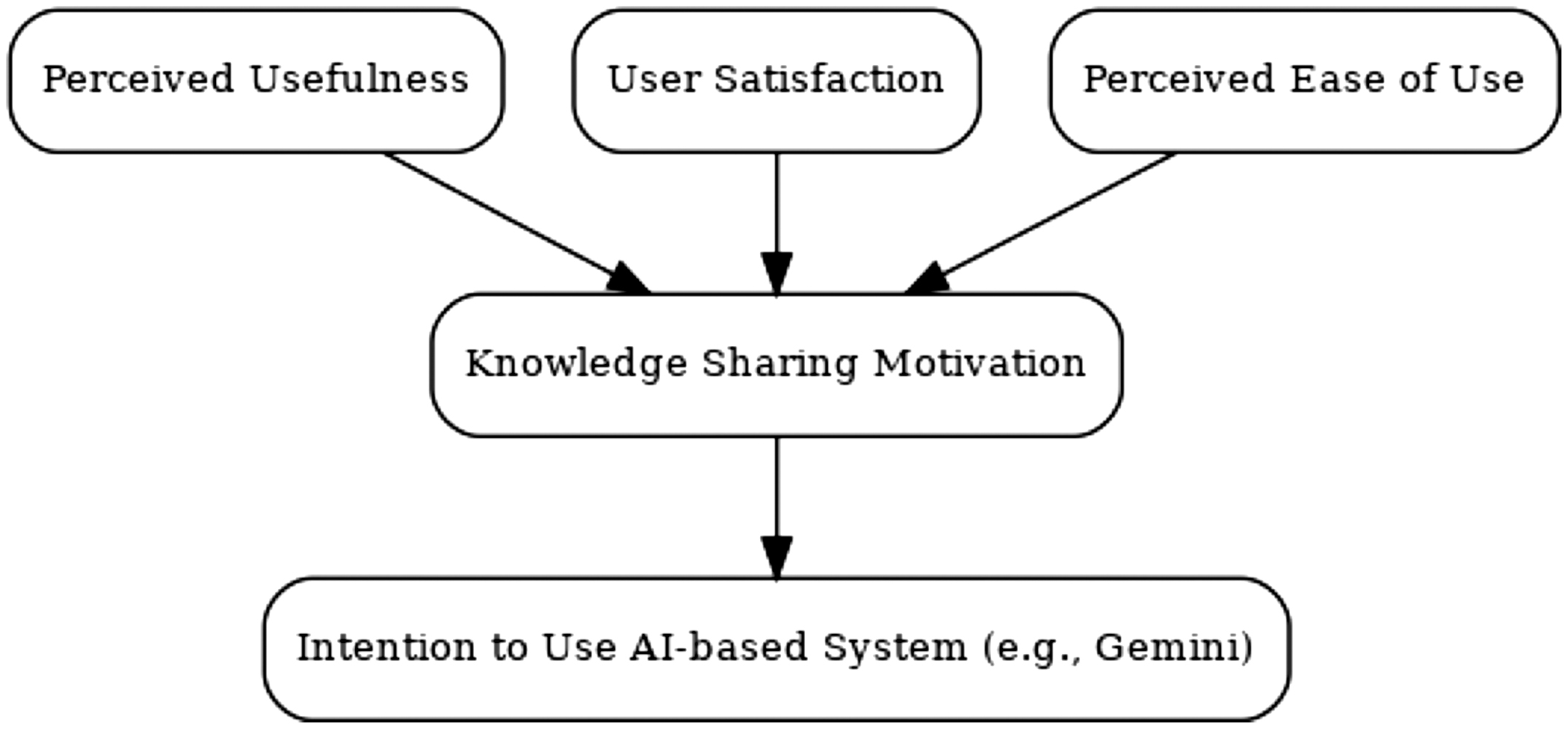 Fig. 1. Research model showing the mediating role of knowledge-sharing motivation between PU, US, PEU, and intention to use AI-based system (e.g., Gemini).
IV.METHODS
A.MEASUREMENT OF CONSTRUCTS
This study employed established scales from the literature to ensure face and content validity for all variables under investigation. Items measuring PU and PEOU were adapted from Venkatesh and Davis [41] and Venkatesh et al. [42]. The US scale was based on the work of Bhattacherjee [43], while the items for KSM were adapted from Chiu et al. [44]. Finally, the measurement of IU was adapted from studies by Venkatesh et al. [42] and Davis [1]. All items were measured on a 5-point Likert scale, ranging from 1 (“Strongly Disagree”) to 5 (“Strongly Agree”).
To establish instrument validity, the questionnaire underwent a pre-test by three academic experts with substantial expertise in AI and technology adoption. Their evaluations informed several revisions, primarily involving rewording items to enhance clarity and ensure alignment with the study’s contextual focus. The refined instrument was subsequently pilot tested with a sample of 45 students possessing prior experience with generative AI tools. Results from the pilot phase demonstrated satisfactory reliability across all constructs, with Cronbach’s alpha coefficients exceeding the commonly accepted threshold of 0.70, thereby confirming internal consistency.
B.SAMPLE AND DATA COLLECTION
The target population for this study consisted of individuals in Pakistan who actively use generative AI tools, particularly those participating in active social media groups on platforms such as Facebook and WhatsApp. These groups were selected based on their size and stability, ensuring at least one year of consistent activity related to generative AI discussions. The study focused on coursework students due to their familiarity with digital technologies and their potential to use Gemini for tourism-related tasks.
Ethical approval for the study was granted by the Ethics Review Board of Iqra University. All procedures involving human participants complied with the ethical guidelines of the institutional research committee and conformed to the principles of the 1964 Helsinki Declaration and its later revisions. Informed consent was obtained from all participants prior to data collection. Respondents were assured of both confidentiality and anonymity of their responses, and their right to withdraw from the research at any stage without adverse consequences was clearly communicated.
Data were collected over two months, from February 15 to April 21, 2025. The survey was conducted online, with links shared in selected Facebook and WhatsApp groups. To ensure respondents understood Gemini’s potential applications, a brief instructional video was included at the beginning of the questionnaire. The footage demonstrated Gemini’s functionalities and its use in supporting decision-making and knowledge-sharing activities in tourism. Respondents were encouraged to sign in to Gemini using a provided login link, interact with the chatbot by entering queries, and reflect on their experience before completing the survey. Participation was entirely voluntary and anonymous, with respondents informed of their right to withdraw at any time.
A total of 385 responses were initially collected. However, 27 responses were excluded due to low variance, indicating inattentive or disengaged participation. The remaining 358 responses were subjected to further data quality checks. Univariate outliers were evaluated by calculating standardized scores, with all cases falling within three standard deviations, as recommended by Goodboy and Kline [45]. Multivariate outliers were detected using the Mahalanobis distance approach, applying a significance criterion of p < 0.001. The analysis detected 16 instances of multivariate outliers, which were subsequently removed from the dataset. This exclusion resulted in a final dataset of 342 valid observations, corresponding to an effective response rate of 76%.
The sample composition revealed that 57% of the respondents were female, indicating a higher engagement of women in the study. Regarding educational qualifications, most participants held a diploma (28%), followed by those with a bachelor’s degree (21%). In terms of daily usage patterns, 43% of respondents reported spending 2–3 hours per day engaging with the platform, highlighting significant digital interaction. Additionally, 41% of respondents sought travel guidance from Gemini more than three times over the past three months, underscoring its role as a frequent source of travel-related decision-making.
C.NON-RESPONSE ERROR
To minimize non-response errors, several strategies were implemented both during and after data collection. To encourage participation, respondents were assured that their responses would remain confidential and that their personal information would not be disclosed. This assurance alleviated privacy concerns that might have deterred potential respondents. Additionally, the survey was designed to minimize the time and effort required for completion, reducing the likelihood of non-response due to fatigue or disinterest.
Following data collection, non-response bias was assessed by comparing early and late respondents across core demographic characteristics and principal study variables using independent sample t-tests. The results indicated no statistically significant differences, suggesting that non-response bias was unlikely to pose a substantive issue in this research.
D.COMMON METHOD BIAS
Given the use of self-administered survey data, the study undertook a thorough examination of potential common method bias (CMB). Consistent with the guidelines of Podsakoff et al. [46], two diagnostic techniques were employed. First, Harman’s single-factor analysis revealed that the initial unrotated factor explained 33.7% of the total variance, remaining well below the conventional 50% threshold that signals CMB concerns. Second, a full collinearity assessment, following Kock and Lynn [47], showed that the variance inflation factor for each construct was under the recommended limit of 3.3. Together, these results indicate that CMB was unlikely to pose a significant threat to the validity of the findings.
E.DATA ANALYSIS
The analytical procedure was conducted in two sequential phases. First, the measurement model was evaluated through confirmatory factor analysis (CFA) in SPSS AMOS to verify construct validity and assess the reliability and validity of the employed scales. In the second phase, the hypothesized associations were examined using PROCESS macro Models 1 and 4 [48], which apply advanced regression-based methods to test simple moderation, mediation, and moderated mediation effects.
V.RESULTS
A.CFA
Table I reports the outcomes of the CFA, including factor loadings, average variance extracted (AVE), and Cronbach’s alpha values for each construct. All factor loadings, reflecting the magnitude of the relationship between each observed measure and its associated latent construct, surpass the recommended cut-off value of 0.50 [49]. This demonstrates that the measurement items effectively represent their respective constructs, thereby supporting the evidence for convergent validity.
Table I. Convergent validity and reliability
| Constructs and indicators | SFLs | AVE | CR | Alpha |
|---|---|---|---|---|
| Perceived ease of use | ||||
| PEOU1 | .75 | |||
| PEOU2 | .89 | |||
| PEOU3 | .59 | |||
| PEOU4 | .66 | |||
| Perceived usefulness | ||||
| PU1 | .89 | |||
| PU2 | .78 | |||
| PU3 | .82 | |||
| PU4 | .94 | |||
| User satisfaction | ||||
| US1 | .77 | |||
| US2 | .67 | |||
| US3 | .67 | |||
| US4 | .63 | |||
| US5 | .79 | |||
| Knowledge-sharing behavior | ||||
| KSM1 | .94 | |||
| KSM2 | .78 | |||
| KSM3 | .93 | |||
| KSM4 | .73 | |||
| KSM5 | .96 | |||
| KSM6 | .77 | |||
| KSM7 | .59 | |||
| Intention to use | ||||
| IU1 | .94 | |||
| IU2 | .86 | |||
| IU3 | .87 |
Note: SFLs = standardized factor loadings; AVE = average variance extracted; CR = composite reliability.
The AVE was examined to assess the extent to which the indicators account for the variance in their corresponding construct relative to the total variance. All constructs exhibited AVE values above the recommended threshold of 0.50 [50], indicating that the indicators capture a substantial proportion of shared variance and thereby affirming convergent validity. Furthermore, Cronbach’s alpha coefficients were computed to evaluate internal consistency. Across all constructs, alpha values exceeded the widely accepted benchmark of 0.70, reflecting strong reliability. All the items loaded significantly (p < .001). The fit indices – χ2(224) = 653.38, χ2/df = 2.71, RMSEA = .07, SRMR = .05, CFI = .93, TLI = .90 – showed a satisfactory fit with our data. Collectively, these findings confirm that the measurement items are both conceptually aligned and consistently represent their intended latent constructs.
Discriminant validity was evaluated using the heterotrait–monotrait ratio of correlations (HTMT), applying the recommended cut-off value of 0.85 for this analysis [51]. Values above this threshold would signal inadequate discriminant validity between constructs. As presented in Table II, all HTMT coefficients remain below the specified limit, confirming that the constructs within the model are sufficiently distinct and meet the criterion for discriminant validity.
Table II. Discriminant validity by HTMT
| Variables | 1 | 2 | 3 | 4 | 5 |
|---|---|---|---|---|---|
| 1. PEOU | |||||
| 2. PU | .71 | ||||
| 2. US | .17 | .28 | |||
| 3. KSM | .32 | .40 | .24 | ||
| 4. IU | .54 | .48 | .27 | .40 |
Note: PEOU = Perceived ease of use; PU = Perceived usefulness; KSM =Knowledge-sharing motivation; US = User satisfaction; IU = Intention to use.
Table III presents the descriptive statistics and correlation coefficients for all study constructs. The distributional properties indicate normality, as the skewness and kurtosis values for each construct fall within the acceptable range of −2 to +2.
Table III. Summary statistics and correlations of observed variables
| Mean | SD | 1 | 2 | 3 | 4 | 5 | |
|---|---|---|---|---|---|---|---|
| 1. PEOU | 4.35 | 1.41 | 1 | ||||
| 2. PU | 4.55 | 1.42 | .62** | 1 | |||
| 3. US | 4.44 | 1.31 | .23** | .15** | 1 | ||
| 4. KSM | 3.40 | 1.22 | .36** | .29** | .21** | 1 | |
| 5. IU | 4.53 | 1.05 | .42** | .49** | .24** | .37** | 1 |
Note: N 342. PEOU = Perceived ease of use; PU = Perceived usefulness; US = User satisfaction; KSM = Knowledge-sharing motivation; IU = Intention to use; SD = standard deviation, **p < .01.
B.HYPOTHESIS TESTING
We examined the hypothesized direct effects (H1, H2, and H3), and the mediating effects of knowledge-sharing behavior (H4, H5, and H6), using the PROCESS SPSS plugin [48]. This plugin employs ordinary least squares regression and bootstrapping procedures to estimate combinations of mediation and moderation effects. Specifically, we estimated PROCESS Models 1 and 4 [48]. The analysis revealed that PEOU positively related to IU (β = .25, SE = .04, p < .05), PU positively associated with usage intention (β = .30, SE = .04, p < .05), and US positively related to usage intention (β = .13, SE = .04, p < .05), leading us to accept H1, H2, and H3. All predictors, i.e., PEOU, PU, and US, significantly determined IU (R2 = .42). Similarly, these predictors accounted for substantial variance in knowledge-sharing behavior (R2 = .38), with standardized effects of β = .35 (PEOU), β = .29 (PU), and β = .22 (US), at p < .05.
Mediation analysis was conducted using the bootstrapping procedure, a robust non-parametric resampling approach [52]. The results, summarized in Table IV, indicate that knowledge-sharing behavior significantly mediates the associations between PEOU and IU (indirect effect = .07, SE = .02, p < .05), PU and IU (indirect effect = .06, SE = .02, p < .05), and US and IU (indirect effect = .06, SE = .02, p < .05). These findings provide empirical support for hypotheses H4, H5, and H6.
| 95%CI | ||||
|---|---|---|---|---|
| B | SE | LL | UL | |
| Direct Paths | ||||
| PEOU→ Intention to use | .25** | .04 | .17 | .32 |
| PU → Intention to use | .30** | .04 | .23 | .37 |
| User satisfaction → Intention to use | .13** | .04 | .06 | .21 |
| PEOU→ Knowledge-sharing behavior | .31** | .04 | .23 | .40 |
| PU → Knowledge-sharing behavior | .26** | .05 | .17 | .34 |
| User satisfaction → Knowledge-sharing behavior | .20** | .05 | .10 | .29 |
| Indirect Path | ||||
| PEOU→ Knowledge-sharing behavior → Intention to use | .07* | .02 | .03 | .11 |
| PU → Knowledge-sharing behavior → Intention to use | .06* | .02 | .03 | .09 |
| US → Knowledge-sharing behavior → Intention to use | .06* | .02 | .02 | .09 |
Notes. N = 342. B = Unstandardized coefficient, SE = Standard error, Bootstrapping specified at 5000 with 95% confidence interval. CI = Confidence interval. LL = lower limit. UL = Upper limit. EU = Perceived ease of use; PU = Perceived usefulness; US = User satisfaction; p < .05, **p < .05.
VI.DISCUSSION
This study sought to examine the relationships between PEOU, PU, US, and IU Gemini, with a particular focus on the mediating role of KSM. The results of our data analysis provide robust support for the hypothesized relationships, which align with both theoretical expectations and recent advancements in technology adoption research. The following discussion interprets these findings in light of contemporary literature and theoretical frameworks. The study found a significant positive relationship between PEOU and IU (β = .25, SE = .04, p < .05), supporting H1. This result is consistent with prior research, where PEOU has been established as a key predictor of technology adoption [1,41]. The influence of PEOU on IU reflects the idea that users are more likely to adopt technologies that they find easy to use [42]. Empirical evidence indicates that higher PEOU alleviates cognitive effort, streamlines user interaction, and improves the overall experiential quality, which in turn fosters sustained engagement with the technology [53].
Recent research by Al-Emran [54] also corroborates these findings, emphasizing that the more straightforward and more intuitive a system, the more likely users will embrace it, particularly in educational contexts. This is particularly relevant for Gemini, where the users’ ability to interact smoothly with the platform is crucial for fostering continued use. Moreover, the significant positive linkage between PEOU and IU aligns with the core propositions of the TAM, which underscores ease of use as a central antecedent shaping user attitudes and, consequently, their behavioral intentions toward adopting novel technological solutions [55]. In the Pakistani context, the salience of ease of use may be amplified by uneven levels of digital literacy, as users facing limited prior exposure to AI systems may prioritize simplicity of interaction over more sophisticated features [11]. Likewise, PU demonstrated a significant positive effect on IU (β = 0.30, SE = 0.04, p < 0.05), thereby lending support to H2. This is in line with Davis’s (1989) original formulation of TAM [1], where PU was identified as a crucial determinant in users’ decisions to adopt technology. The result also echoes the findings of Kim and Hong [56], who found that PU is consistently associated with higher adoption rates across various technological domains, including AI and digital platforms. The positive association between PU and IU within the context of Gemini indicates that users are more likely to adopt and engage with the platform when they perceive it as enhancing their task performance, particularly in executing tourism-related activities. Chen et al. [57] further argue that PU influences not only the adoption of technology but also its sustained use, as users increasingly integrate the technology into their routine practices. The stronger effect of PU compared to satisfaction in this study may reflect pragmatic adoption tendencies in emerging markets such as Pakistan, where users often evaluate technologies primarily in terms of tangible efficiency gains and problem-solving utility [11,12]. This suggests that cognitive evaluations of functionality may outweigh affective responses, at least in early stages of adoption.
The US also emerged as a significant predictor of IU (β = .13, SE = .04, p < .05), supporting H3. This finding aligns with the extensive body of literature on technology adoption, which consistently highlights satisfaction as a strong determinant of continued use and technology acceptance [43,58]. In the context of Gemini, US likely reflects users’ positive experiences with the platform’s performance, ease of use, and ability to meet expectations. This is particularly important for systems that require regular interaction, as satisfied users are prospective to continue utilizing the technology and advocate it to others [27]. Recent studies, such as those by Zhao and Bilen [59], have indicated that US significantly enhances the likelihood of technology adoption in AI-based tools, especially when users perceive the technology to be adaptable to their needs. However, the weaker coefficient of satisfaction relative to PU in this study merits reflection. One possible explanation is that, because many respondents had limited direct experience with Gemini beyond demonstrations, their judgments of satisfaction were less firmly established. By contrast, PU—evaluated through clear functional outputs like efficiency or accuracy—may have been more immediately observable [23]. Moreover, in collectivist cultures such as Pakistan, adoption decisions are often influenced by perceptions of utility that can be communicated to peers, whereas satisfaction remains more individually experienced and less socially reinforced [22–25]. This cultural dynamic may help explain why satisfaction exerted a weaker relative effect.
The analysis further examined the mediating influence of KSM on the associations between PEOU, PU, US, and IU. Results indicated that KSM acted as a significant mediator across all three pathways: PEOU → IU (indirect effect = 0.07, SE = 0.02, p < 0.05), PU → IU (indirect effect = 0.06, SE = 0.02, p < 0.05), and US → IU (indirect effect = 0.06, SE = 0.02, p < 0.05). These findings lend empirical support to hypotheses H4, H5, and H6, underscoring the pivotal role of users’ knowledge-sharing behavior in strengthening their intention to continue engaging with the Gemini platform.
This mediation pattern aligns with prior scholarship emphasizing the centrality of knowledge-sharing in technology adoption and sustained usage. Chiu et al. [44] observed that perceptions of ease of use and utility foster a willingness among users to disseminate their experiences and insights, thereby reinforcing continued adoption intentions. Similarly, Zhang et al. [29] demonstrated that active knowledge-sharing behaviors enhance user engagement and cultivate long-term commitment to platform use. This aligns with the present study, where users’ willingness to share their insights and experiences with Gemini not only fosters a sense of community but also amplifies their overall engagement with the platform.
Moreover, the mediating effect of KSM aligns with the tenets of social exchange theory [60], which asserts that individuals are more likely to engage in reciprocal actions, such as knowledge sharing, when they perceive mutual benefits. In this study’s context, as users recognize the utility of Gemini—stemming from its ease of use and PU—they become more inclined to reciprocate by sharing their experiences, thereby strengthening their IU the platform. In hospitality and tourism contexts, where uncertainty reduction and peer learning are vital, KSM becomes especially relevant. By motivating users to contribute information, KSM creates collective value that enhances both individual adoption and broader platform legitimacy [39]. In Pakistan, where collectivist orientations encourage information exchange within networks, this mediating pathway is likely accentuated, underscoring the importance of cultural context in interpreting the results. Consistent with this finding, Liu et al. [24] demonstrated that knowledge-sharing behavior serves as a pivotal mediator in elucidating the influence of PEOU and PU on technology adoption within collaborative platforms. Thus, KSM not only explains the mechanism through which TAM constructs translate into adoption but also reflects culturally embedded patterns of reciprocity and collective decision-making. Theoretically, this highlights the value of integrating motivational and contextual variables into TAM extensions, while practically, it suggests that fostering knowledge-sharing opportunities could strengthen adoption of AI chatbots in tourism and hospitality.
A.THEORETICAL IMPLICATIONS
This research extends established frameworks by generating novel insights into technology adoption and knowledge-sharing behaviors within the domain of AI chatbots, with a specific focus on the Gemini platform. Hypotheses H1, H2, and H3 examine the relationships among PEOU, PU, US, and IU, thereby advancing the classical TAM (Davis, 1989) [1]. In doing so, this study extends the understanding of how core TAM constructs function within the domain of AI-powered conversational agents, providing a more granular perspective on the factors influencing users’ behavioral intentions toward adoption. While prior research has predominantly examined the direct effects of PEOU and PU on technology acceptance [62], the present work posits that PEOU (H1), PU (H2), and US (H3) collectively exert positive influences on IU. This approach advances TAM by integrating both cognitive dimensions (ease and usefulness) and affective dimensions (satisfaction and motivational drivers), thereby offering a more holistic account of user engagement with AI chatbot technologies. This extension offers a more comprehensive view of how users evaluate the usability and benefits of emerging technologies.
Hypotheses H4, H5, and H6 propose that KSM functions as a mediating mechanism, extending the TAM by indicating that perceptions of ease of use, usefulness, and satisfaction influence adoption intentions both directly and indirectly via KSM. This framing positions KSM as both an outcome of positive technology perceptions and a critical mechanism sustaining continued engagement with the Gemini chatbot. Such an interpretation aligns with recent empirical evidence [36] yet advances the literature by illustrating that KSM functions as a key intermediary, linking PEOU and PU to ongoing technology adoption. This underscores the dual role of KSM as both a behavioral consequence and a reinforcing driver within AI-enabled collaborative environments. This mediation provides a richer understanding of how users’ cognitive assessments of a technology (PEOU, PU, and US) translate into actions that foster the platform’s knowledge ecosystem, thereby reinforcing the platform’s utility and long-term adoption. By proposing that satisfaction also drives knowledge-sharing behaviors [11], this study integrates satisfaction with cognitive and emotional pathways, which influence not only user retention but also their willingness to contribute to the platform actively. This addition enriches the understanding of satisfaction in the context of AI technology by demonstrating its impact on collaborative behaviors, which are crucial for platforms like Gemini that rely on user-generated content.
B.PRACTICAL IMPLICATIONS
This study offers valuable practical insights for the design, implementation, and management of AI chatbots like Gemini in industries where user engagement and knowledge-sharing are critical, such as tourism, hospitality, and customer service. First, the study emphasizes the importance of PEOU in driving user adoption. Organizations should prioritize designing user-friendly interfaces that facilitate intuitive navigation and minimize cognitive load during user interactions. Features such as adaptive commands and seamless workflows can significantly improve users’ perceptions of ease of use. This focus on ease of use not only enhances US but also increases the likelihood of sustained engagement and adoption. A smooth and effortless user experience is crucial for ensuring long-term success in AI chatbot platforms like Gemini.
Second, enhancing the PU of AI chatbots is essential for promoting greater adoption. Organizations must ensure that the platform provides accurate, reliable, and real-time information, particularly in knowledge-intensive industries like tourism and hospitality. Demonstrating that the chatbot can meaningfully support decision-making and improve task efficiency strengthens users’ belief in the platform’s utility, which in turn increases their likelihood of adopting and continuously using the technology. By delivering tangible value, Gemini can become a trusted tool for users to achieve specific goals.
Third, the study highlights the mediating role of KSM in influencing users’ IU the chatbot. To leverage this insight, organizations should design features that encourage and facilitate knowledge exchange within the platform. For Gemini, this could involve integrating collaborative knowledge bases, peer-to-peer interaction, and feedback loops to motivate users to share information and contribute to the chatbot’s knowledge ecosystem. Additionally, incorporating gamification elements or recognition systems could incentivize knowledge-sharing behaviors, thereby promoting active user participation.
Fourth, US is identified as a critical factor in fostering long-term engagement with AI chatbots. Organizations should focus on ensuring that the platform consistently meets or exceeds user expectations. This can be achieved by providing reliable performance, seamless interactions, and a high-quality user experience. Regular updates, personalized interactions, and prompt issue resolution will help maintain satisfaction levels. Moreover, organizations should gather user feedback continuously and refine the platform based on this input to ensure that it evolves in line with user needs and expectations.
Fifth, both cognitive and emotional factors significantly impact users’ IU AI chatbots. Organizations should address these factors by enhancing both the functional and emotional needs of users. For example, incorporating emotionally intelligent responses and empathetic interactions from the chatbot can improve US, thus reinforcing users’ intention to return to the platform. Additionally, transparent, efficient, and adaptive features that reduce cognitive load will increase users’ sense of ease and improve engagement, making the platform more attractive for continued use.
Sixth, the study suggests that organizations can use marketing strategies to promote the ease of use and utility of the chatbot. Highlighting these attributes in marketing materials will resonate with users’ expectations and increase their willingness to adopt the technology. Showcasing positive user testimonials and success stories that highlight satisfaction and knowledge-sharing benefits can build trust and encourage further adoption, potentially leading to increased user retention through word-of-mouth promotion.
Seventh, organizations should consider personalizing user experiences to cater to different demographic needs. Users may place varying levels of importance on ease of use, usefulness, and satisfaction, depending on their familiarity with technology. For example, more tech-savvy users may prioritize efficiency and advanced features, while less experienced users may require more guidance and simpler interfaces. Adapting the user experience to these preferences by offering adaptive interfaces and customizable features will improve user engagement and ensure that users feel comfortable interacting with the platform.
VII.LIMITATIONS AND FUTURE RESEARCH DIRECTIONS
This study has certain limitations that may affect the breadth and applicability of its findings. First, the sampling strategy relied heavily on participants in Pakistan who were active in AI-related social media groups, many of whom were students. While this group represents a digitally literate cohort, it does not fully capture the perspectives of actual tourism or hospitality users, thereby limiting the generalizability of the findings to real-world industry contexts [55]. Moreover, the reliance on self-reports after a brief demonstration of Gemini may not reflect sustained adoption behaviors in operational environments. Future research should therefore engage with field data from actual tourists, travelers, and hospitality employees to validate and extend these results.
Second, the cross-sectional design provides only a snapshot of user perceptions, making it unsuitable for capturing temporal changes in attitudes or behavioral patterns toward Gemini [10]. Longitudinal approaches would allow researchers to assess whether perceptions of usefulness, ease of use, satisfaction, and KSM evolve as users gain extended experience with AI-enabled chatbots [56].
Third, the study focuses primarily on constructs derived from the TAM—namely, PU, PEOU, US, and KSM —while omitting potentially influential factors such as trust, privacy concerns, and organizational or contextual determinants [44]. These omissions constrain explanatory depth, particularly in service industries where ethical and cultural factors strongly shape adoption decisions [47]. Future work could enrich the model by including such constructs and by conducting comparative analyses with alternative AI chatbots to assess functional distinctions and user preferences.
Furthermore, the reliance on self-reported data introduces susceptibility to biases, including common method variance and social desirability bias [46], despite procedural and statistical remedies applied in this study. Future research could incorporate behavioral usage logs, system data, and multi-source inputs to triangulate findings and reduce subjectivity [48].
Lastly, while this study focused on the tourism and hospitality context to ensure sectoral relevance, the findings may not be directly transferable to other industries where AI chatbots like Gemini are increasingly deployed, such as healthcare, education, and public services. Broader sectoral diversification of research contexts, alongside cross-cultural designs, would strengthen external validity and highlight the wider applicability of AI-enabled conversational agents [23,62].