I.INTRODUCTION
Thailand is undergoing a steady demographic transition toward an aging society, generating far-reaching implications across social, economic, and public health systems. These implications include increasing chronic disease burdens, long-term care demands, fiscal sustainability concerns, and the design of urban environments and public services that support dignified and meaningful aging. International research consistently characterizes healthy aging as a complex, multilevel phenomenon that requires interdisciplinary empirical evidence and coherent policy integration [1]. From a macroeconomic perspective, population aging exerts pressure on labor force participation, productivity dynamics, and resource allocation, while simultaneously creating opportunities within the expanding silver economy and service innovation sectors when supported by robust knowledge infrastructures and evidence-informed policy frameworks [2]. The reversal of the demographic dividend further underscores the need for systematic and integrated understanding of aging-related research to inform adaptive policy responses and long-term economic strategies [3].
Despite growing research output, the knowledge landscape of aging research in Thailand remains fragmented across disciplinary boundaries and distributed data repositories. This fragmentation is reflected in inconsistent metadata practices, non-standardized terminology, and reliance on keyword-based retrieval mechanisms that are limited in their ability to capture semantic meaning and contextual relationships among research outputs. As a result, knowledge discovery, evidence synthesis, and policy application processes are often inefficient and vulnerable to evidence gaps, increasing the risk of suboptimal decision-making. In parallel, global movements toward open science and the Findable, Accessible, Interoperable, and Reusable (FAIR) data principles emphasize that research outputs should be Findable, Accessible, Interoperable, and Reusable, highlighting the need for standardized semantic frameworks that enable interoperability across heterogeneous data sources [4,5].
Recent advances in semantic web technologies, knowledge graphs, and linked open data architectures have demonstrated potential for improving cross-repository information retrieval and supporting richer forms of evidence integration [6,7]. However, effective application of these technologies within national research ecosystems requires conceptual frameworks that are sensitive to local domain characteristics, institutional structures, and policy priorities. In the context of Thailand’s transition to an aging society, culturally and contextually adapted semantic models that systematically organize aging research knowledge remain limited.
Aging research is inherently interdisciplinary, spanning physical and mental health, chronic disease prevention, rehabilitation, welfare and personal finance, social participation, lifelong learning, age-friendly urban design, assistive technologies, and care service innovation across the life course [8]. Policymakers and practitioners increasingly require tools that enable policy-relevant questions to be systematically linked to relevant evidence across disciplines and data sources. Traditional bibliographic search and keyword indexing approaches are often insufficient in such contexts, where terminology varies across fields and meanings depend on contextual interpretation. Semantic web technologies, particularly ontologies, offer formal mechanisms for representing concepts, relationships, and constraints, thereby supporting semantic alignment and structured knowledge organization [7]. While biomedical ontologies illustrate the effectiveness of semantic standards in data integration and scientific discovery [9], comprehensive ontological frameworks that integrate health, economics, quality of life, age-friendly cities, and innovation within Thailand’s research and policy ecosystem remain scarce.
Ontologies, defined as formal specifications of domain concepts, relationships, and constraints, are widely recognized as foundational instruments for semantic interoperability and knowledge organization [10]. Established ontology engineering methodologies, such as Ontology Development 101 and Open Biological and Biomedical Ontologies (OBO) aligned practices, provide systematic guidance for scope definition, vocabulary elicitation, hierarchical modeling, and property and axiom specification [10]. Evaluation tools, including the Ontology Pitfall Scanner (OOPS!), further support ontology quality assurance by identifying common modeling pitfalls and structural inconsistencies [12]. When aligned with FAIR principles and linked data architectures, domain ontologies can function as semantic infrastructures that facilitate structured retrieval, interoperability, and exploratory analysis across heterogeneous research resources, rather than as standalone analytical systems [13,14].
A review of existing work reveals several gaps that motivate this study: (1) a domain integration gap, reflected in the absence of unified ontological structures linking health, economics, quality of life, age-friendly cities, and care innovation within a policy-aligned framework; (2) a research ecosystem gap, characterized by limited semantic linkage between researcher profiles, academic metadata, research strategies, and thematic content; (3) a semantic interoperability gap arising from inconsistent terminology and metadata practices across repositories; and (4) a quality assessment and reuse gap, where systematic evaluation procedures and governance documentation remain insufficient to support transparency and cross-context reuse [5,13,15].
In response to these gaps, this study proposes a domain-specific ontological framework for structuring aging research in Thailand. The ontology is designed to support semantic alignment across interdisciplinary research domains and to facilitate linkage with relevant national strategies and policy contexts, while remaining compatible with international semantic web standards. The development and evaluation processes follow established ontology engineering practices. Rather than asserting immediate empirical effectiveness, the practical objective of this work is to establish a semantic foundation that may support future ontology-driven retrieval, reasoning, and evidence synthesis applications. The theoretical contribution lies in articulating a context-sensitive domain knowledge model that positions ontology development as semantic infrastructure for aging research within Thailand’s evolving demographic landscape.
The remainder of this paper is structured as follows. Section II reviews the relevant literature on aging research, ontology engineering methodologies, and semantic web technologies. Section III details the research methodology, encompassing ontology scoping, conceptual modeling, property and constraint specification, and evaluation procedures. Section IV reports the results of the ontology development and expert-based evaluation. Section V discusses the findings in relation to prior studies and addresses methodological limitations. Finally, Section VI concludes the paper and outlines directions for future research.
II.LITERATURE REVIEW
A.THEORIES AND CONCEPTS OF ONTOLOGY DEVELOPMENT
Ontologies in the context of knowledge management originate from philosophical thought and have been adapted for applications in information technology. Reference [16] notably defined an ontology as the precise representation of an abstract model, thereby laying the groundwork for advancing contemporary knowledge management systems. This definition has been elaborated and applied across various domains, with particular emphasis on the formal, explicit, and shared nature of ontological knowledge as demonstrated in cultural heritage and semantic web applications [17]. The theoretical development of ontologies has been influenced by multiple disciplines, particularly artificial intelligence and knowledge management. Contemporary research underscores the importance of ontologies as enabling technologies for knowledge sharing and semantic interoperability [18]. These frameworks have highlighted the transformative potential of ontological approaches in supporting knowledge-intensive processes across diverse domains, from cultural heritage preservation to digital humanities research [19]. Engineering-oriented approaches to ontology development have continued to evolve through systematic methodologies and standardized frameworks. Reference [11] established foundational principles for ontology construction that emphasize systematic development processes and stakeholder involvement. This trajectory has been further advanced by [17] who proposed model-driven approaches that stress the importance of employing standardized models and tools in ontology development, leading to the creation of systematic and replicable frameworks for developing ontologies across various domains.
The evolution of semantic web technologies has significantly enhanced the role of ontologies in handling information and knowledge effectively. Additionally, contemporary frameworks for ontology application management illustrate the potential for streamlined development processes which simplify the construction of semantic web applications built upon ontologies [17]. The evolution toward linked open data frameworks has expanded opportunities for semantic interoperability and knowledge integration across cultural and institutional boundaries [15]. Contemporary research underscores the role of ontologies in supporting specialized domain applications, particularly in cultural heritage informatics and digital humanities. Reference [19] demonstrated that ontologies can enhance semantic search capabilities and content management systems by providing contextual and semantic enrichment to cultural data. The integration of ontologies with emerging technologies continues to open new opportunities for applications across domains, including cultural preservation, knowledge organization, and interdisciplinary research collaboration [20].
B.APPLICATIONS OF ONTOLOGY IN RESEARCH
The application of ontology across research domains has demonstrated diverse potential for enhancing knowledge management and data discovery. The biomedical field has been a leading adopter, with [21] establishing a standard for classifying gene functions that has become a key model for ontology development in other disciplines. Applications in this field illustrate how ontologies can effectively support interdisciplinary research and enable cross-institutional data sharing. In environmental science, ontologies have been instrumental in harmonizing datasets from various disparate sources, as well as facilitating systems-level analyses. Reference [22] developed ontologies for ecosystem knowledge management that allow researchers to link data across multiple scales, from the molecular to the landscape level. This application highlights the capacity of ontologies to accommodate the complexity and heterogeneity inherent in scientific data. The social sciences and humanities have begun to apply ontologies to organize cultural and historical knowledge. Reference [23] developed the CIDOC (International Committee for Documentation) Conceptual Reference Model (CIDOC-CRM), an authoritative ontology vital for structuring cultural heritage information. This development has inspired ontology creation in other social science domains and demonstrates the utility of ontologies for handling qualitative data [24]. Educational research has employed ontologies to support intelligent learning systems and the management of learning resources. Reference [25] proposed a framework for using ontologies in the design of adaptive educational systems. Applications in this area demonstrate the benefits of ontologies for personalizing content and learning activities to the specific needs of learners.
Recent studies have continually expanded ontology applications into new domains. Reference [26] examined ontology-driven approaches to sustainability knowledge management, showing their potential to address complex, cross-cutting issues. These developments provide a strong foundation for applying ontologies in aging research, which similarly necessitates the synthesis of insights from various academic fields.
C.GERONTOLOGICAL RESEARCH AND KNOWLEDGE ORGANIZATION
Gerontological research is inherently interdisciplinary by nature, encompassing multiple dimensions from healthcare to public policy. Reference [27] investigated the conceptual advancements within social gerontology, highlighting the inherent intricacies of studying aging and the progression toward integrated frameworks that synthesize knowledge from diverse theoretical traditions and research approaches. This complexity poses challenges for knowledge organization due to the multiplicity of technical vocabularies, research traditions, and perspectives across disciplines.
In the field of older adult healthcare, knowledge organization is critically important for improving care quality and fostering innovation. Reference [28] emphasized the necessity of standardized conceptual frameworks for managing health information for older adults. Ontology development in this domain has contributed to enhanced information retrieval, clinical decision support, and the design of holistic care systems.
Research on aging policy and economics requires knowledge systems capable of linking data from multiple sources and analytical levels. The socioeconomic implications of demographic transition present complex challenges that demand systematic approaches to information management and policy analysis. Contemporary aging societies contend with various economic burdens, among them soaring health expenditures, the fiscal resilience of retirement systems, coupled with workforce demographic shifts that necessitate robust analytical frameworks. In this context, ontologies can facilitate data interoperability across agencies and research institutions, enabling comprehensive impact analyses that support evidence-based policy development.
Advances in gerontechnology have created demand for knowledge organization that supports the integration of technological solutions with aging-related knowledge. Reference [29] proposed a conceptual framework for developing technologies appropriate for older adults, which presupposes a deep understanding of the physiological and psychological changes associated with aging.
Knowledge organization in gerontology must also account for cultural diversity and social context. Reference [30] emphasizes the importance of cultural factors in aging studies and the necessity of conceptual frameworks that reflect the heterogeneity of aging experiences. Such considerations are crucial for developing ontologies tailored to the specific contexts of individual countries and cultures.
D.THE CONTEXT OF RESEARCH IN THE ELDERLY IN THAILAND
Thailand is experiencing rapid demographic change, transitioning to an aging society in a shorter time frame than many developed countries. Reference [31] projected that older adults (aged 60 years and above) will account for approximately 28% of the total population by 2030. This shift presents both challenges and opportunities that necessitate targeted research and policymaking, particularly in organizing knowledge to support evidence-informed decision-making and service development.
Eldercare in Thailand is rooted in traditional cultural norms and values, with care provision largely relying on family and community support systems. Reference [32] documented the cultural foundations of eldercare in Thailand while highlighting how changes in family structures and labor migration are straining traditional care arrangements. These demographic and social trends call for knowledge systems that accommodate both long-standing cultural practices and emerging care innovations, ensuring that research frameworks reflect the evolving landscape of eldercare provision.
Health research on older adults in Thailand highlights the critical importance of disease prevention and health promotion strategies. Reference [33] reported significant prevalence rates of multiple chronic conditions among older Thais, particularly diabetes and related metabolic disorders. Consequently, knowledge organization in the health domain must encompass both treatment and prevention approaches, supporting the integration of contemporary biomedical interventions with traditional Thai medicine practices to create comprehensive care frameworks.
From an economic and fiscal perspective, Thailand must prepare for rising expenditures associated with comprehensive eldercare systems. Reference [34] analyzed long-term care policy challenges and underscores the urgent need for financially sustainable care models, particularly catering to seniors grappling with intricate health issues, including dementia. Knowledge organization in this domain should facilitate data integration across government agencies and healthcare providers while enabling comprehensive long-term impact assessment of policy interventions and resource allocation strategies.
Aging policies in Thailand are significantly informed by international frameworks, most notably the Age-Friendly Cities approach developed by the World Health Organization. Reference [35] examined the application of age-friendly city concepts within the Thai context and demonstrated that successful implementation requires careful local adaptation to environmental, cultural, and resource conditions. Accordingly, policy-related knowledge organization must accommodate both international best practices and standards while maintaining flexibility for the specific cultural, economic, and infrastructural characteristics of the Thai context.
E.OBJECTIVE
To develop a domain ontology for Thailand’s aging research that supports cross-disciplinary integration and semantic querying, ensures semantic interoperability in accordance with international standards (e.g., Web Ontology Language (OWL), FAIR), and is validated through both automated evaluation (OOPS!) and expert assessment.
III.METHODOLOGY
A.RESEARCH DESIGN
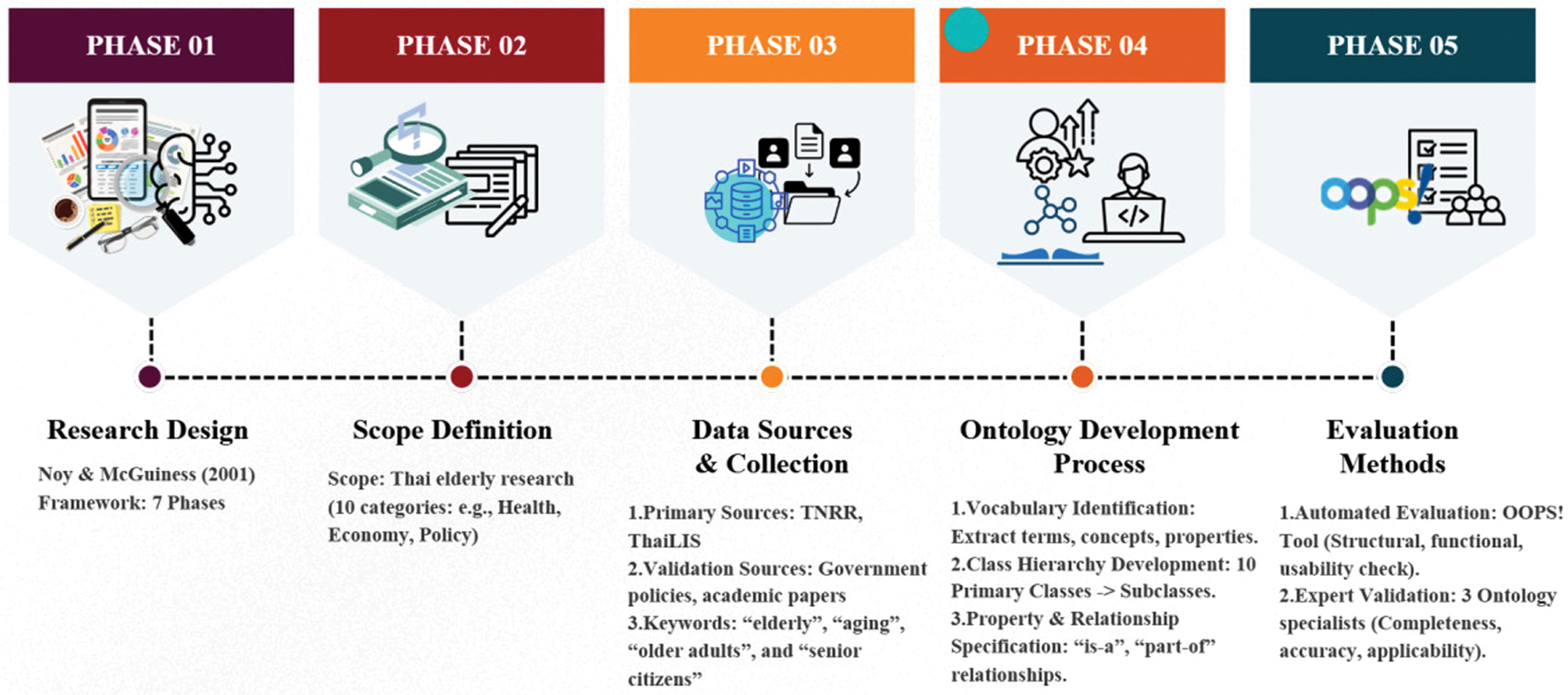
This research employed a systematic ontology development approach grounded in established ontology engineering methodologies, primarily following the framework proposed by [11], with contextual adaptations to reflect the characteristics of elderly research in Thailand. The development process consisted of seven main phases: scope determination, ontology reuse evaluation, vocabulary identification, class hierarchy definition, property specification, constraint establishment, and evaluation. Rather than aiming to demonstrate empirical system performance, the research design focused on ensuring methodological transparency, conceptual coherence, and structural validity appropriate for foundational ontology development.
B.SCOPE DEFINITION
The ontology scope was defined to encompass research knowledge related to elderly populations in Thailand, covering both academic research outputs and practice-oriented knowledge artifacts. The target domain includes research reports, institutional research projects, theses, dissertations, and peer-reviewed scholarly publications addressing aging-related issues within the Thai context.
The ontology was conceptually designed to provide a semantic foundation that may support the development of ontology-driven applications in future work. Specifically, the framework organizes knowledge across 10 key information categories: research work, strategy, researcher status, policy, economy, health, quality of life, age-friendly cities, care innovation, and scientific innovation. These categories were identified through thematic analysis of national research priorities and recurring conceptual patterns in aging-related studies, rather than being predefined application requirements.
C.DATA SOURCES AND COLLECTION
Primary data sources included the Thai National Research Repository (TNRR) and ThaiLIS (Thai Library Integrated System) databases. These repositories were selected due to their comprehensive coverage of nationally produced research outputs and institutional relevance within the Thai research ecosystem. Additional reference materials included government policy documents, official research reports, and selected academic publications, which were used to support conceptual validation rather than exhaustive data integration.
The document collection process employed a systematic keyword-based retrieval strategy to identify aging-related research materials. Search queries were formulated in both Thai and English, combining core aging-related terms (e.g., elderly, aging, older adults, senior citizens, and their Thai equivalents) with domain-specific keywords such as health, policy, economy, and technology. The retrieved documents were used as sources for concept elicitation and vocabulary extraction, rather than as datasets for quantitative analysis.
D.ONTOLOGY DEVELOPMENT PROCESS
1).VOCABULARY IDENTIFICATION
The vocabulary identification process involved systematic content analysis of the collected documents to extract relevant domain terms and conceptual expressions. Extracted terms were examined for semantic similarity, ambiguity, and contextual usage in order to minimize redundancy and enhance conceptual clarity. The resulting vocabulary was categorized into three primary types: domain concepts and topics, properties and attributes, and definitional or descriptive elements, consistent with established ontology modeling practices.
2).CLASS HIERARCHY DEVELOPMENT
The class hierarchy was developed through an iterative conceptual analysis of relationships among identified domain concepts. Ten primary classes were established based on thematic patterns observed in aging research and the informational needs reflected in national research and policy contexts. Each primary class was further subdivided into subclasses to provide granular conceptual representation.
The hierarchical structure adhered to core ontological design principles, including appropriate subsumption relationships, conceptual non-overlap where applicable, and a balanced distribution of depth and breadth. The hierarchy was refined iteratively to ensure internal coherence rather than exhaustive coverage of all possible aging-related concepts.
3).PROPERTY AND RELATIONSHIP SPECIFICATION
Properties and relationships among classes were defined based on logical and semantic associations identified during domain analysis. Two primary relationship types were specified: “is-a” relationships to represent taxonomic hierarchies and “part-of” relationships to represent compositional structures. Property definitions were constrained to support semantic consistency and potential reasoning compatibility, without asserting the execution of automated reasoning tasks within this study.
E.EVALUATION METHODS
The ontology was evaluated using two complementary evaluation approaches: automated assessment using the OntologyPitfall Scanner (OOPS!) and expert-based validation conducted by three domain specialists with expertise in ontology engineering and aging-related research. The OOPS! tool was employed to identify common structural, semantic, and modeling pitfalls, thereby supporting technical quality assurance rather than empirical validation.
Expert evaluation was conducted using structured questionnaires covering five evaluation dimensions, including scope adequacy, conceptual clarity, structural consistency, applicability, and reuse potential. Given the limited number of experts, the evaluation was interpreted as qualitative domain validation, consistent with common practices in ontology development studies.
To support transparency and methodological clarity, Fig. 1 illustrates the conceptual research framework guiding the ontology development process. This framework outlines the sequential and interrelated stages of scope definition, data collection, ontology construction, and evaluation. The figure is intended to provide readers with a clear overview of the procedural flow and conceptual logic underpinning the study, rather than to imply system-level implementation or deployment.
IV.RESULTS
A.STRUCTURE AND SCOPE OF THE ONTOLOGY
The proposed ontology encompasses knowledge related to aging research in Thailand. It is organized around 10 top-level classes and 27 subclasses, with a scope restricted specifically to research on older adults in Thailand. It is presented as a coherent set of concepts and terms that delineate the domain by providing definitions and meanings, specifying properties and attributes, including example instances, and articulating relationships among classes and terms. The ontology’s structure is derived from the knowledge framework of research on older adults in Thailand and has been further refined to formalize the domain “knowledge of research on older adults in Thailand.” Existing knowledge groupings which were identified in that knowledge framework were examined and instantiated as classes. The objective of developing this ontology is to provide a foundational knowledge base for a retrieval and recommendation tool (recommender system). The system is intended to retrieve and recommend information items drawn from the following categories: (1) research, (2) strategies, (3) researcher status/profiles, (4) policy, (5) economy, (6) health, (7) quality of life, (8) age-friendly cities, (9) care innovations, and (10) scientific innovations. The interconnections among these classes are illustrated in Fig. 2.
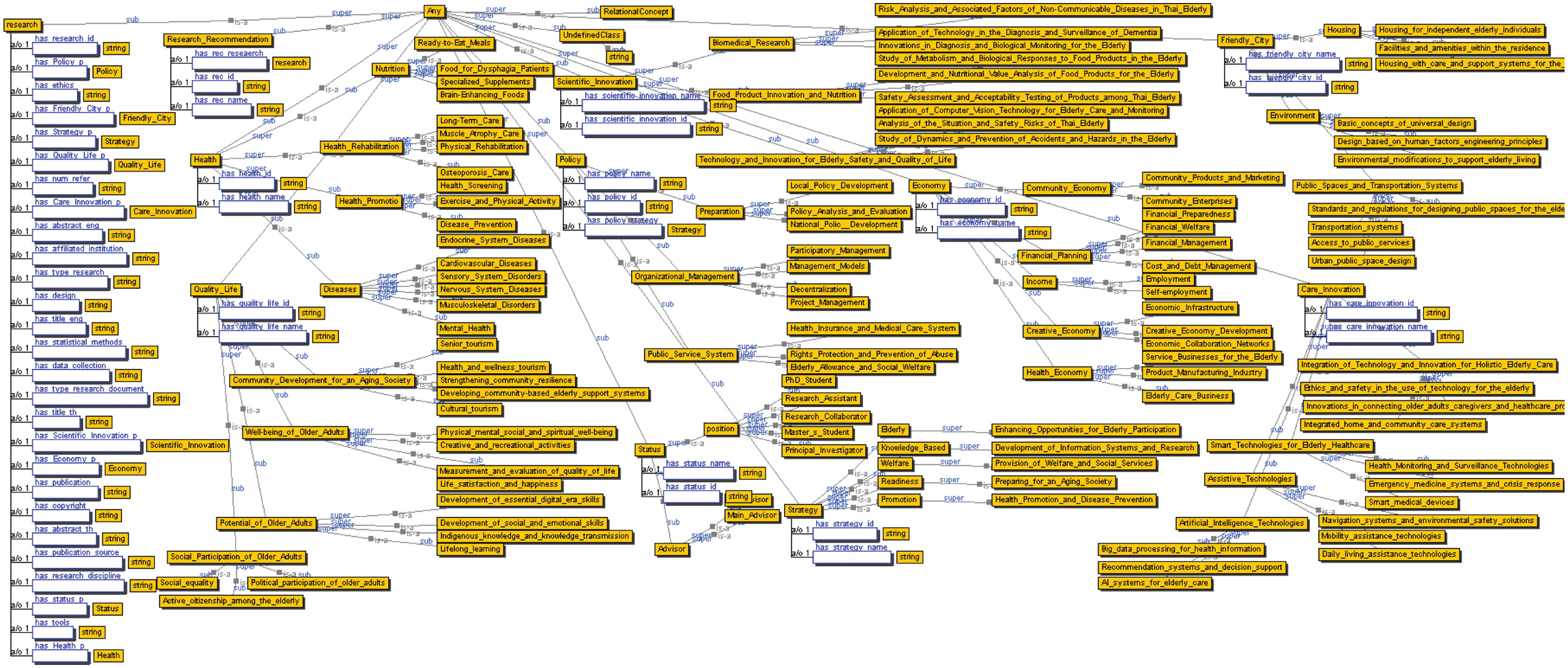 Fig. 2. Class interconnections in research in the elderly in Thailand.
B.CLASS HIERARCHY AND RELATIONSHIPS
The ontology comprises 10 top-level classes that represent the principal domains of aging research in Thailand. These classes are designed to be comprehensive and to reflect the current research landscape. The 10 top-level classes are (1) research, (2) strategies, (3) researcher status, (4) policy, (5) economy, (6) health, (7) quality of life, (8) age-friendly cities, (9) care innovations, and (10) scientific innovations. From these, 27 subclasses are defined: (1) preparation; (2) organizational management; (3) public service systems; (4) financial planning; (5) income; (6) community economy; (7) health economics; (8) creative economy; (9) health promotion; (10) nutrition; (11) diseases; (12) rehabilitation; (13) potential of older adults; (14) community development for an aging society; (15) social participation of older adults; (16) environment; (17) housing; (18) public spaces and transportation systems; (19) smart technologies for healthcare for older adults; (20) assistive technologies; (21) artificial intelligence technologies; (22) integration of technology and innovation for holistic care of older adults; (23) biomedical research; (24) innovation in food products and nutrition; (25) technology and innovation for older adults’ safety and quality of life; (26) researcher position; and (27) advisor. The hierarchical organization and inter-class relationships are detailed in Fig. 3 and Table I.
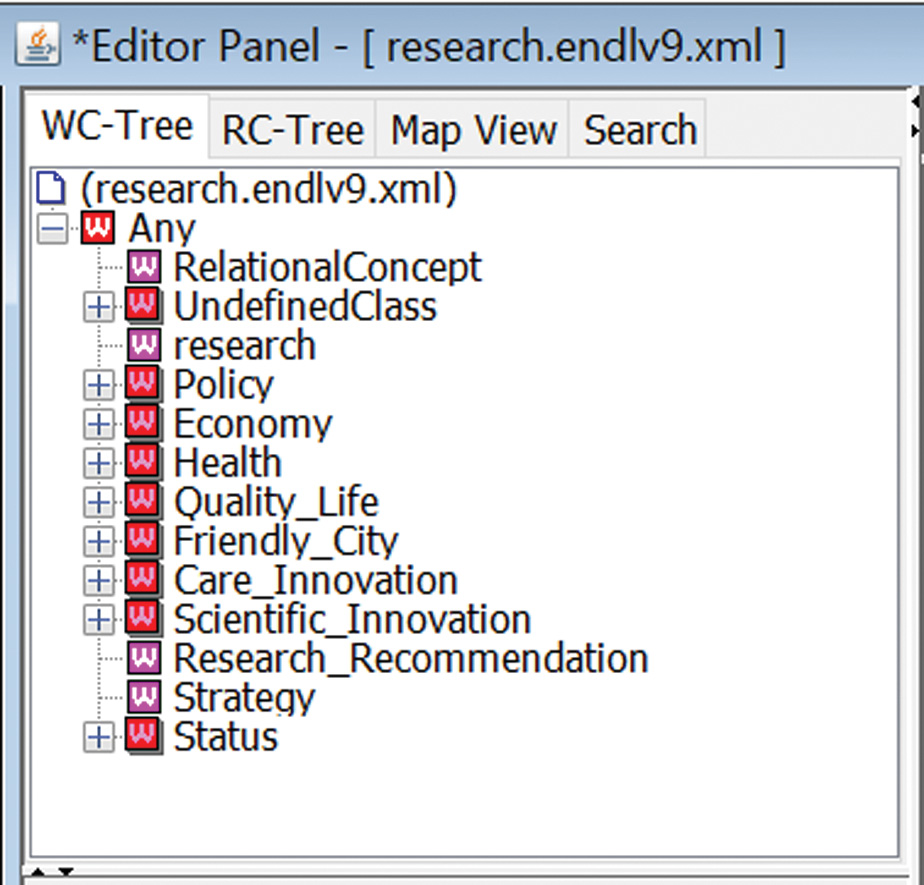 Fig. 3. Ontology class hierarchy for research in the elderly in Thailand.
Table I. Classes of the research knowledge ontology in the elderly in Thailand
| Class | Definition |
|---|---|
| Covers complete research reports, research projects, institutional research, theses, and dissertations focusing on older adults in Thailand. This class functions as the central hub of the ontology, linking to other classes through multiple types of relationships. | |
| Encompasses research on policies for the older population, including preparedness planning, the administration of entities, and public service systems. This class underscores the importance of policy design in addressing population aging and is directly linked to the Strategies class. | |
| Investigations here focus on economic issues affecting older adults, encompassing subjects like wealth management, income generation strategies, local economic endeavors, medical finance, and the creative sector. This categorization reflects the complexity of economic issues in the context of an aging society. | |
| The research scope here encompasses health-related topics, such as promoting well-being, nutritional aspects, illnesses, and restorative therapies specifically for senior individuals. This grouping emphasizes the significance of holistic healthcare for the older population. | |
| Includes research on the development of older adults’ capacities, community development for an aging society, and social participation of older adults. This class emphasizes a positive view of aging and the social engagement of older adults. | |
| Covers research on age-friendly environments, including housing, public spaces, and transportation systems. This class illustrates how the World Health Organization (WHO) age-friendly cities framework is utilized within Thailand. | |
| Explores studies on groundbreaking paradigms for care provision, encompassing smart healthcare technologies, assistive technologies, the utilization of machine learning techniques, and unified service systems. | |
| Studies within this domain address topics such as biomedicine, as well as innovations related to dietetics and edible products, alongside technologies specifically developed to improve well-being and living standards for the elderly. | |
| Research in this domain addresses strategic planning materials, in conjunction with theoretical constructions. Emphasis is placed on referring to the 20-year strategic plan issued by the Department for the Development of the Quality of Life of Persons with Disabilities and older persons (B.E. 2561–2580; 2018–2037). | |
| Encompasses roles in research and advisory capacities, including principal investigators, co-investigators, research assistants, graduate students, and advisors. |
C.PROPERTIES AND RELATIONSHIPS
Two primary types of relations are defined within the ontology. Taxonomic (is-a) relations establish hierarchical classifications among classes and subclasses; for example, preparedness, organizational management, and public service systems are classified as types of policy. These relations enable automated reasoning and property inheritance within the ontology.
Compositional (part-of) relations specify the mereological structure within domains. For instance, all primary research areas are components of broader research categories, and strategies are components of policies. These relations support systematic navigation and exploration of the ontology. Data attributes have been meticulously structured to facilitate efficient querying and filtering. They comprise descriptive metadata—such as titles, abstracts, and keywords—unique identifiers—such as project Identifier (IDs) and Digital Object Identifier (DOIs)—and temporal attributes—such as publication year and project duration. The specification of these attributes conforms to recognized metadata standards to ensure seamless interoperability with external systems.
Object properties interlink concepts across the field of aging research. These include links between research and researchers (hasResearcher, isResearchedBy), between policies and strategies (implementsStrategy, isImplementedBy), and between innovations and applications (hasApplication, isAppliedIn). These relations enable complex querying and automated reasoning.
D.EVALUATION RESULTS
1).AUTOMATED EVALUATION
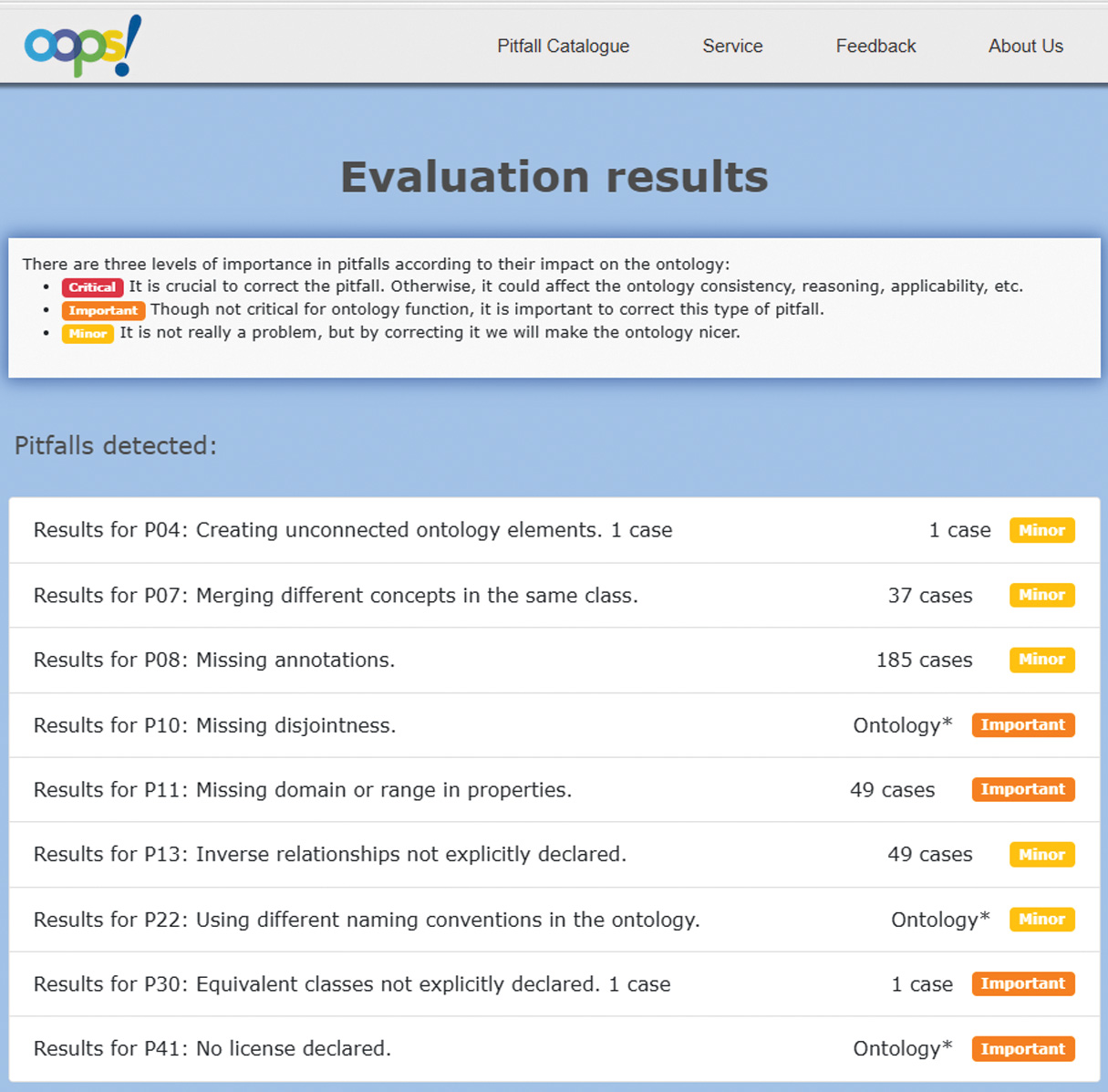
The OOPS! assessment identified three key issues requiring remediation. First, P10 Missing disjointness indicated the absence of appropriate disjointness declarations among classes and properties. This was addressed by introducing suitable disjointness axioms and relationship constraints to ensure that distinct concepts do not inappropriately overlap. Second, P11 Missing domain or range in properties reflected incomplete domain and range specifications for data properties. This was resolved by defining appropriate datatypes and explicitly specifying the domain and range for each property, thereby improving ontological coherence and enabling more robust data validation. Third, P41 No license declared highlighted the absence of a usage license; although this is a documentation rather than a structural issue, it was recognized as critical for future dissemination and reuse of the ontology. Following these corrections, the ontology exhibited satisfactory structural completeness and coherence. A subsequent OOPS! evaluation showed a substantial improvement in the overall quality score, with no overlapping or usability issues identified. The automated evaluation results using the OOPS! tool for all three issues is presented in Fig. 4.
2).EXPERT EVALUATION OF SCOPE IDENTIFICATION AND PURPOSE DEFINITION
The expert evaluation of the scope identification and purpose definition process for the elderly research ontology development in Thailand indicated a high level of expert satisfaction, with an overall mean score of 4.17 ± 0.06. Rather than asserting empirical effectiveness, these results are interpreted as reflecting expert judgment on the conceptual adequacy and relevance of the ontology design within the defined domain.
The assessment revealed strong perceived suitability of the ontology for potential application in elderly research ontology development, which received the highest mean score (4.54 ± 0.07). This score is interpreted as indicating perceived applicability by domain experts, rather than as evidence of validated system performance. In addition, the ontology demonstrated close alignment with the defined knowledge scope of elderly research in Thailand (4.23 ± 0.08). The comprehensiveness of domain coverage achieved a comparatively lower, yet still high, mean score (3.75 ± 0.25), suggesting that while coverage was generally adequate, certain aspects of the domain may benefit from further refinement or expansion. These results are summarized in Table II and illustrated in Fig. 5.
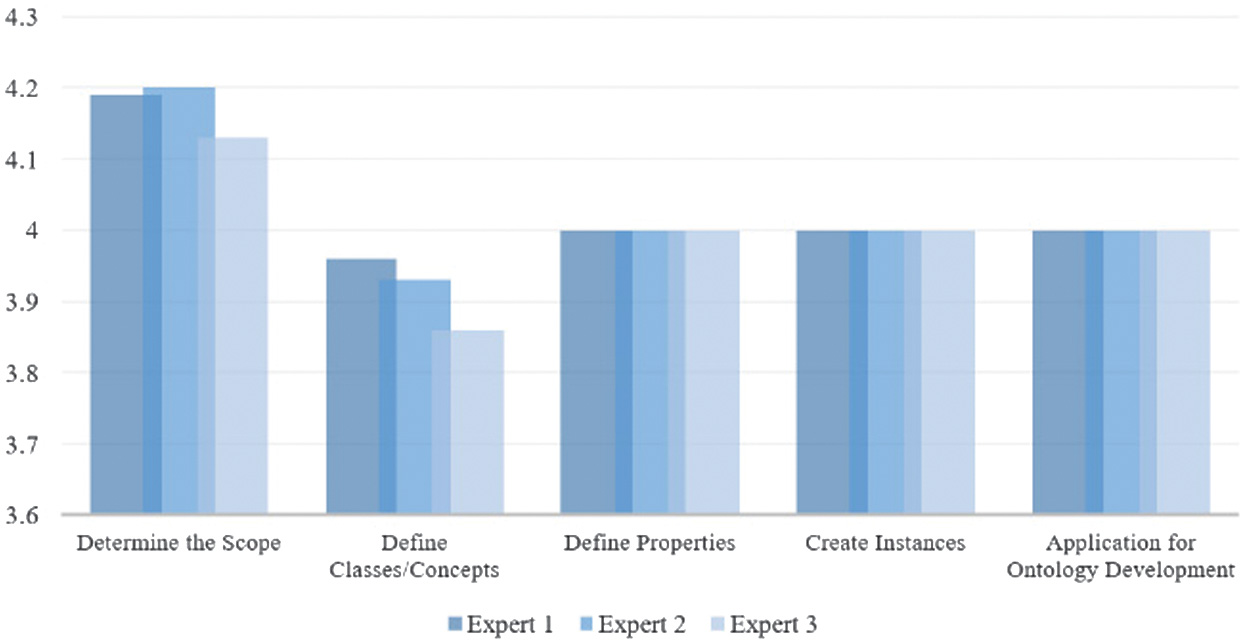 Fig. 5. Expert assessment of ontology outcomes for elderly research in Thailand.
Table II. Expert assessment of ontology outcomes for elderly research in Thailand
| No | Proposed assertions | Levels of agreement (N = 3) | |
|---|---|---|---|
| ¯ ± S.D. | Level | ||
| 1 | The ontology exhibits coherent alignment with the defined knowledge domain pertinent to elderly research in Thailand. | 4.23 ± 0.08 | High |
| 2 | The ontology offers a robust and comprehensive representation of the knowledge domain associated with elderly research in Thailand. | 3.75 ± 0.03 | High |
| 3 | The ontology lends itself to practical deployment, facilitating the development of ontological frameworks for elderly research in Thailand. | 4.54 ± 0.07 | Very high |
| 1 | The ontology formulates conceptual definitions that effectively elucidate the intricate facets of domain knowledge. | 4.00 ± 0.00 | High |
| 2 | The ontology employs judicious categorization and systematic arrangement of superclasses within its hierarchical framework. | 3.50 | High |
| 3 | The ontology offers a fitting taxonomy, systematically organizing classes and subclasses within its taxonomic structure. | 4.00 ± 0.00 | High |
| 4 | The ontology delineates data types in a technically rigorous and contextually appropriate fashion. | 4.00 ± 0.00 | High |
| 5 | The ontology articulates terminological elements with precise definition and unambiguous clarity. | 4.00 ± 0.00 | High |
| 6 | The ontology institutes class constraints characterized by precise definition and logical consistency. | 4.00 ± 0.00 | High |
| 1 | Within the ontology, properties are articulated with meticulous attention to establish meaningful interlinks that support conceptual clarification and robust knowledge representation. | 4.00 ± 0.00 | High |
| 2 | Interconceptual relationships are precisely outlined to reveal significant associations, thereby enabling comprehensive conceptual articulation. | 4.00 ± 0.00 | High |
| 3 | Cardinality constraints are specified with meticulous precision and rigorous technical rigor. | 4.00 ± 0.00 | High |
| 4 | Value definitions are formulated in a coherent and logically consistent manner. | 4.00 ± 0.00 | High |
| 5 | Relational constructs are maintained to ensure internal coherence and to preclude any contradictory linkages. | 4.00 ± 0.00 | High |
| High | |||
| 1 | Data instances within the ontology are delineated to foster unified semantic interpretations across the domain context. | 4.00 ± 0.00 | High |
| 2 | Within the ontology, data instances are characterized using precise linguistic terminology and a coherent syntactic framework. | 4.00 ± 0.00 | High |
| High | |||
| 1 | The ontology exhibits robust accuracy and dependable performance in practical implementations and operational settings. | 4.00 ± 0.00 | High |
| 2 | The ontology can be readily customized and repurposed to facilitate associated systems and applications across pertinent domains. | 4.00 ± 0.00 | |
| High | |||
3).INTER-RATER AGREEMENT ANALYSIS
Although the number of experts involved in the evaluation was limited to 3, inter-rater agreement was examined to assess the consistency of expert judgments, rather than to establish statistical generalizability. Kendall’s coefficient of concordance (W) exceeded the commonly referenced threshold for strong agreement (W > 0.70) across the evaluated dimensions. This level of agreement is interpreted as indicative of acceptable internal consistency among domain experts, consistent with validation practices commonly reported in ontology engineering research. The reported agreement should therefore be understood as supportive evidence of consistency in expert assessment, rather than as confirmation of external validity or system effectiveness.
4).INTERPRETATION OF EVALUATION OUTCOMES
(1) Class and Concept Definition Process Evaluation: The expert assessment of the class and concept definition process yielded a high level of satisfaction, with an overall mean score of 3.92. Five evaluation criteria achieved identical high ratings of 4.00, indicating consistent expert judgments across multiple technical dimensions, rather than empirical validation of functional performance. These criteria included the appropriateness of conceptual definitions for knowledge explanation, suitable classification of classes and subclasses, appropriate datatype specification, precise terminological definition, and adequate class constraint establishment. The organization of superclasses received a slightly lower mean score of 3.50, suggesting a potential area for further refinement in hierarchical structuring, rather than a structural deficiency.
(2) Property Definition Process Assessment: The property definition evaluation demonstrated uniform performance across all assessed dimensions, achieving a consistent mean score of 4.00 for every criterion. These results reflect expert perceptions of technical adequacy and semantic coherence in property modeling, including the specification of conceptual relationships, inter-conceptual associations, cardinality constraints, value definitions, and the avoidance of contradictory relational patterns. The uniformly high ratings are interpreted as indicative of structural soundness, rather than as evidence of validated system behavior.
(3) Instance Definition Process Evaluation: The instance definition assessment achieved consistently high mean scores of 4.00 across both evaluated dimensions. Experts indicated that the instantiated examples appropriately reflected shared semantic meanings within the domain context, and that linguistic terminology and syntactic structures were applied consistently. This consistency suggests that the ontology supports the translation of conceptual models into representative data instances, without implying completeness or real-world deployment effectiveness.
(4) Future Application and Development Potential: The assessment of future application and development potential yielded high satisfaction levels, with mean scores of 4.00 for both evaluation criteria. These scores are interpreted as expert perceptions of the ontology’s structural readiness to serve as a foundation for subsequent system development or adaptation, rather than confirmation of operational deployment. In addition, experts indicated that the ontology exhibits potential reusability for related systems and applications, subject to further validation and contextual extension.
(5) Overall Assessment Implications: Taken together, the expert evaluation results support the interpretation that the proposed elderly research ontology constitutes a technically coherent and contextually appropriate knowledge organization framework. The consistently high ratings across evaluation dimensions reflect alignment with the intended ontological design objectives, while the results should be understood as indicative expert-based validation rather than empirical proof of effectiveness. The uniform performance across technical, semantic, and application-oriented criteria reinforces the methodological rigor of the ontology development process, positioning the ontology as a foundational semantic artifact for future extension, validation, and application in elderly research within Thailand’s evolving demographic context.
V.DISCUSSION
This study presents a domain-specific ontological framework designed to structure aging research in Thailand and to respond to identified challenges related to semantic interoperability and interdisciplinary knowledge organization. Rather than asserting empirical effectiveness, the ontology is framed as a formal semantic representation that models key concepts and relationships relevant to aging research within the Thai context. In contrast to generic or internationally oriented ontologies, the framework is tailored to national demographic priorities and research structures, while remaining compatible with established gerontological and semantic web standards [10,31].
The interdisciplinary scope of the ontology reflects the inherently multi-domain nature of gerontological research, encompassing health, economics, policy, quality of life, and technological innovation [2,10,32]. By formally representing these domains within a unified conceptual structure, the ontology is intended to support semantic alignment at the conceptual level across disciplinary boundaries, without assuming full integration of heterogeneous data sources. This positioning is consistent with prior semantic web research that conceptualizes ontologies as enabling infrastructures, rather than as standalone analytical or decision-making systems [7,31].
From a methodological perspective, the study follows a structured ontology engineering process grounded in established practices, including terminology elicitation, hierarchical modeling, property specification, and constraint definition. The combined use of automated evaluation through OOPS! and expert-based assessment is employed as an initial validation, rather than as a statistically generalizable evaluation. Given the limited number of evaluators, the expert review is interpreted as a qualitative domain validation step commonly adopted in ontology development studies. The observed inter-rater agreement is interpreted as indicative of internal consistency in expert judgments, rather than evidence of broader external validity [12]. The selective reuse of existing ontological components further highlights both the feasibility and the constraints of adapting general-purpose semantic models to context-specific domains, underscoring the importance of domain expertise in ontology design [9,24,36].
In terms of application, the ontology provides a semantic foundation upon which ontology-driven information retrieval, recommendation, or reasoning systems may be developed in future work, rather than demonstrating such systems empirically. Although the framework is designed to be compatible with formal reasoning mechanisms through explicit class hierarchies, property definitions, and constraints, this study does not evaluate reasoning outcomes, retrieval performance metrics, or comparative user studies. Accordingly, references to semantic search, recommendation, and automated reasoning are framed as potential use cases enabled by the ontology’s structure, in line with common practice in foundational semantic web research [7].
The scope of the ontology is intentionally bounded to aging research in Thailand and is primarily informed by national repositories such as TNRR and ThaiLIS. While this focus enhances contextual relevance and domain specificity, it also limits immediate international generalizability. Nevertheless, the adoption of OWL-based modeling principles and alignment with internationally recognized frameworks, including WHO age-friendly city concepts, allow future extension or mapping to global and multilingual datasets. The ontology is therefore positioned as a reusable semantic resource in principle, rather than as a validated cross-national model.
Overall, this study contributes to the semantic web and knowledge organization literature by presenting a transparent and context-sensitive ontology development case that emphasizes methodological clarity, structural validity, and contextual adaptation. Rather than claiming empirical impact, the work is framed as a foundational contribution that may inform subsequent ontology-based research and system development in aging studies.
This study has certain limitations. The ontology evaluation was conducted by a small number of domain experts, which limits the statistical generalizability of the findings. Nevertheless, the inclusion of inter-rater agreement analysis offers indicative support for the internal consistency of expert judgments, without implying broader statistical inference. Future research should involve a larger and more diverse group of experts, incorporate cross-country validation, and empirically assess ontology-enabled systems in real-world semantic retrieval and decision-support contexts.
VI.CONCLUSION
This study developed a domain-specific ontology to structure knowledge related to aging research in Thailand, responding to identified challenges in semantic interoperability and cross-disciplinary knowledge organization. Rather than asserting direct empirical effectiveness or system-level impact, the ontology was positioned as a foundational semantic representation that captures key concepts and relationships within a national research context. Methodologically, the study presented an ontology development approach grounded in established semantic web practices, integrating systematic vocabulary analysis, iterative refinement, and combined automated and expert-based evaluation. The evaluation results were interpreted as indicative of structural soundness and internal consistency among expert judgments, without implying statistical generalizability or validated application performance.
Despite these contributions, the study was subject to certain limitations, including reliance on nationally focused research repositories and a limited number of domain experts involved in the evaluation. Accordingly, the expert assessment and inter-rater agreement analysis were interpreted as indicative of internal consistency in expert judgments, rather than as evidence of statistical generalizability. To support transparency, reproducibility, and future reuse, the OWL ontology developed in this study, including formal axioms and representative SPARQL Protocol and RDF Query Language (SPARQL) query examples, will be made publicly available via an online repository upon acceptance of the paper.
Overall, this work was framed as a foundational contribution to semantic knowledge organization for aging research, providing a reusable conceptual infrastructure that may inform subsequent ontology-based system development, cross-domain integration, and comparative studies in both national and international contexts.